MDR on UPI: CAIT's Khandelwal urges brief deferral for awareness drive
Synopsis
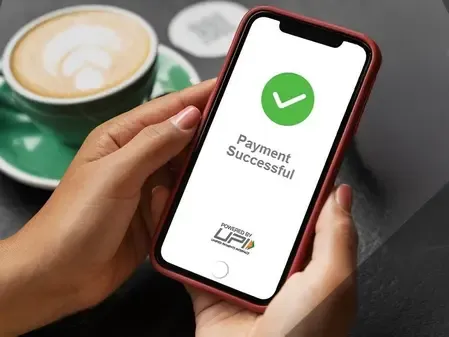
CAIT chief and BJP MP Praveen Khandelwal has backed the proposed MDR on UPI — calling the 0.40% charge with a ₹300 cap 'quite reasonable' — but wants the government to pause the rollout briefly and run a national awareness drive to cut through Opposition-fuelled confusion before the proposed 15 October implementation.
Key Takeaways
Praveen Khandelwal , President of CAIT and BJP MP , called for a brief deferral of the proposed MDR on UPI transactions on 23 September 2026 .
He backed the 0.40 per cent MDR charge as reasonable, noting a cap of ₹300 per transaction.
Khandelwal suggested implementation, reportedly set for 15 October , be pushed back by a few days to allow stakeholder consultations and a public awareness drive.
He highlighted RuPay debit cards as a no-MDR alternative for higher-value transactions.
Khandelwal alleged the Opposition had created confusion among traders and the public on the MDR issue.
Praveen Khandelwal, BJP Member of Parliament and President of the Confederation of All India Traders (CAIT), on Wednesday, 23 September 2026, called for a month-long nationwide awareness campaign on the proposed Merchant Discount Rate (MDR) on select UPI transactions before the policy takes effect. Khandelwal argued that a brief deferral of the rollout would help eliminate confusion among traders and the general public, and allow adequate stakeholder engagement.
What Khandelwal Said
The CAIT chief voiced support for the MDR in principle, describing the proposed 0.40 per cent charge as reasonable given the accompanying cap of ₹300 per transaction. 'Whenever we avail ourselves of a service, we should pay for that service. I believe the 0.40 per cent MDR charge is very reasonable and there is also a cap of Rs 300,' Khandelwal said.
He also flagged an alternative for those concerned about costs on higher-value transactions, noting that RuPay debit cards currently carry no such charge. 'If someone wants to make a higher-value transaction, they can use a RuPay debit card, on which there is no charge in the present context,' he said.
The Case for Deferral
Khandelwal specifically suggested that if implementation is slated from 15 October, the government could push it back by a few days to allow consultations and a public information drive. He argued that once people understand the MDR structure — including the charge cap — resistance would subside. 'I believe that if it is deferred for a few days and an awareness drive is conducted, everyone will understand that the MDR is actually quite reasonable and that there is also a cap on it,' he said.
Notably, CAIT represents a large cross-section of India's small and medium traders, making Khandelwal's intervention significant even as he comes from the ruling Bharatiya Janata Party (BJP). His call for a pause, while broadly backing the policy, implicitly acknowledges that the government's communication on MDR has fallen short so far.
Political Dimension
Khandelwal alleged that the Opposition had deliberately stoked confusion over the MDR proposal, framing it as an attack on small traders and digital payment users. He contended that a structured awareness drive — covering why MDR is being introduced, who bears the cost, and what alternatives exist — would neutralise those concerns. This comes amid broader political friction over any move perceived as adding costs to India's fast-growing digital payments ecosystem.
Background on MDR and UPI
The MDR is a fee charged to merchants for processing digital payments. The government had previously waived MDR on RuPay and UPI transactions to drive adoption. Any reintroduction — even partial — marks a policy reversal that affects the over 500 crore monthly UPI transactions recorded in recent months. Industry bodies and payment processors have been watching the development closely, given its potential impact on merchant willingness to accept digital payments, particularly in the small-ticket segment.
As the proposed 15 October implementation date approaches, the government's response to Khandelwal's deferral call will be closely watched by traders, fintech firms, and consumer groups alike.
Point of View
However partial or capped, will face resistance unless the government makes a transparent case for why the subsidy model is unsustainable. Framing the Opposition as the sole source of confusion sidesteps that accountability.
NationPress
23 Sept 2026
Frequently Asked Questions
What is the proposed MDR on UPI transactions?
The proposed Merchant Discount Rate (MDR) on UPI is a fee of 0.40 per cent charged to merchants on certain UPI transactions, with a cap of ₹300 per transaction. It marks a partial reversal of the government's earlier zero-MDR policy that had been in place to accelerate digital payments adoption.
Why is CAIT's Praveen Khandelwal calling for a deferral?
Khandelwal wants the government to defer implementation by a few days — from the proposed 15 October date — to run a nationwide awareness campaign explaining the MDR structure to traders and consumers. He argues that confusion, partly attributed to Opposition messaging, needs to be cleared before the charge kicks in.
Does Khandelwal support the MDR in principle?
Yes. Khandelwal has stated that the 0.40 per cent charge is 'quite reasonable' given the ₹300 cap, and that users paying for a service should expect a charge. His call for deferral is about communication, not opposition to the policy itself.
Is there a way to avoid the MDR charge on UPI?
According to Khandelwal, RuPay debit cards currently carry no MDR charge, making them an option for those looking to avoid the fee on higher-value transactions. He has urged the government to communicate this alternative more widely.
Who is affected by the proposed MDR on UPI?
The MDR primarily affects merchants who accept UPI payments, particularly for transactions above a certain value. Consumers could indirectly bear the cost if merchants pass it on. Small traders and micro-enterprises — CAIT's core constituency — are among the most closely watched affected groups.