MDR on UPI transactions not driven by external pressure, Finance Ministry says

Synopsis
India's Finance Ministry has called it 'patently false' that MDR on UPI was introduced under US trade pressure — and released the USTR report itself to make the case. The real story is more nuanced: the MDR is designed to give smaller domestic payment firms a revenue model so the long-stalled NPCI 30% market-share cap can finally be enforced by December 2026.
Key Takeaways
The Finance Ministry on 17 September 2026 rejected allegations that MDR on UPI was introduced under USTR pressure , calling the claim 'patently false and misleading.' The USTR 2026 report flags two issues: exclusion of US payment firms from the UPI ecosystem and the NPCI 30% market-share cap for third-party providers.
An NPCI circular dated 15 September 2026 restricts UPI credit transactions to RuPay credit cards only.
The government says MDR on select high-value transactions will give smaller domestic payment companies a revenue base to compete.
RuPay debit cards remain exempt from MDR to protect consumer accessibility.
The NPCI 30% market-share cap , announced November 2020 , is now set for enforcement in December 2026 .
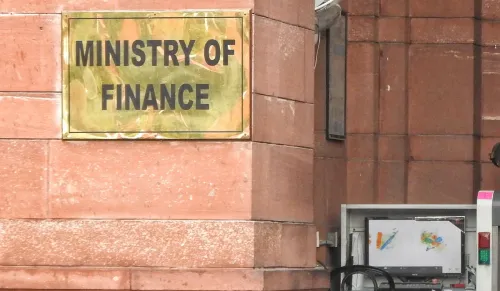
The Finance Ministry's Department of Financial Services on Thursday, 17 September 2026 issued a categorical rebuttal to media allegations that the introduction of the Merchant Discount Rate (MDR) on UPI transactions was the result of foreign pressure, calling such claims 'patently false and misleading.' The ministry simultaneously released a copy of the US Trade Representative (USTR) report that had been cited in those allegations.
What the Allegation Claimed
A section of the media had linked the MDR rollout to a 2026 USTR report, suggesting that pressure from American trade officials had nudged India into adopting the levy on UPI payments. The Finance Ministry rejected this framing outright, stating that no external influence — commercial or diplomatic — shaped the policy decision.
What the USTR Report Actually Says
The USTR report, as clarified by the ministry, raises two distinct concerns. First, it flags the inability of US electronic payment services suppliers to participate in the UPI ecosystem on a level playing field with RuPay. The NPCI circular of 15 September 2026 restricts credit transactions on UPI to RuPay credit cards alone, a deliberate policy to establish RuPay as the preferred credit card among Indian consumers. Second, the USTR report notes the NPCI's 30 per cent market-share cap for third-party application providers, announced in November 2020 with an enforcement date of December 2026.
Why MDR Was Introduced, According to the Government
The ministry contends that the 30 per cent market-share cap could not be enforced when it was first announced because smaller payment companies lacked a viable revenue model to compete with dominant players. The introduction of MDR on select high-value transactions is meant to provide those smaller domestic firms with a self-sustaining income stream, enabling them to grow their share of the UPI ecosystem. 'Contrary to misleading claims made that MDR has been introduced under external pressure, the introduction of MDR on select high-value transactions will enable more domestic companies to operate under UPI,' the ministry statement read. 'Thus, the action of introducing MDR is a step in protecting India's sovereignty in the electronic payment ecosystem.'
RuPay Debit Card Kept Free of MDR
To protect the growth trajectory of RuPay, the government has kept RuPay debit cards exempt from MDR. Officials said this preserves accessibility for ordinary users while still creating a revenue structure that supports competition in the digital payments space. India has actively promoted RuPay credit and debit cards as a strong domestic alternative to international card networks.
What This Means for India's Digital Payments Ecosystem
The MDR debate sits at the intersection of domestic industrial policy and international trade diplomacy. Notably, the NPCI's market-share cap — pending enforcement since 2020 — has been a long-standing structural concern, and the government's framing positions MDR as a corrective tool rather than a concession to foreign interests. How smaller payment aggregators utilise this new revenue runway will be closely watched as the December 2026 enforcement deadline approaches.
Point of View
But the mere act of releasing the USTR report confirms that the American trade lobby's concerns have landed in Indian policy conversations — whatever their ultimate influence. The harder question is not whether MDR was 'ordered' by Washington, but whether a policy justified as protecting domestic competition will, in practice, be absorbed by merchants and passed on to consumers. The NPCI's six-year struggle to enforce its own 30% market-share cap also reveals a regulatory gap: rules without revenue models are unenforceable. MDR may fix that — or it may simply entrench the incumbents who can afford compliance infrastructure that small rivals cannot.
NationPress
17 Sept 2026
Frequently Asked Questions
What is MDR on UPI transactions and why is it controversial?
MDR, or Merchant Discount Rate, is a fee levied on digital payment transactions. Its proposed introduction on select high-value UPI transactions has been controversial because media reports alleged it was introduced under pressure from the US Trade Representative, a charge the Finance Ministry has categorically denied.
What does the USTR 2026 report actually say about UPI?
The USTR 2026 report raises two concerns: that US electronic payment service providers cannot participate in the UPI ecosystem on equal terms with RuPay, and that the NPCI's 30% market-share cap for third-party payment apps — announced in November 2020 — could restrict competition. The Finance Ministry released the report publicly to counter claims that it justified MDR as a foreign-pressure concession.
Why has the NPCI 30% market-share cap not been enforced since 2020?
According to the Finance Ministry, the cap could not be enforced because smaller payment companies lacked a viable revenue model to compete with dominant players. The introduction of MDR on high-value transactions is intended to give these firms a self-sustaining income stream, enabling the cap to finally be enforced from December 2026.
Are RuPay debit cards affected by the new MDR?
No. The government has kept RuPay debit cards exempt from MDR to protect consumer accessibility and support RuPay's continued growth as a domestic alternative to international card networks.
How does this MDR decision relate to India's digital payments sovereignty?
The Finance Ministry has explicitly framed MDR as a measure to protect India's sovereignty in the electronic payment ecosystem by fostering domestic competition within UPI, rather than as a step favourable to foreign payment networks. The government argues the policy strengthens, not weakens, the domestic payments architecture.