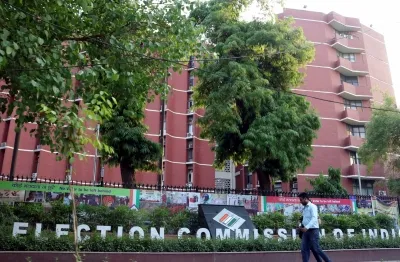
ECI defends unanimous decisions amid dissent row, cites 40 reforms

Synopsis
A rare public clarification from the Election Commission of India — the constitutional body that runs the world's largest democracy's elections — reveals cracks at the top, with two Commissioners reportedly objecting on record 14 times in 10 months. The ECI's rebuttal insists all decisions were unanimous and frames dissent as healthy deliberation, but the investigative report it is responding to has put the integrity of India's electoral machinery under fresh scrutiny.
Key Takeaways
The Election Commission of India (ECI) on 23 September 2026 issued a formal clarification amid a controversy over internal dissent.
A leading daily reported that two Election Commissioners raised recorded objections on 14 occasions over 10 months , including over voter additions and deletions from electoral rolls.
The ECI countered that differing views are 'a normal part of deliberation' and that all major decisions over the past year were unanimous .
The Commission cited around 40 new initiatives and major electoral reforms, including the Special Intensive Revision (SIR) of voter rolls, as evidence of institutional cohesion.
The ECI stated that its digital platforms, including ECINet , operate under strict data security protocols against tampering.
Critics argue the statement does not directly address the substance of the 14 specific objections detailed in the investigative report.
The Election Commission of India (ECI) on Wednesday, 23 September 2026, pushed back against a widening controversy over internal dissent, asserting that differing views are 'a normal part of deliberation in any institution' and that all major decisions taken over the past year were unanimous. The clarification came after a leading daily published an investigative report alleging that two Election Commissioners had objected on record to Commission decisions on 14 occasions over a span of 10 months.
What the Controversy Is About
The investigative report claimed that the two Commissioners raised recorded objections over a range of issues — including allegations that they were kept in the dark about certain matters, and concerns over the addition of new voters and deletion of names from electoral rolls. The report did not name the specific Commissioners but suggested a pattern of friction at the top of the constitutional body.
The revelations drew sharp attention given the ECI's constitutional stature under Article 324 of the Constitution, and raised questions about institutional cohesion ahead of upcoming election cycles.
ECI's Formal Response
In an official statement, the Commission said: 'Written notes, observations, technical suggestions and internal checks-and-balances are standard, ongoing practices designed to ensure complete transparency, legal compliance and operational rigour. All actions of the ECI have been in accordance with the laws and instructions of the Commission.'
The poll body further stressed that all official orders and administrative directions carry full legal sanction under The Chief Election Commissioner and Other Election Commissioners (Appointment, Conditions of Service and Term of Office) Act, 2023. It emphasised that 'any operational queries or inputs raised by Commission members during draft stages are part of standard administrative practice aimed at safeguarding voter rights.'
40 New Initiatives and Electoral Reforms
The ECI pointed to a substantial body of work as evidence of institutional cohesion, stating it has introduced around 40 new initiatives and undertaken several electoral reforms over the past year, including the Special Intensive Revision (SIR) of electoral rolls across the country. The Commission also highlighted its conduct of major elections in Bihar, Kerala, Tamil Nadu, Puducherry, Assam, and West Bengal — all executed through unanimous approvals.
'Highlighting certain specific internal notes/observations spread over the period of 10 months while overlooking the much larger body of approvals, decisions, instructions and initiatives gives only one part of the picture,' the ECI said.
Digital Platform Security and Voter Data
Separately, the Commission addressed concerns about its digital infrastructure, stating that its platforms — including ECINet — operate under 'strict data security protocols to prevent unauthorised tampering, manipulation.' It confirmed that statutory authorities, including Electoral Registration Officers (EROs) and District Election Officers (DEOs), exercise their powers for voter registration and deletion strictly under law.
What This Means Going Forward
The ECI reiterated its commitment to constitutional responsibilities and the integrity of the electoral process. Critics, however, argue that the Commission's response — while comprehensive — does not directly address the specific nature of the 14 recorded objections cited in the investigative report. Whether the controversy intensifies will likely depend on whether further details of those dissents enter the public domain. Opposition parties are expected to press for greater transparency on the matter in the coming days.
Point of View
The distinction between 'healthy dissent' and 'Commissioners being kept in the dark' is not a procedural footnote; it is the central question. The statement's emphasis on 40 reforms and election conduct is a classic volume defence — quantity of decisions does not resolve concerns about the quality of a specific subset. If the Commission genuinely has nothing to hide in those 14 instances, proactive disclosure would serve it better than a generalist rebuttal.
NationPress
23 Sept 2026
Frequently Asked Questions
What is the ECI dissent controversy about?
An investigative report by a leading daily alleged that two Election Commissioners raised recorded objections to Commission decisions on 14 occasions over 10 months, including concerns about voter additions, name deletions from electoral rolls, and being kept uninformed about certain matters. The ECI responded that such internal deliberations are standard practice and all final decisions were unanimous.
What did the Election Commission say in its clarification?
The ECI stated that written notes and observations by Commissioners are part of 'standard administrative practice' and that differing views are normal in any institution. It added that all major decisions over the past year, including around 40 new initiatives and electoral reforms, were taken unanimously by the full Commission.
What is the Special Intensive Revision (SIR) mentioned by the ECI?
The Special Intensive Revision (SIR) is an electoral roll revision exercise conducted by the ECI across India to update voter lists — adding eligible new voters and removing ineligible or deceased names. It was among the reforms the Commission cited as having been approved unanimously.
How does the ECI protect its digital voter data?
The Commission stated that its digital platforms, including ECINet, operate under strict data security protocols to prevent unauthorised tampering or manipulation. Electoral Registration Officers (EROs) and District Election Officers (DEOs) exercise statutory powers for voter registration and deletion under established law.
What happens next in this controversy?
Opposition parties are expected to press for greater transparency regarding the 14 specific recorded objections cited in the investigative report. Whether the controversy deepens will depend on whether the content of those dissents enters the public domain, and whether the Commission or the concerned Commissioners make further statements.