ECI rejects dissent report; all decisions including SIR were unanimous
Synopsis
The Election Commission has flatly denied that its two Election Commissioners formally dissented from its decisions — including the politically charged SIR exercise. With The Indian Express reporting 14 instances of on-record objections over 10 months, and opposition leaders like Kapil Sibal alleging the CEC acted unilaterally, the credibility of India's poll body is under its sharpest public scrutiny in years.
Key Takeaways
The Election Commission of India (ECI) rejected a report by The Indian Express alleging that two commissioners objected on record to 14 decisions over 10 months .
ECI sources said the commissioners made only observations , not formal dissents, and all decisions were unanimous .
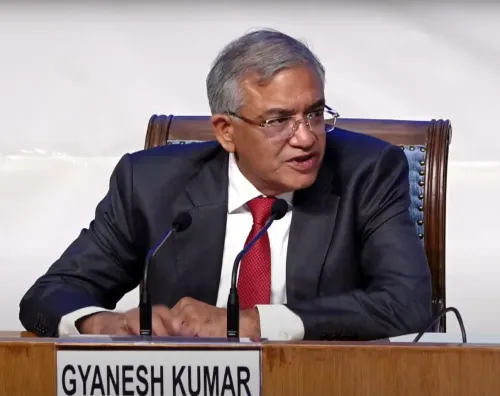
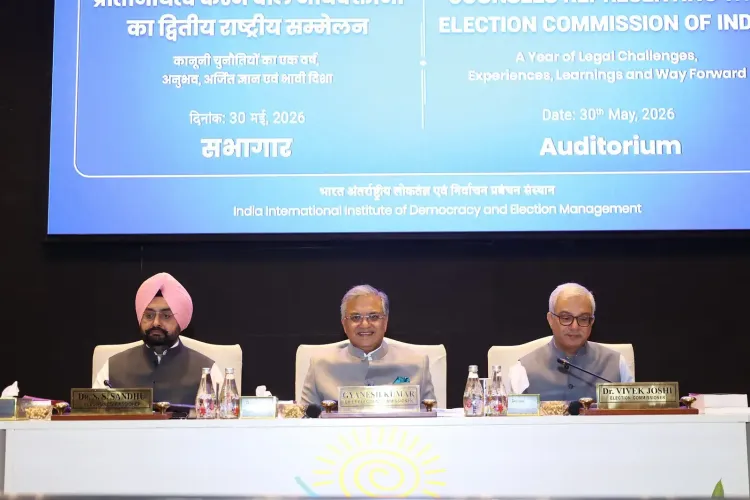
All decisions carry the signatures of Chief Election Commissioner Gyanesh Kumar and commissioners Sukhbir Singh Sandhu and Vivek Joshi .
ECI rules allow a majority decision to prevail when two of three commissioners agree.
Rajya Sabha member Kapil Sibal alleged the CEC acted 'arbitrarily', accusing him of sidelining his colleagues on the SIR process.
Opposition parties claim the SIR exercise risks voter exclusion and benefits the BJP — allegations the Commission has denied.
The Election Commission of India (ECI) has firmly rejected a media report claiming that two Election Commissioners had formally objected to multiple decisions taken by the poll body, allegedly without their knowledge. Sources close to the Commission stated on 23 September that no Election Commissioner had recorded any dissent — only observations, which were subsequently examined by the panel.
What the Newspaper Report Alleged
The controversy follows an investigative report published by The Indian Express claiming that on 14 separate occasions over a period of 10 months, two Election Commissioners had objected on record to steps taken by the Commission. The alleged objections spanned a range of decisions, including claims that the commissioners were kept uninformed about certain matters, as well as concerns related to the addition of new voters and deletion of names from electoral rolls.
ECI's Position: Signatures of All Three Members on Every Decision
Sources within the Commission pointed out that every decision taken by the ECI carries the signatures of all three members — Chief Election Commissioner Gyanesh Kumar and Election Commissioners Sukhbir Singh Sandhu and Vivek Joshi. They further noted that the rules governing the Commission include a provision allowing a majority decision to prevail when two of the three commissioners are in agreement.
'All decisions of the Election Commission of India, including SIR, have been unanimous and with the approval of both the Election Commissioners and the Chief Election Commissioner,' an ECI source said.
Opposition Seizes on the Report
Opposition parties have launched a renewed offensive against the Commission, alleging that the Special Intensive Revision (SIR) exercise is a sophisticated mechanism that could lead to voter exclusion and benefit the Bharatiya Janata Party (BJP). Rajya Sabha member Kapil Sibal alleged that the report confirms 'the majority was not with Gyanesh Kumar', and accused the Chief Election Commissioner of 'making decisions arbitrarily according to his own whims.'
This is not the first time the SIR process has drawn political scrutiny. Opposition parties have consistently questioned the Commission's neutrality on voter roll management, and the latest report has sharpened that criticism.
ECI Defends the SIR Exercise
The Election Commission has rejected these allegations and maintained that the SIR exercise is aimed squarely at ensuring the accuracy and integrity of electoral rolls. It has not, as of this report, issued a formal written rebuttal of the newspaper's claims or detailed the specific observations made by the two commissioners.
With the controversy now drawing parliamentary voices and opposition parties coordinating their response, the ECI faces mounting pressure to clarify its internal decision-making processes ahead of upcoming electoral cycles.
Point of View
Cite procedure, and move on. But the Commission's response leaves a crucial question unanswered: if the observations made by the two commissioners were genuine and substantive, why has the institution not released them for public scrutiny? A democracy's electoral body derives legitimacy from transparency, not just from internal unanimity. The SIR controversy is not merely a procedural dispute — it sits at the intersection of voter roll integrity and partisan suspicion, a combination that erodes public trust faster than any individual decision. The Commission would serve itself better with proactive disclosure than with carefully worded denials.
NationPress
23 Sept 2026
Frequently Asked Questions
What did The Indian Express report about the Election Commission?
The Indian Express published an investigative report claiming that on 14 separate occasions over 10 months, two Election Commissioners had formally objected on record to decisions taken by the Commission, allegedly without their prior knowledge. The objections reportedly covered matters including the SIR exercise and changes to electoral rolls.
How has the ECI responded to these allegations?
The Election Commission has rejected the report, with sources stating that no commissioner recorded any formal dissent — only observations that were later examined by the panel. The ECI also noted that all decisions, including on the SIR, were unanimous and bear the signatures of all three commission members.
What is the SIR exercise at the centre of the controversy?
The Special Intensive Revision (SIR) is a process conducted by the Election Commission to verify and update electoral rolls, including adding new eligible voters and removing ineligible names. Opposition parties allege it could lead to unjust voter deletions and benefit the BJP, while the ECI says it is aimed at ensuring roll accuracy and integrity.
Who are the three members of the Election Commission currently?
The Election Commission of India currently comprises Chief Election Commissioner Gyanesh Kumar and Election Commissioners Sukhbir Singh Sandhu and Vivek Joshi. All three members' signatures reportedly appear on every decision taken by the Commission.
What has the political opposition said about this row?
Opposition parties, including Rajya Sabha member Kapil Sibal, have seized on the report to allege that Chief Election Commissioner Gyanesh Kumar acted unilaterally and that the SIR exercise is designed to exclude certain voters. The ECI has denied these allegations, maintaining that all processes follow established rules.