Election Commission clarifies letters to Cabinet Secretary not a policy dispute or IT matter
Synopsis
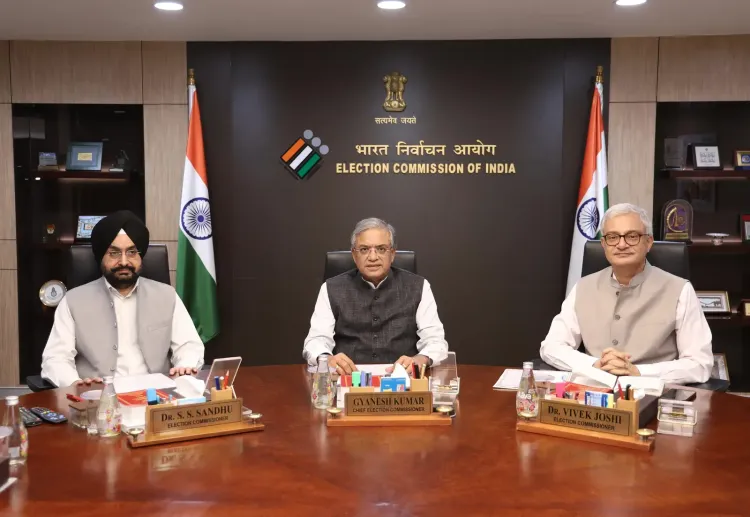
Amid opposition demands to remove Chief Election Commissioner Gyanesh Kumar, the Election Commission has firmly clarified that letters sent by two commissioners to the Cabinet Secretary were about a deputationist officer's conduct — not a policy rift or IT division dispute. The SIR decisions, the ECI insists, were taken unanimously.
Key Takeaways
The Election Commission of India reiterated that letters written to the Cabinet Secretary were not related to any policy matter or the IT division.
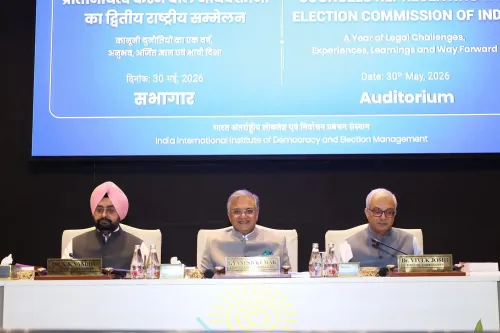
Election Commissioners Sukhbir Singh Sandhu and Vivek Joshi wrote separately to the Cabinet Secretary on 29 July 2026 over an internal work allocation order issued on 28 July 2026 .
The order was never implemented , following a joint direction by both commissioners on 30 July 2026 .
The ECI stated that SIR decisions were taken unanimously and that the issues raised had become 'infructuous'.
Opposition parties have used the letters to demand the removal of Chief Election Commissioner Gyanesh Kumar , a claim the ECI has consistently denied.
The Election Commission of India (ECI) has once again pushed back against claims of internal discord, asserting that letters written by two Election Commissioners to the Cabinet Secretary were 'not related to any policy matter' or the IT division. The clarification comes amid persistent social media narratives about alleged 'friction' within the poll panel, and opposition demands for the removal of Chief Election Commissioner Gyanesh Kumar.
What the Letters Were Actually About
According to the ECI, the letters sent by Election Commissioners Sukhbir Singh Sandhu and Vivek Joshi on 29 July 2026 to the Cabinet Secretary concerned the conduct of a deputationist officer and an internal work allocation order — not any disagreement over electoral policy or the Commission's IT division. The order in question had been issued on 28 July 2026 by an IAS officer of Additional Secretary rank posted on deputation to the ECI.
The Commission has maintained that this order was never implemented. 'The work re-distribution orders issued by the concerned officer were not actually implemented after the orders of the two Commissioners, and the oversight over the IT division by the DEC was never actually withdrawn,' the ECI said in a statement.
Timeline of Events
The sequence, as laid out by the ECI, is as follows: an internal work allocation order was issued on 28 July 2026; both commissioners wrote separately to the Cabinet Secretary on 29 July 2026; and a joint direction dated 30 July 2026 by the two Election Commissioners effectively rendered the original order void. The Commission noted that internal work distribution has since continued as per the arrangement set out in an earlier Office Order dated 23 September 2025.
The Commission's Stand on SIR Decisions
The ECI also reiterated that decisions relating to the Special Intensive Revision (SIR) of electoral rolls were taken unanimously, countering opposition narratives that sought to portray the SIR process as contentious. The poll panel has described the issues raised by the two commissioners as having become 'infructuous' — meaning they were resolved before they could develop into any substantive dispute.
Opposition Demands and Political Context
Opposition parties have repeatedly cited the letters to press for the removal of Chief Election Commissioner Kumar, framing them as evidence of a breakdown in institutional consensus. The ECI's sustained clarifications suggest the Commission is acutely aware that the narrative, if left unchallenged, could undermine public confidence ahead of upcoming electoral exercises. This is not the first time the Commission has had to publicly address claims of internal disagreement — a pattern that reflects the heightened political scrutiny the institution faces in the current environment.
The ECI has not indicated any further formal statement on the matter, but observers note that the Commission's repeated clarifications signal an intent to firmly close the space for political speculation around its internal functioning.
Point of View
The denials become part of the story. The core facts, as the Commission has laid them out, do not support the 'breakdown' narrative: the disputed order was never implemented, the commissioners' issues were resolved within 48 hours, and SIR decisions were unanimous. Yet the opposition's framing has forced the poll panel into a defensive posture at a time when it can least afford reputational ambiguity. The deeper issue is structural: the absence of a transparent, timely disclosure mechanism within the ECI means disputes — even minor administrative ones — are vulnerable to political amplification. The Commission may need to consider proactive disclosure norms to pre-empt future narrative capture.
NationPress
5 Nov 2026
Frequently Asked Questions
Why did Election Commissioners write to the Cabinet Secretary?
The two Election Commissioners, Sukhbir Singh Sandhu and Vivek Joshi, wrote to the Cabinet Secretary on 29 July 2026 regarding an internal work allocation order issued by a deputation officer and the conduct of that officer — not over any policy disagreement or IT division matter.
Was there a disagreement within the Election Commission of India?
The ECI has consistently denied any disagreement within the Commission. It has stated that the issues raised by the two commissioners became 'infructuous' after a joint direction on 30 July 2026 rendered the disputed order void, and that SIR decisions were taken unanimously.
What is the opposition's demand regarding the Election Commission?
Opposition parties have cited the letters to the Cabinet Secretary as evidence of internal discord and have demanded the removal of Chief Election Commissioner Gyanesh Kumar. The ECI has rejected these claims as politically motivated and factually incorrect.
What was the disputed order about?
The order dated 28 July 2026 was issued by an IAS officer of Additional Secretary rank posted on deputation to the ECI, and pertained to internal work allocation. It was never implemented following a joint direction by Election Commissioners Sandhu and Joshi on 30 July 2026.
How has the ECI addressed the SIR controversy?
The ECI has reiterated that all decisions relating to the Special Intensive Revision (SIR) of electoral rolls were taken unanimously by the full Commission, pushing back against claims that the process was marred by internal disagreement.