ECI letters to Cabinet Secretary broke protocol, says ex-ECI official
Synopsis
A former senior ECI official has publicly declared that letters reportedly sent by two sitting Election Commissioners to the Cabinet Secretary were 'against protocol' — a rare instance of institutional self-criticism that deepens the cloud over the poll body's internal functioning, even as it scrambles to contain a public perception crisis over voter roll revisions.
Key Takeaways
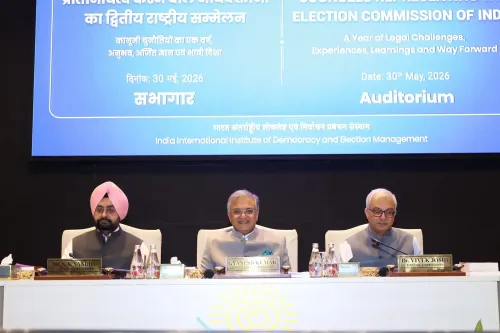
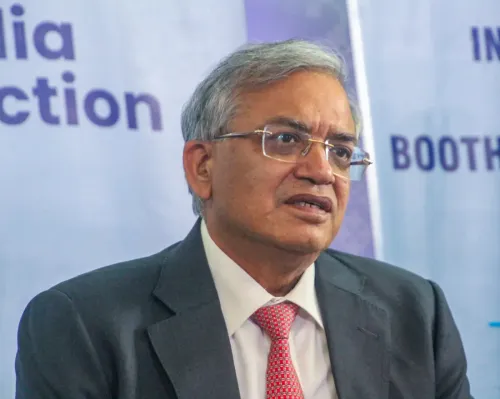
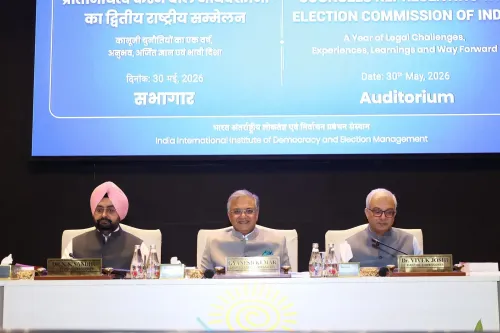
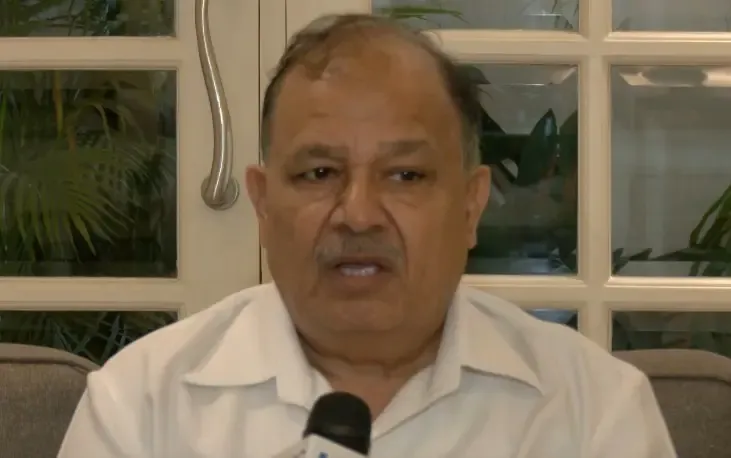
Former ECI Joint Director Mohammad Amin on 30 September said letters written to the Cabinet Secretary by Election Commissioners Sukhbir Singh Sandhu and Gyanesh Kumar were 'against protocol.' Amin said such letters should have been addressed to the Ministry of Law and Justice or to President Droupadi Murmu .
The ECI issued a press release to counter reports of internal differences, clarifying the context of the letter.
The Special Intensive Revision (SIR) of electoral rolls — last conducted in 2004 and revived in 2025–26 in Bihar and West Bengal — is currently under Supreme Court scrutiny.
The ECI removed the additional declaration from Form 6 on its ECINET portal on 30 September in states where the SIR has concluded.
Amin cautioned that the episode hands the Opposition a political narrative, saying it will claim its earlier objections were vindicated.
Former Joint Director of the Election Commission of India (ECI), Mohammad Amin, on Wednesday, 30 September, said that letters reportedly written to the Cabinet Secretary by Election Commissioners Sukhbir Singh Sandhu and Gyanesh Kumar were 'against protocol.' According to Amin, such correspondence should have been directed to the Ministry of Law and Justice or to President Droupadi Murmu — not the Cabinet Secretary.
What Triggered the Controversy
A media report earlier claimed that the two Election Commissioners had 'objected on record' to several decisions taken by the poll panel, allegedly without their knowledge. The ECI subsequently issued a press release seeking to quell reports of internal differences, offering its own account of why the letter to the Cabinet Secretary was written.
The episode has drawn attention to fault lines — or at least the appearance of them — within one of India's most constitutionally independent institutions, just as the poll body faces scrutiny over its voter roll revision process.
What the Former Official Said
'Whatever letters they have written, if they had to write one, they should have written it to the Ministry of Law and Justice. The Ministry of Law and Justice makes amendments,' Mohammad Amin said. He further stated that if anything had been written to the Cabinet Secretary, it was 'against protocol,' adding that the commissioners should instead have met or written to the President.
'There has been some misinformation as well. Whatever it may be, it should be clarified. The entire Commission should come before the country and present its position. Only then will people believe that the Election Commission is working transparently and is not connected to any party,' he said.
The SIR Row and Supreme Court Watch
Amin also addressed the controversy surrounding the Special Intensive Revision (SIR) of electoral rolls. He noted that the SIR process was last conducted in 2004, and was carried out again in 2025–26 in Bihar and West Bengal, with the 2003 electoral roll serving as the cut-off baseline for the procedure.
He acknowledged that the matter is currently under consideration by the Supreme Court, while recalling that the apex court had previously affirmed that the constitutional authority to decide how the SIR is conducted rests with the Election Commission. 'But if irregularities are found in the process, then perhaps the Supreme Court will look into it, and the Election Commission will also consider the matter,' he added.
Political Fallout and the ECINET Rollback
Amin warned that the public discord would hand ammunition to the Opposition. 'The Opposition will now use this to strengthen its position, saying that the issues it had raised were correct and that today the Commission had to withdraw the annexure,' he observed.
His remarks referred to the ECI's decision to remove the additional declaration appended to Form 6 — the voter enrolment form — from its ECINET application portal in states where the Special Intensive Revision has concluded. The rollback on the ECINET system took effect on 30 September, the same day Amin made his remarks.
What Happens Next
With the Supreme Court reportedly examining aspects of the SIR process and the ECI facing questions over internal governance, the poll body is under pressure to demonstrate both procedural integrity and institutional cohesion. A formal, unified clarification from the full Commission — as Amin suggested — could be the next step the Commission takes to restore public confidence.
Point of View
Independent decision-making; any appearance of commissioners writing dissenting letters outside established channels corrodes that premise. The ECI's press release and the ECINET rollback on Form 6, both arriving the same day, look reactive rather than planned. More troubling is that the Supreme Court is already watching the SIR process — meaning the Commission faces simultaneous pressure from the judiciary, the Opposition, and now its own former officials. A unified public statement from the full Commission is overdue; the longer the vacuum, the more space there is for competing narratives to take hold.
NationPress
30 Sept 2026
Frequently Asked Questions
Why were the Election Commissioners' letters to the Cabinet Secretary considered 'against protocol'?
Former ECI Joint Director Mohammad Amin said the correct channel for such correspondence would have been the Ministry of Law and Justice or President Droupadi Murmu, not the Cabinet Secretary, who does not have a direct constitutional role in poll panel matters. Writing to the Cabinet Secretary, according to Amin, bypassed established institutional procedure.
What did the ECI say about reports of internal differences?
The ECI issued a press release on 30 September to push back against media reports claiming the Election Commissioners had 'objected on record' to decisions taken without their knowledge. The press release sought to clarify the context in which the letter to the Cabinet Secretary was written, though it did not fully put the controversy to rest.
What is the Special Intensive Revision (SIR) of electoral rolls?
The SIR is a process for comprehensively updating voter registration rolls. It was last conducted in 2004 and was revived in 2025–26 for Bihar and West Bengal, using the 2003 electoral roll as the baseline cut-off. The Supreme Court is currently examining aspects of the process.
What change did the ECI make to its ECINET portal on 30 September?
The ECI removed an additional declaration that had been appended to Form 6 — the voter enrolment form — from its ECINET application portal in states where the Special Intensive Revision has concluded. The change took effect on 30 September 2026.
How could this dispute affect the Opposition's position?
Mohammad Amin acknowledged that the apparent discord within the ECI — and particularly the removal of the Form 6 annexure — gives the Opposition grounds to argue that its earlier criticisms of the electoral roll revision process were well-founded. He noted the Opposition would likely use these developments to reinforce its narrative against the poll body.