CM Yogi Credits ODOP for ₹2 Lakh Crore UP Exports

Synopsis
Chief Minister Yogi Adityanath says UP's One District One Product programme has generated ₹2 lakh crore in exports by linking all 75 districts' unique products to technology, branding, and global markets — framing ODOP as the state's flagship economic achievement.
Key Takeaways
CM Yogi Adityanath cited ₹2 lakh crore in exports driven by the ODOP scheme across Uttar Pradesh's 75 districts .
ODOP was formally launched in January 2018 , mapping each district to a signature craft or manufactured product.
From 2019 onward , the state integrated GI tagging and e-commerce platforms to expand market access.
Key beneficiaries include local artisans, MSME exporters , and district-level producers across the state.
ODOP parallels national initiatives like Make in India and the GI push, aiming to add value at the production source.
Official quarterly and annual ODOP export data will be the next metric to watch for validating the ₹2 lakh crore claim.
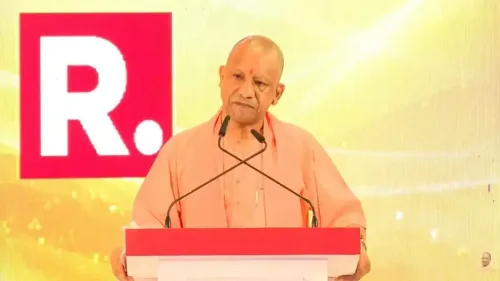
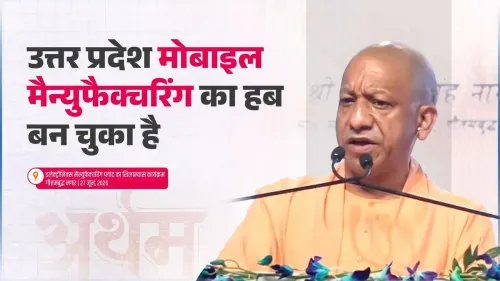
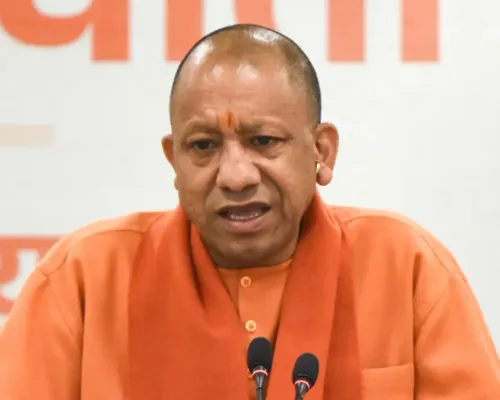
Every one of Uttar Pradesh's 75 districts now ships a signature product to the world — and Chief Minister Yogi Adityanath wants the country to notice. Speaking on Thursday, 5 November 2026, the Chief Minister's Office of Uttar Pradesh quoted him directly, claiming that the state's One District One Product (ODOP) programme has driven exports worth ₹2 lakh crore, a figure that frames the decade-old industrial backwater as a serious export engine.
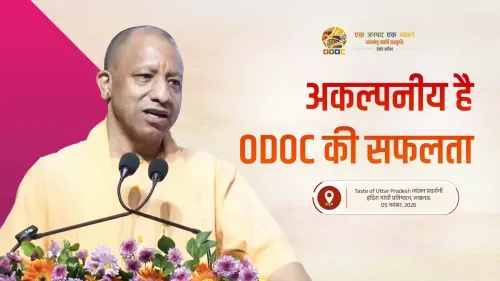
In his remarks, CM Yogi Adityanath said: 'Aaj Uttar Pradesh ke sabhi 75 janapadon ke apne-apne vishisht utpaad hain' — 'Today, every one of Uttar Pradesh's 75 districts has its own unique product. We connected these products with technology, provided them market access, and built their branding. The result: UP today exports products worth ₹2 lakh crore through ODOP.' The statement lands as a report card, not a promise.
From Lucknow Chikankari to Agra Leather — the 75-District Grid
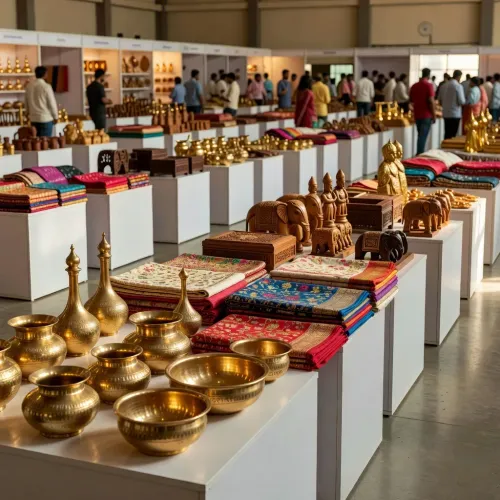
ODOP was formally launched by the Uttar Pradesh government in January 2018, mapping each of the state's 75 districts to a defining local craft or manufactured good — think Varanasi's silk, Moradabad's brassware, Agra's footwear, Firozabad's glasswork. The logic was deliberate: instead of funnelling investment into a handful of large industrial corridors, the state would deepen value at the source, where artisans and micro-manufacturers already lived and worked.
From 2019 onward, the government layered in GI tagging and e-commerce platform integration, giving district producers legal protection for their products and a digital storefront for national and global buyers. That combination — heritage authentication plus modern market reach — is the structural story behind the export claim.
ODOP's Place in India's Wider Export Architecture
ODOP is not an isolated scheme. It runs parallel to central initiatives like Make in India and the national push for Geographical Indications, both aimed at capturing more value-added exports rather than raw commodity shipments. What makes the UP version distinctive is scale: 75 simultaneous product clusters, each with a designated branding and market-access plan, represents one of the most geographically distributed manufacturing pushes by any Indian state government.
The principal beneficiaries are local artisans, MSME exporters, and district-level producers — a constituency that sits outside the organised corporate sector but generates significant employment. If the ₹2 lakh crore figure holds to scrutiny, it would position UP as a genuinely consequential player in India's export diversification story.
The next test is transparency: official quarterly and annual ODOP export data, and whether the scheme expands into new product categories, will determine whether Thursday's headline becomes a durable milestone or a talking point.
Point of View
If verified, would mark ODOP's transformation from a district-branding exercise into a structurally significant trade programme — a rebuttal to the perception that UP's economy is driven primarily by agricultural distress. For CM Yogi, the claim serves a dual purpose: it reinforces his 'business-friendly UP' narrative ahead of any electoral cycle, and positions the state as proof that decentralised MSME clusters can outperform concentrated industrial corridors. The GI-tagging and e-commerce integration layer is the genuinely interesting policy innovation here, as it mimics how premium agri-export models work in Maharashtra and Kerala but applies it to handicrafts at scale. Scrutiny of the export methodology — whether the figure captures FOB value, domestic invoicing, or platform GMV — will be the real test of how durable this headline is.
NationPress
5 Nov 2026
Frequently Asked Questions
What is the ODOP scheme in Uttar Pradesh?
ODOP stands for One District One Product, a Uttar Pradesh government programme launched in January 2018 that identifies a unique product for each of the state's 75 districts and supports it through branding, technology linkage, GI tagging, and market access.
What is the ODOP export figure announced by CM Yogi?
CM Yogi Adityanath claimed that UP exports products worth ₹2 lakh crore through the ODOP programme, crediting technology integration, market access, and branding for the achievement.
Which districts and products are covered under UP's ODOP?
All 75 districts of Uttar Pradesh are covered. Examples include Varanasi's silk , Moradabad's brassware , Agra's leather footwear , Firozabad's glasswork , and Lucknow's Chikankari embroidery , each mapped to the district's traditional craft or industry.
How does ODOP connect to GI tagging and e-commerce?
From 2019 onward , the UP government integrated ODOP products with Geographical Indication (GI) tagging for legal brand protection and listed them on e-commerce platforms to give artisans and MSME exporters direct access to national and global buyers.
Who benefits from the UP ODOP programme?
The primary beneficiaries are local artisans, MSME exporters, and district-level producers across Uttar Pradesh — small-scale manufacturers and craftspeople who operate outside the organised corporate sector but form a large part of the state's employment base.