Kishan Reddy Hails UNESCO MOWCAP Nod for Rajtarangini, Mahabharata, Arthashastra
Synopsis
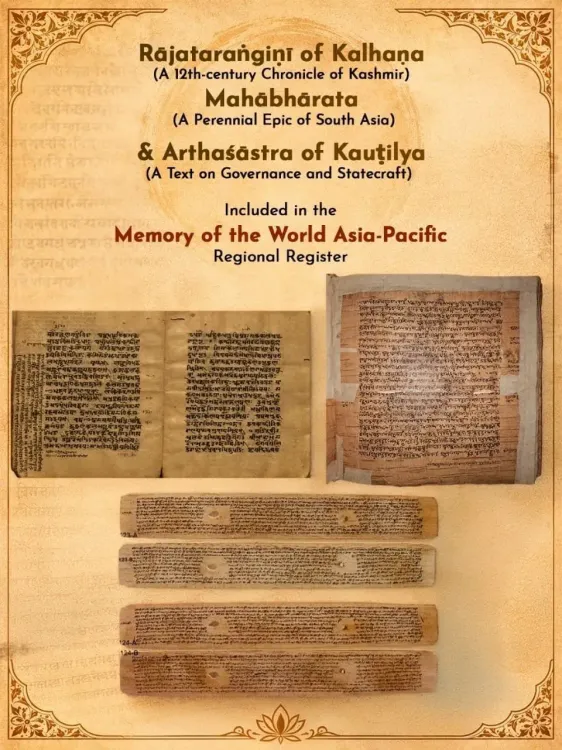
UNESCO's MOWCAP Regional Register has included Kalhaṇa's Rājataraṅgiṇī, the Mahābhārata, and Kauṭilya's Arthaśāstra. Union Minister G. Kishan Reddy hailed the recognition as a vindication of PM Modi's 'Vikas Bhi, Virasat Bhi' vision, linking India's development agenda to the global preservation of its classical intellectual heritage.
Key Takeaways
The Mahābhārata , Kauṭilya's Arthaśāstra , and Kalhaṇa's Rājataraṅgiṇī have been inscribed on the UNESCO MOWCAP Asia-Pacific Regional Register.
Kishan Reddy described the development as 'a moment of immense pride' for India's civilisational heritage.
The recognition aligns with PM Narendra Modi 's 'Vikas Bhi, Virasat Bhi' framework linking modern progress with heritage preservation.
India has pursued UNESCO Memory of the World nominations systematically since 2014 ; the Rigveda was inscribed on the international register in 2005 .
MOWCAP inscription opens a pathway to escalation onto the full UNESCO Memory of the World International Register .
The three texts represent India's contributions to epic literature, statecraft , and historiography respectively.
Three of India's most consequential ancient texts — Kalhaṇa's Rājataraṅgiṇī, the Mahābhārata, and Kauṭilya's Arthaśāstra — have secured a place on UNESCO's Memory of the World Committee for Asia and the Pacific (MOWCAP) Regional Register, earning a formal global acknowledgment of their civilisational weight. Union Coal and Mines Minister G. Kishan Reddy celebrated the development on 5 November 2026, calling it 'a moment of immense pride for India's rich civilisational heritage.'
Three texts, three traditions — one defining recognition
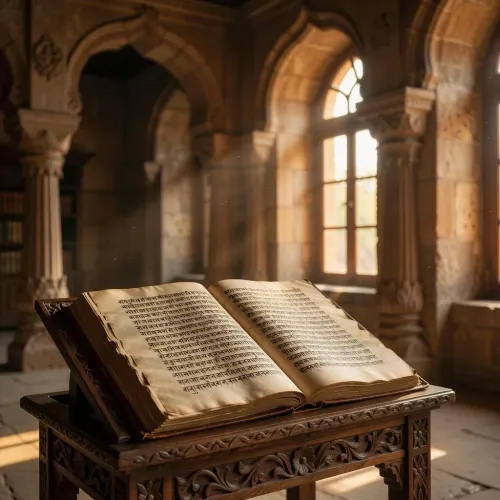
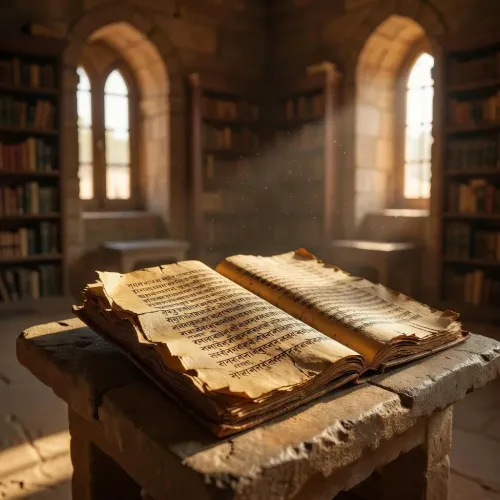
The three works span very different registers of human thought. The Mahābhārata, among the longest epic poems in world literature, is a cornerstone of Indian philosophy, ethics, and narrative tradition. Kauṭilya's Arthaśāstra — a treatise on statecraft, economic policy, and military strategy composed roughly in the 4th century BCE — is frequently compared to Machiavelli's The Prince for its unflinching analysis of governance. Kalhaṇa's Rājataraṅgiṇī, the 12th-century chronicle of Kashmir's kings, stands as one of the earliest examples of systematic historical writing in the subcontinent. Together, they represent literature, statecraft, and historiography — three pillars on which India's classical intellectual identity rests.
India's cultural diplomacy playbook, entry by entry
This recognition is not a one-off event. Since 2014, the Government of India has systematically pursued UNESCO Memory of the World nominations for ancient Indian manuscripts as part of a deliberate cultural diplomacy strategy. The Rigveda entered the international Memory of the World Register as far back as 2005; the current MOWCAP inscription adds to a growing regional portfolio. The logic is consistent: anchor India's contemporary global influence to the depth of its civilisational record, not just its economic trajectory.
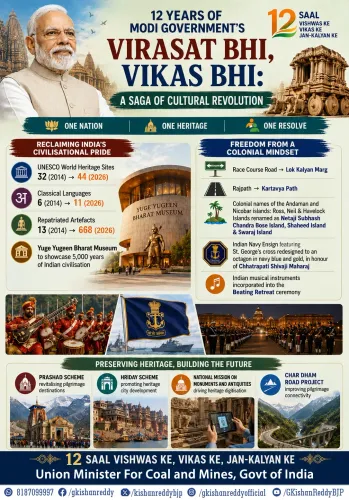
Minister Reddy framed the moment explicitly through Prime Minister Narendra Modi's governing philosophy of 'Vikas Bhi, Virasat Bhi' — 'Development as well as Heritage' — a formulation the central government has used to position cultural preservation as inseparable from India's modernisation agenda. The slogan has been applied to everything from the restoration of ancient temples to the promotion of classical performing arts, and now extends to documentary heritage on a multilateral stage.
MOWCAP register and the road to international inscription
MOWCAP — the Memory of the World Committee for Asia and the Pacific — is UNESCO's regional arm responsible for safeguarding documentary heritage across a zone spanning some of the world's oldest manuscript traditions. Inscription on the MOWCAP Regional Register is both a mark of significance and a stepping stone: entries that demonstrate exceptional universal value can be escalated to the full UNESCO Memory of the World International Register, placing them in the same canon as the Magna Carta and Anne Frank's diary. That is now a live possibility for all three Indian texts.
For historians and heritage bodies, the recognition matters beyond symbolism. MOWCAP inscription encourages digitisation, multilingual access, and conservation cooperation — practical outcomes that make ancient knowledge more durable in an era when manuscripts face deterioration, dispersal, and neglect.
India's ancient texts have just been handed a stage that billions of people's institutions built. The question now is how far New Delhi pushes to carry them from a regional register to the world's.
Point of View
Virasat Bhi' slogan, the BJP government reinforces a domestic political narrative that positions heritage pride as a pillar of the development story, not a distraction from it. The move also sets up a natural next campaign: a push to elevate these three entries from the regional register to the full international register, which would place them alongside the world's most recognised documentary milestones. How India manages that escalation — and whether it broadens the coalition of scholars and institutions behind future nominations — will determine whether this moment becomes a one-cycle headline or a durable plank of cultural statecraft.
NationPress
6 Nov 2026
Frequently Asked Questions
What is the UNESCO MOWCAP register?
MOWCAP stands for the Memory of the World Committee for Asia and the Pacific, UNESCO's regional body that recognises and helps preserve significant documentary heritage across the Asia-Pacific zone. Inscription on its register signals that a document or collection holds outstanding regional value and encourages conservation and wider access.
Which Indian texts were included in the MOWCAP register?
The three texts recognised are the Mahābhārata (epic literature and philosophy), Kauṭilya's Arthaśāstra (statecraft and governance), and Kalhaṇa's Rājataraṅgiṇī (12th-century historical chronicle of Kashmir).
What does 'Vikas Bhi, Virasat Bhi' mean?
'Vikas Bhi, Virasat Bhi' translates to 'Development as well as Heritage.' It is PM Narendra Modi's governing formulation that presents cultural preservation and modern economic progress as complementary rather than competing national priorities.
Is the Mahabharata already on the UNESCO international Memory of the World register?
The Mahābhārata's inclusion in the MOWCAP Asia-Pacific regional register is the current recognition. The full UNESCO Memory of the World International Register — which previously included India's Rigveda (2005) — is a separate, higher-tier inscription, and these entries could be nominated for it in future.
Why is the Arthashastra considered significant for world heritage?
Kauṭilya's Arthaśāstra, composed around the 4th century BCE , is one of the world's earliest systematic texts on statecraft, economic administration, and military strategy. Scholars worldwide study it alongside Greek and later European political philosophy, making its documentary preservation a matter of global intellectual interest.