CEA Nageswaran: Free utility services carry a hidden economic cost
Synopsis
India’s top economic advisor has put a number on the word ‘free’ — and it isn’t zero. V Anantha Nageswaran’s blunt warning at the CII Tamil Nadu Infrastructure Summit 2026 that below-cost utility pricing harms the very people it claims to protect is a direct challenge to a political consensus that has made subsidised services an electoral staple across party lines.
Key Takeaways
CEA V Anantha Nageswaran cautioned against free or below-cost utility pricing at the CII Tamil Nadu Infrastructure Summit 2026 on 3 August 2026 .
He argued the cost of ‘free’ services is always borne — by users, taxpayers, or through infrastructure neglect.
Zero-priced water encourages overconsumption and leaves households without piped access paying significantly higher rates to private suppliers.
Nageswaran called for ‘honest pricing’ to fund infrastructure maintenance, attract long-term investment, and enable targeted support for the vulnerable.
He cited India’s GDP growth of 7.7 per cent and rising capital expenditure but warned that public spending alone cannot sustain growth indefinitely.
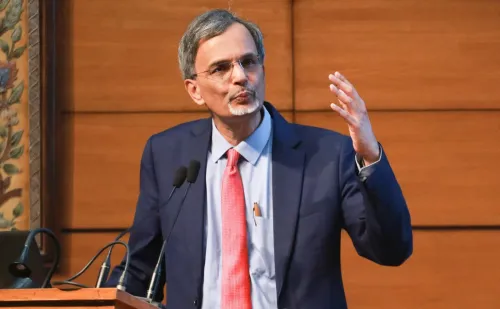
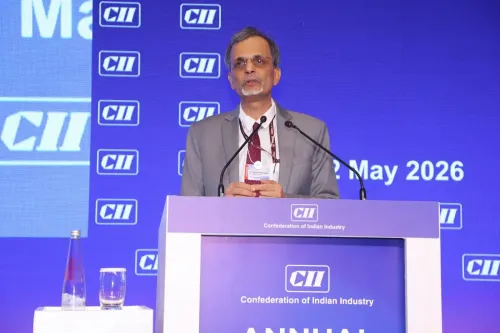
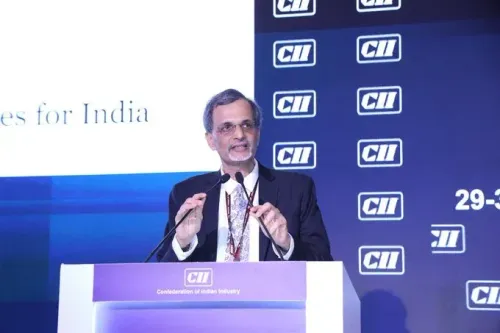
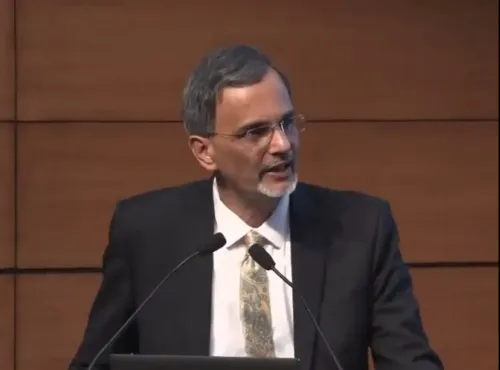
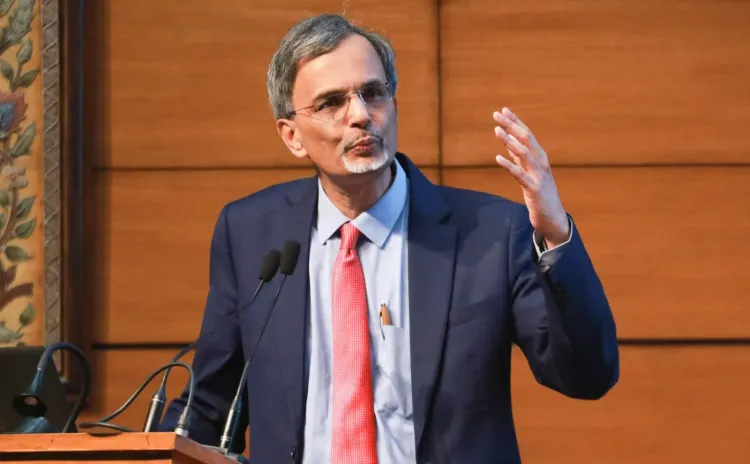
Chief Economic Advisor V Anantha Nageswaran on Monday, 3 August 2026 warned that below-cost pricing of public utilities and infrastructure creates deep economic distortions — ultimately burdening taxpayers, eroding asset quality, and leaving the most vulnerable citizens underserved. He made the remarks at the CII Tamil Nadu Infrastructure Summit 2026 in New Delhi.
The Core Argument
“Free is the most expensive word in public policy,” Nageswaran said, encapsulating his central thesis. He argued that every public service carries a real cost, and that cost is invariably borne by someone — either users through tariffs, the broader public through subsidies, or society at large through the neglect and deterioration of infrastructure assets.
Building infrastructure on the promise of below-cost services, he said, is inherently contradictory: the revenue shortfall that results from underpricing directly undermines the capacity to maintain and expand the very networks that citizens depend on.
Who Really Bears the Burden
Nageswaran challenged the widely held assumption that underpricing utilities functions as an effective social safety net. Such policies, he argued, disproportionately benefit households that already have access to services, while the most economically vulnerable segments remain underserved.
He cited the case of water pricing as a pointed illustration: households without access to piped water frequently purchase water from private suppliers at rates significantly higher than standard utility charges. Zero-priced or heavily subsidised piped water, in effect, subsidises connected households while unconnected ones pay a steep market premium.
Pricing essential services at zero, he further noted, encourages overconsumption and waste — consumers begin treating scarce resources as unlimited, compounding supply pressures over time.
The Case for Honest Pricing
The CEA made the case for what he called ‘honest pricing’: setting tariffs that reflect the true economic cost of service delivery, while using the resulting fiscal headroom to provide targeted support to genuinely vulnerable groups. This approach, he argued, would allow utilities to generate sufficient revenue to maintain existing infrastructure and fund expansion — a prerequisite for attracting long-term private investment.
Nageswaran stressed that sustainable pricing is also critical for drawing institutional capital into infrastructure financing, a sector that India needs to scale significantly to support its growth ambitions.
India’s Growth Context
Situating his remarks within India’s broader economic trajectory, Nageswaran highlighted the country’s GDP growth of 7.7 per cent and a sharp rise in government capital expenditure as signs of underlying resilience. However, he cautioned that public spending alone cannot sustain growth indefinitely — a signal that the Centre must create conditions for private and institutional capital to step in, including through credible utility pricing frameworks.
What This Signals for Policy
The remarks carry weight given Nageswaran’s role as the government’s principal economic voice. They arrive at a time when several state governments have expanded free or heavily subsidised utility schemes — a practice that has drawn periodic scrutiny from fiscal watchdogs and the Reserve Bank of India. Whether the Centre translates this advisory position into concrete policy guidance on state-level freebies remains to be seen.
Point of View
Across party lines. The fiscal math he outlines is not new: the RBI and successive finance commissions have flagged the same risks. What is notable is the timing and platform — a national infrastructure summit where the audience is precisely the private capital India needs to crowd in. The harder question his remarks leave unanswered is what the Centre intends to do about it: advisory caution from the CEA is not the same as a policy directive to states. Until pricing reform is tied to fiscal transfer conditions or GST devolution criteria, the warning risks remaining exactly that.
NationPress
18 Sept 2026
Frequently Asked Questions
What did CEA V Anantha Nageswaran say about free utility services?
Nageswaran warned that below-cost or free utility pricing creates economic distortions that are ultimately paid for by taxpayers, subsidies, or deteriorating infrastructure. Speaking at the CII Tamil Nadu Infrastructure Summit 2026, he said ‘free is the most expensive word in public policy.’
Why does Nageswaran argue that free utilities hurt the poor most?
He argued that subsidised utility schemes typically benefit households already connected to service networks, while the most vulnerable — who lack piped water or grid access — end up buying from private suppliers at rates far higher than standard utility charges. The subsidy, in effect, bypasses those who need it most.
What is ‘honest pricing’ as described by the CEA?
Honest pricing refers to setting tariffs that reflect the true economic cost of delivering a service. Nageswaran argued this approach would allow utilities to maintain and expand infrastructure while freeing up fiscal space for targeted support to genuinely vulnerable groups.
How does this relate to India’s current economic performance?
Nageswaran acknowledged India’s GDP growth of 7.7 per cent and rising government capital expenditure, but cautioned that public spending alone cannot drive growth indefinitely. Sustainable infrastructure financing requires credible pricing frameworks that attract long-term private and institutional investment.
Which forum did Nageswaran make these remarks at?
He spoke at the CII Tamil Nadu Infrastructure Summit 2026, held on 3 August 2026, where infrastructure financing and public policy were among the central themes.