Khet Bachao Abhiyan: Centre urges Bengal farmers to cut chemical fertilisers
Synopsis
The Centre's Khet Bachao Abhiyan reached West Bengal on 10 November, with Agriculture MoS Ram Nath Thakur directly appealing to North 24 Parganas farmers to slash chemical fertiliser use. Running nationwide from 22 October to 30 November, the campaign targets soil restoration and farmer prosperity — framing organic farming not as a niche choice but as a national agricultural imperative.
Key Takeaways
Union MoS for Agriculture Ram Nath Thakur addressed farmers at Subhasnagar, Swarupnagar block, North 24 Parganas on 10 November 2026 .
The event was part of the nationwide Khet Bachao Abhiyan , running from 22 October to 30 November to promote sustainable rabi-season farming.
Thakur urged farmers to shift to organic fertilisers and pesticides and reduce chemical fertiliser use to protect soil health.
Farmers were encouraged to use soil health cards for informed, need-based fertiliser application.
Krishi Vigyan Kendras (KVKs) were highlighted as key support structures for the transition to natural farming.
The campaign aligns with the Centre's broader National Mission on Natural Farming and its goal to protect agricultural land for future generations.
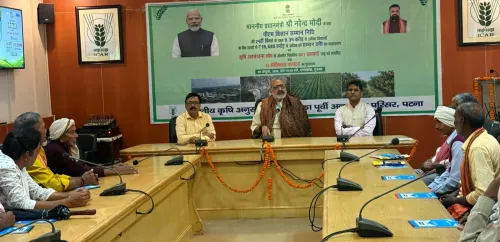
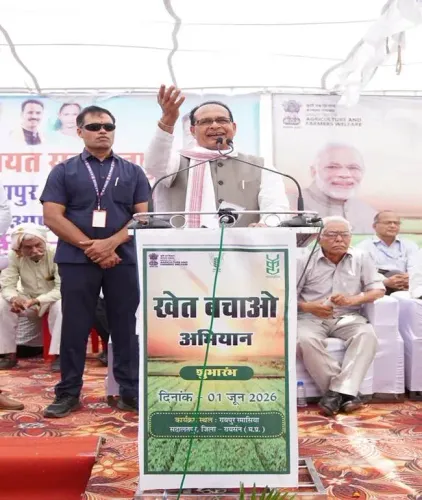
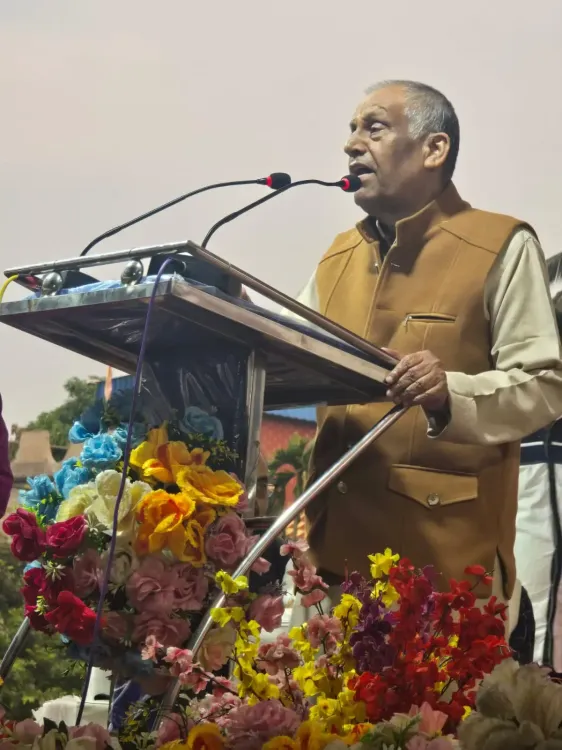
Union Minister of State for Agriculture Ram Nath Thakur on Tuesday, 10 November 2026, addressed farmers in West Bengal's North 24 Parganas district, urging them to reduce dependence on chemical fertilisers and embrace natural farming practices as part of the Centre's nationwide Khet Bachao Abhiyan. The event, organised by ICAR-National Institute of Natural Fibre Engineering and Technology (ICAR-NINFET) at Subhasnagar in Swarupnagar block, brought together cultivators from across the region to reinforce the government's push for sustainable agriculture ahead of the rabi season.
What the Minister Said
Addressing the gathering, Thakur called on farmers to return to natural processes of cultivation — including the use of organic fertilisers and organic pesticides — to restore and maintain soil health. He highlighted natural farming as a critical approach to preserving soil fertility, improving ecological balance, and ensuring long-term agricultural productivity.
The Minister also stressed the importance of treating soil as a living resource, warning against excessive and indiscriminate use of chemical inputs. He encouraged farmers to adopt need-based agricultural input management and to make full use of soil health cards for informed fertiliser decisions and improved nutrient-use efficiency.
Role of Science and Technology
Beyond the return to natural methods, Thakur urged farmers to adopt climate-resilient agricultural techniques, scientific innovations, and modern technologies to future-proof their livelihoods. He pointed to Krishi Vigyan Kendras (KVKs) as key enablers in this transition, noting their role in delivering technical guidance, practical demonstrations, and extension services to help farmers shift toward sustainable practices.
About Khet Bachao Abhiyan
The Khet Bachao Abhiyan — launched nationwide from 22 October to 30 November — is the Centre's campaign to promote healthy crops, sustainable agriculture, and farmer prosperity during the rabi season. The programme at Swarupnagar reinforced this message, underscoring the Union government's commitment to protecting agricultural land, restoring soil health, and reducing over-reliance on synthetic chemical inputs.
Notably, West Bengal is one of India's largest agricultural states, making farmer outreach here particularly significant to the campaign's national reach. This is consistent with a broader Central government emphasis on natural farming that has been gaining policy momentum since the launch of the National Mission on Natural Farming.
What It Means for Farmers
The Centre's message directly targets the environmental and economic costs of heavy chemical fertiliser use — including soil degradation, groundwater contamination, and rising input costs that squeeze farm incomes. By promoting organic alternatives and soil health monitoring, the initiative aims to protect both the productivity and long-term viability of India's farmland for present and future generations.
Point of View
Rather than a state body, reflects that dynamic. More broadly, the natural farming push faces a credibility gap: transitioning from chemical to organic inputs often causes short-term yield dips that smallholders cannot afford to absorb without direct income support. Until the Centre pairs its messaging with concrete financial buffers for the transition period, the campaign risks remaining aspirational rather than actionable for the farmers it most needs to reach.
NationPress
11 Nov 2026
Frequently Asked Questions
What is the Khet Bachao Abhiyan?
The Khet Bachao Abhiyan is a nationwide campaign launched by the Union government from 22 October to 30 November to promote natural farming, soil health restoration, and sustainable agriculture during the rabi season. It aims to reduce excessive dependence on chemical fertilisers and encourage organic farming practices for long-term farmer prosperity.
What did MoS Ram Nath Thakur say to West Bengal farmers?
Ram Nath Thakur urged farmers at Swarupnagar in North 24 Parganas to return to natural farming, use organic fertilisers and pesticides, and reduce chemical fertiliser use to maintain soil health. He also encouraged the adoption of climate-resilient techniques and the use of soil health cards for informed fertiliser application.
What role do Krishi Vigyan Kendras play in this initiative?
Krishi Vigyan Kendras (KVKs) have been identified as frontline institutions to support the shift to natural farming by providing technical guidance, practical demonstrations, and extension services to farmers. They serve as the local delivery mechanism for the Centre's natural farming outreach.
Why is reducing chemical fertiliser use important for Indian agriculture?
Excessive use of chemical fertilisers degrades soil health, reduces long-term fertility, contaminates groundwater, and raises input costs for farmers. The government's natural farming push aims to reverse these trends and ensure agricultural sustainability for present and future generations.
Who organised the event in West Bengal and where was it held?
The event was organised by ICAR-National Institute of Natural Fibre Engineering and Technology (ICAR-NINFET) at Subhasnagar in the Swarupnagar block of West Bengal's North 24 Parganas district on 10 November 2026.