Is China Planning to Impose Rare Earth Export Restrictions on Japan?
Click to start listening
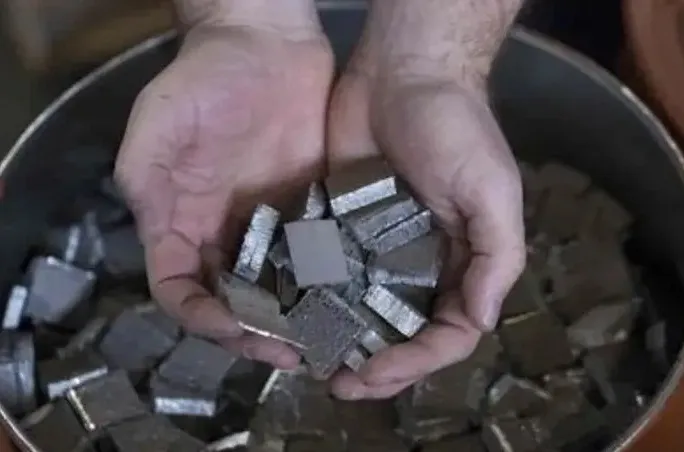
Synopsis
As tensions rise between China and Japan, the possibility of rare earth export restrictions looms, prompting serious concerns among Japanese businesses and policymakers. This situation mirrors past events and highlights the ongoing geopolitical dynamics that could reshape global supply chains.
Key Takeaways
- China may impose restrictions on rare earth exports to Japan.
- These materials are crucial for modern technologies.
- Historically, China has used rare earth exports as leverage in disputes.
- Japan is currently dependent on China for heavy rare earths.
- Long-term restrictions could significantly impact the Japanese economy.
New Delhi, Jan 8 (NationPress) The escalating tensions between China and Japan have taken a new turn as Beijing hinted at potential restrictions on rare earth material exports to Japan. This has raised serious alarms among Japanese business sectors and policymakers, as reported.
China’s Ministry of Commerce announced an impending ban on all 'dual-use' items to Japan, citing reasons related to national security, as reported by The New York Times.
These dual-use products are capable of serving both civilian and military functions. Although the official statement did not specify the items in question, state-affiliated media have indicated that rare earth elements might be part of these restrictions.
As per China Daily, authorities in China are contemplating more stringent checks on export licenses for medium and heavy rare earths.
These materials are essential for a wide array of modern technologies, including electric vehicle motors, electronic devices, and advanced defense systems.
Following the announcement, a former editor from the state-linked Global Times cautioned on social media that halting rare earth shipments could adversely impact numerous industries.
He emphasized that no possibilities should be excluded, which has contributed to increasing market anxiety.
For Japan, this warning revives memories of the 2010 incident when China covertly ceased rare earth exports amid a territorial disagreement with Japan.
Even though no formal prohibition was declared at that time, the move severely disrupted Japanese industries and sent shockwaves through the economy.
Experts speculate that China may not enforce a complete ban this time but could instead slow down exports via prolonged screening processes.
Yoshikiyo Shimamine, a senior fellow at the Dai-ichi Life Research Institute, noted that China could implement rigorous checks to prevent the military use of rare earths, effectively creating an informal export ban, as reported by NYT.
Shimamine highlighted that rare earths represent the most significant economic risk among the items subject to China’s dual-use controls due to their crucial role in various industries, particularly in Japan’s automotive sector.
He cautioned that extended restrictions could severely impact the Japanese economy.
China has already disrupted global supply chains in recent years by tightening its controls over rare earth exports.
These actions have compelled nations like the United States and the European Union to seek alternative sources and lessen their reliance on China.
Historically, China’s dominance in rare earths has also been leveraged in trade and technological disputes.
Japan has been striving for the last 15 years to diminish its dependency on Chinese rare earths.
Its reliance has decreased to about 60–70 percent today, down from nearly 90 percent in 2010.
Nonetheless, China still dominates global production, leaving Japan almost entirely dependent on China for heavy rare earths like dysprosium and terbium, which are vital for high-performance motors and advanced technologies.
Point of View
It is essential to monitor the evolving dynamics between China and Japan, particularly as they pertain to rare earth materials. The implications for global supply chains and economic stability cannot be understated, and a balanced approach is necessary to navigate these complex relations.
NationPress
09/01/2026
Frequently Asked Questions
What are rare earth materials?
Rare earth materials are a group of 17 elements essential for various high-tech applications, including electronics, renewable energy, and military technologies.
Why is China important in the rare earth market?
China currently dominates the global supply of rare earth materials, controlling a significant percentage of production and exports.
How could export restrictions affect Japan?
Restrictions on rare earth exports could disrupt Japanese industries, particularly in technology and automotive sectors, leading to economic repercussions.
What is the historical context of rare earth exports from China to Japan?
In 2010, China suspended rare earth exports to Japan during a territorial dispute, causing significant disruptions in Japanese industries.
What measures is Japan taking to reduce its reliance on China for rare earths?
Japan has been working to diversify its sources of rare earth materials, decreasing its dependency from nearly 90% in 2010 to around 60-70% today.