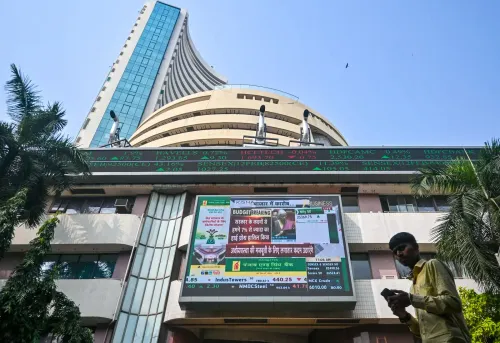
Crude oil prices biggest market headwind: Kotak Securities expert

Synopsis
Kotak Securities' equity research head warns that crude oil prices near $105–$110 per barrel, combined with surging US Treasury yields across 10-, 20-, and 30-year maturities and relentless FII selling, are set to keep Indian equities range-bound. The triple headwind — energy costs, debt-market competition, and currency pressure — creates a compounding challenge for import-dependent emerging economies like India.
Key Takeaways
Chouhan of Kotak Securities identified rising crude oil prices as the biggest current headwind for financial markets.
Crude prices rose by approximately $2–$3 per barrel over the weekend; sustained levels of $105–$110 per barrel could deepen the global economic impact.
US bond yields across 10-year , 20-year , and 30-year maturities surged last week, approaching what Chouhan called 'exceptional levels'.
Higher developed-market bond returns are driving FII outflows from emerging markets, including India, toward safer US and Japanese debt.
Indian equity markets are expected to remain range-bound in the near term amid these compounding global headwinds.
Rising crude is also weakening currencies across energy-import-dependent economies, adding another layer of pressure.
Rising crude oil prices have become the single largest threat to financial markets, with Shrikant S. Chouhan, Head of Equity Research at Kotak Securities, warning on Monday, 18 May that the combination of elevated energy costs, surging bond yields, and persistent foreign fund outflows is creating a challenging environment for equities globally and in India.
Crude Prices Climb Further
Chouhan noted that crude oil prices have shown no signs of relief, having risen by approximately $2–$3 per barrel over the preceding weekend alone. He cautioned that if prices sustain in the $105–$110 per barrel range, the impact on the broader global economy could intensify significantly. 'As long as crude prices remain high, inflation concerns will continue to dominate global markets,' he said.
Bond Yields Surge to Exceptional Levels
A direct consequence of persistent inflationary pressure, according to Chouhan, is the sharp rise in US bond yields. He pointed to a significant surge last week across 10-year, 20-year, and 30-year US Treasury maturities. 'These bond yields are now moving towards exceptional levels. Whenever such a trend emerges, bond markets start attracting large investments,' he said. Higher returns on developed-market debt typically draw capital away from riskier emerging-market assets, including Indian equities.
FII Outflows and Pressure on Indian Markets
Chouhan linked persistent selling by foreign institutional investors (FIIs) directly to rising global uncertainty and elevated crude oil prices. As global investors rotate towards safer instruments in markets such as the United States and Japan, emerging economies face the dual pressure of capital outflows and currency depreciation. He noted that higher crude prices are already weakening currencies across import-dependent economies. Against this backdrop, he expects Indian equity markets to remain range-bound in the near term.
The Compounding Effect on Emerging Economies
The stress is not limited to equity valuations. Chouhan highlighted that energy-import-dependent nations — a category that includes India — face a compounding challenge: costlier crude widens the current account deficit, weakens the domestic currency, and pushes up domestic inflation simultaneously. This comes amid an already fragile global macro environment, where central banks in developed markets are maintaining a hawkish posture. Notably, this is not the first time crude-driven volatility has rattled Indian markets; similar dynamics played out during the 2022 energy price surge following geopolitical disruptions.
What Markets Are Watching Next
'The combination of expensive crude oil, rising bond yields and continued foreign fund outflows is creating a challenging environment for equity markets globally as well as in India,' Chouhan noted. Market participants will be closely tracking any movement in crude benchmarks, the trajectory of US Treasury yields, and weekly FII flow data for signals on whether the pressure eases or deepens in the sessions ahead.
Point of View
A currency shock, and an FII deterrent. What makes the current episode more dangerous than past cycles is the confluence — elevated crude is arriving alongside, not before, a US bond yield surge, compressing the window for any single corrective measure to work. Indian policymakers have limited tools: the RBI cannot cut rates while inflation is crude-driven, and fiscal intervention on fuel prices has a direct cost to the deficit. The range-bound equity call may prove optimistic if crude holds above $110 for an extended period.
NationPress
27 Sept 2026
Frequently Asked Questions
Why are rising crude oil prices a threat to Indian equity markets?
Rising crude oil prices fuel inflation, which pushes up bond yields globally and makes developed-market debt more attractive than emerging-market equities. This triggers FII outflows from India, weakens the rupee, and widens the current account deficit — all of which pressure Indian stocks.
What level of crude oil prices is considered critical for the global economy?
According to Kotak Securities' Shrikant Chouhan, sustained crude prices in the $105–$110 per barrel range could begin to reflect more strongly on the global economy, amplifying the existing pressures on inflation and growth.
How are US bond yields affecting Indian markets?
US Treasury yields across 10-year, 20-year, and 30-year maturities surged last week to what Chouhan described as 'exceptional levels.' Higher US yields attract global capital away from riskier emerging-market assets, leading to FII selling in Indian equities.
What is the near-term outlook for Indian equity markets?
Kotak Securities expects Indian equity markets to remain range-bound in the near term, given the triple headwind of elevated crude oil prices, rising global bond yields, and persistent FII outflows.
Which economies are most vulnerable to the current crude oil price surge?
Emerging economies that are heavily dependent on energy imports — including India — are most exposed. Higher crude prices widen their trade deficits, weaken domestic currencies, and stoke inflation, compounding the impact of global capital outflows.