Shivraj announces Krishi Vigyan Kendra for Ichhawar
Synopsis
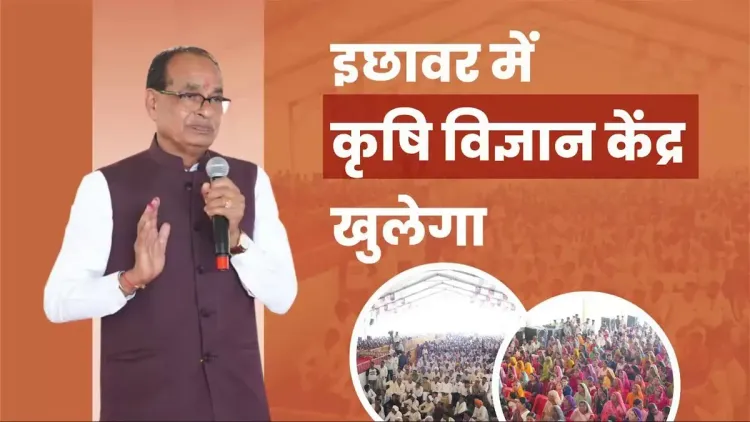
Union Agriculture Minister Shivraj Singh Chouhan announced a Krishi Vigyan Kendra for Ichhawar in Sehore district, Madhya Pradesh. The ICAR-run centre will provide farm training, crop demonstrations and technology transfer to local farmers.
Key Takeaways
Union Agriculture Minister Shivraj Singh Chouhan announced a Krishi Vigyan Kendra (KVK) for Ichhawar , Sehore district, Madhya Pradesh on 27 September 2026 .
KVKs are district-level farm extension hubs run by ICAR , offering training, soil testing, crop demonstrations and scheme guidance to farmers.
The first KVK in India was established in 1974 at Puducherry ; the network has since expanded to hundreds of districts.
Ichhawar is in Sehore district , a predominantly agrarian area where wheat, soybean and chickpea are key crops.
Funding details, staffing and the inauguration timeline are expected via ICAR or state agriculture department announcements.
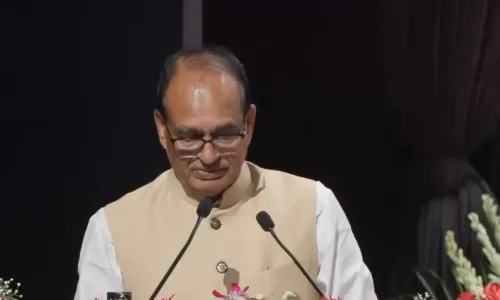
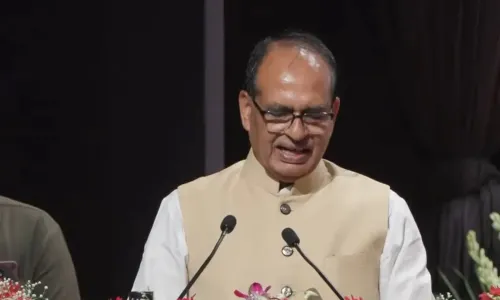
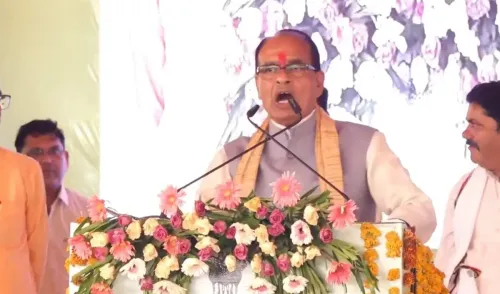
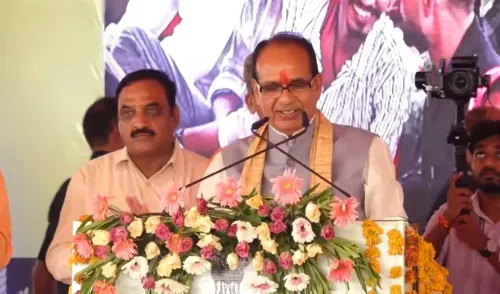
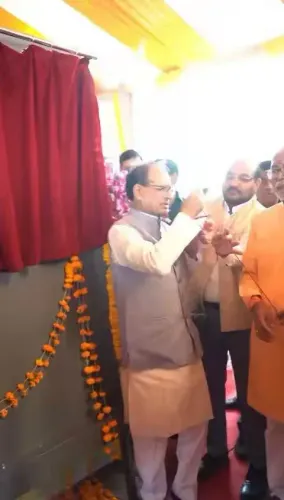
A farming town in the heart of Madhya Pradesh is about to get a direct line to agricultural science. Union Agriculture Minister Shivraj Singh Chouhan announced on Sunday, 27 September 2026 that a Krishi Vigyan Kendra (KVK) will be established in Ichhawar, a town in Sehore district, bringing government-backed farm research and training to farmers' doorsteps in one of his former strongholds.
Addressing farmers directly — 'mere kisan bhaion' ('my farmer brothers') — Chouhan framed the announcement as a commitment to the agricultural community of Ichhawar. The KVK network, run by the Indian Council of Agricultural Research (ICAR), is the country's primary mechanism for translating laboratory research into practical, field-level guidance for farmers.
What a KVK actually does for a farming district
Krishi Vigyan Kendras are district-level agricultural extension hubs that provide hands-on training, crop demonstrations, soil testing, and technology transfer to farmers. The concept was born in 1974, when ICAR established the first KVK at Puducherry — a model that has since been replicated across hundreds of districts nationwide. For small and marginal farmers who lack access to agronomists or modern inputs, a local KVK can be transformative.
Sehore district, where Ichhawar sits, is predominantly agrarian, with wheat, soybean and chickpea forming the backbone of its farm economy. A dedicated KVK would give local farmers structured access to improved seed varieties, pest management guidance, and government scheme counselling — services previously requiring travel to the district headquarters or beyond.
Chouhan's political and agricultural footprint in Sehore
Ichhawar falls within a region Chouhan knows intimately. As four-term Chief Minister of Madhya Pradesh, he built a political identity closely tied to farmer welfare — earning the nickname 'Mama' among rural constituents. His current portfolio as Union Minister of Agriculture and Farmers Welfare and Rural Development extends that platform to the national stage, and announcements of this kind — a specific facility for a specific town — carry both administrative and political weight in his home state.
The broader push behind this announcement is consistent with Central Government policy: successive administrations have steadily expanded the KVK network to cover more districts, with the Ministry of Agriculture sanctioning new centres as part of efforts to raise farm productivity and rural incomes through on-ground extension services.
The funding allocation, staffing plan, and inauguration timeline for the Ichhawar centre are expected to follow through ICAR or state agriculture department channels. When it opens, it will add one more node to a network that has been quietly rewiring India's agricultural knowledge chain for over five decades.
Point of View
High-visibility rural touch-point that delivers tangible infrastructure. For a minister whose political brand was built on farmer welfare across four terms as Madhya Pradesh CM, telegraphing facility-level benefits directly to constituents on social media is strategic as much as administrative. The Ichhawar announcement also signals continued Central investment in agricultural extension as a pillar of rural income policy, even as debates persist about the adequacy of such services for India's most marginalised small farmers.
NationPress
27 Sept 2026
Frequently Asked Questions
What is a Krishi Vigyan Kendra?
A Krishi Vigyan Kendra (KVK) is a district-level agricultural science centre run by the Indian Council of Agricultural Research (ICAR). It provides farmers with hands-on training, crop demonstrations, soil testing, and access to improved farming technologies and government schemes.
Where is Ichhawar located?
Ichhawar is a town in Sehore district, Madhya Pradesh. It falls within the political base of former Madhya Pradesh Chief Minister and current Union Agriculture Minister Shivraj Singh Chouhan.
When was the first Krishi Vigyan Kendra set up in India?
The first Krishi Vigyan Kendra was established in 1974 at Puducherry by ICAR. The network has since expanded to cover hundreds of districts across the country.
What crops are grown in Sehore district?
Sehore district in Madhya Pradesh is predominantly agrarian, with wheat, soybean and chickpea among its major crops. A new KVK in Ichhawar would provide local farmers better access to research-backed guidance on these and other crops.
When will the Ichhawar KVK open?
As of the announcement on 27 September 2026, the exact inauguration timeline has not been confirmed. Details on funding, staffing and opening are expected through ICAR or the Madhya Pradesh state agriculture department.