CSIR Integrated Skill Initiative Phase III: First-Year Progress Reviewed at Pune Conclave
Synopsis
Thirty-seven CSIR laboratories converged in Pune to review the first year of Phase III of the CSIR Integrated Skill Initiative — a programme that could position India's publicly funded research network as a direct pipeline for industry-ready talent under the Skill India Mission. Five new priority pillars were announced to sharpen focus and accountability.
Key Takeaways
The CSIR Integrated Skill Initiative Phase III first-year progress was reviewed at a two-day conclave in Pune on 8 August 2025 .
Skill Nodal Coordinators from all 37 participating CSIR laboratories presented annual progress reports.
Mohana Krishna Reddy Mudiam , Chairman of the Monitoring Committee, outlined five key priority pillars for the initiative's future direction.
The conclave was hosted by CSIR-HRDC in association with CSIR-NCL, Pune , under the Ministry of Science and Technology .
Leadership emphasised aligning the initiative with the Skill India Mission and positioning India as a global hub for skilled talent.
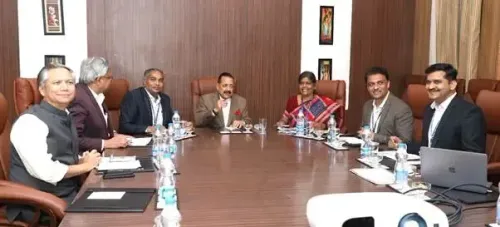
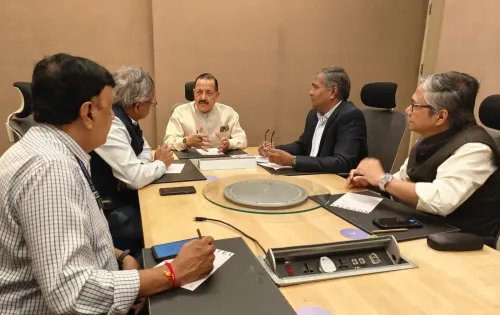
The Council of Scientific and Industrial Research (CSIR) Integrated Skill Initiative held its Coordinators' Conclave-cum-Monitoring Committee Meeting on 8 August 2025 in Pune, bringing together skill nodal coordinators from all 37 participating CSIR laboratories to assess the first-year progress of Phase III of the programme. The two-day event, hosted by CSIR-HRDC in association with CSIR-National Chemical Laboratory (NCL), Pune, was convened under the aegis of the Ministry of Science and Technology, according to an official statement.
What the Conclave Covered
Skill Nodal Coordinators from across the country presented annual progress reports detailing programmes conducted, trainee outreach figures, innovations introduced, challenges encountered, and forward-looking action plans. The structured presentations allowed the Monitoring Committee to conduct a comprehensive cross-laboratory assessment of implementation status. The conclave also served as a platform for sharing best practices and replicable models of skill development across the network.
Key Voices from Leadership
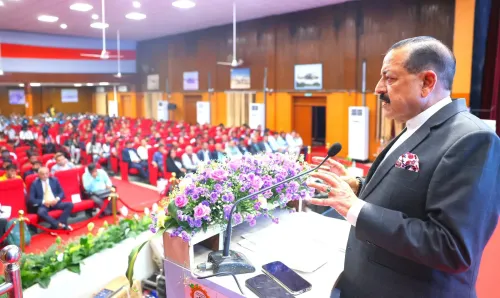
Dr. Mohana Krishna Reddy Mudiam, Director of the Institute of Pesticide Formulation Technology (IPFT), Gurugram, and Chairman of the Monitoring Committee, stressed that skill development is a foundational pillar of nation-building. He outlined five key priority pillars intended to steer the CSIR Integrated Skill Initiative toward a robust, future-ready, and industry-aligned ecosystem.
Dr. Vinay Kumar, Scientist-G and Skill Nodal Principal Investigator at CSIR-HRDC, highlighted the initiative's role in building a nationwide ecosystem capable of producing industry-ready, technology-driven talent. Dr. Ashish Lele, Director of CSIR-NCL, Pune, argued that CSIR is uniquely positioned to advance the Skill India Mission by leveraging its extensive laboratory network and scientific expertise to help establish India as a global hub for skilled professionals.
Dr. T. S. Rana, Head of CSIR-HRDC, Ghaziabad, underscored CSIR's commitment to translating scientific knowledge into digitally enabled, experiential, and innovation-driven skill development solutions.
Why This Initiative Matters
The CSIR Integrated Skill Initiative operates across one of India's largest publicly funded research networks, spanning laboratories in fields ranging from chemicals and pharmaceuticals to materials science and environmental research. Phase III represents a scaling-up of earlier efforts, with the emphasis shifting toward industry alignment and measurable trainee outcomes. This comes amid broader national momentum around the Skill India Mission, which targets skilling hundreds of millions of workers over the coming decade.
Notably, the involvement of 37 laboratories in a single coordinated review underscores the programme's ambition to standardise skill delivery across geographically and thematically diverse institutions — a challenge that earlier phases grappled with.
What Comes Next
The insights and action plans surfaced at the conclave are expected to inform Phase III's trajectory for the remainder of the programme cycle. The Monitoring Committee's cross-laboratory review is designed to ensure that successful models from high-performing laboratories are adopted more broadly, while lagging units receive targeted support. Industry bodies and scientific agencies will be watching whether the initiative translates laboratory expertise into workforce outcomes at scale.
Point of View
The risk of uneven implementation is high. A conclave is a start — accountability mechanisms are what will determine whether Phase III outperforms its predecessors.
NationPress
22 Sept 2026
Frequently Asked Questions
What is the CSIR Integrated Skill Initiative Phase III?
It is the third phase of a structured skill development programme run across CSIR's network of laboratories, aimed at producing industry-ready, technology-driven talent aligned with the Skill India Mission. Phase III focuses on scaling outreach and standardising delivery across all 37 participating laboratories.
What was reviewed at the Pune conclave on 8 August 2025?
The two-day conclave reviewed first-year progress of Phase III, with coordinators from all 37 CSIR laboratories presenting reports on programmes conducted, trainee outreach, innovations, challenges, and future action plans. The Monitoring Committee used these presentations to assess implementation status across the network.
Who are the key officials leading the CSIR Skill Initiative?
Dr. Mohana Krishna Reddy Mudiam, Director of IPFT Gurugram, chairs the Monitoring Committee. Dr. Vinay Kumar of CSIR-HRDC serves as Skill Nodal Principal Investigator, and Dr. Ashish Lele, Director of CSIR-NCL Pune, is among the senior scientific leaders driving the programme.
How does this initiative connect to Skill India?
CSIR aims to leverage its nationwide laboratory network and scientific expertise to contribute directly to the Skill India Mission, helping position India as a global hub for skilled professionals, particularly in science and technology-driven sectors.
What are the five priority pillars announced at the conclave?
The five key priority pillars were outlined by Monitoring Committee Chairman Dr. Mohana Krishna Reddy Mudiam to guide the initiative toward a robust, future-ready, and industry-aligned skill development ecosystem. Specific details of each pillar were not elaborated in the official statement.