How has the CSIR Integrated Skill Initiative trained over 2 lakh workers in India?
Synopsis
Explore how the CSIR Integrated Skill Initiative has empowered over 2 lakh individuals across India, driving skills development and aligning with national objectives. Learn about its phases, targeted programs, and the sectors it covers.
Key Takeaways
Over 2 lakh individuals trained.
5200+ skill-based training programs conducted.
Focus on advanced skilling and bridging academia-industry gaps.
Inclusive access for diverse beneficiaries.
Alignment with national initiatives like ‘Atmanirbhar Bharat’ and ‘Skill India’.
New Delhi, Jan 16 (NationPress) The CSIR Integrated Skill Initiative, a leading national program executed by the Council of Scientific and Industrial Research (CSIR), has successfully provided training to over 2 lakh workers throughout the country, as reported by the Ministry of Science & Technology on Friday.
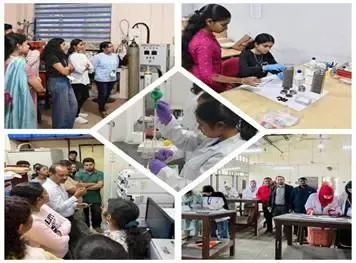
“In the first two phases of the Initiative, over 1.90 lakh individuals received training via more than 5200 skill-based programs, which included specialized initiatives aimed at empowering rural citizens and women,” the Ministry stated.
The third phase of the initiative was formally inaugurated in June 2025 by Dr. N. Kalaiselvi, the Director General of CSIR and Secretary of DSIR, focusing more on advanced skills, addressing the gaps between academia and industry, and promoting development and growth.
“In its initial year, the third phase has already equipped over 14,000 trainees through more than 425 training programs conducted across 37 CSIR laboratories nationwide,” the Ministry noted.
The CSIR Integrated Skill Initiative is aligned with the national vision of ‘Atmanirbhar Bharat’ and ‘Skill India’. It seeks to connect scientific research with industry needs and employability.
This program ensures inclusive access, addressing a wide range of beneficiaries from students, young researchers, technical staff, and working professionals to school dropouts, ITI diploma holders, farmers, and rural communities.
The main focus of this initiative is to align skill development with actual industrial, societal, and entrepreneurial needs.
The program covers 18 of the 36 key sectoral skills identified by the National Skill Development Mission (NSDM), including aerospace, agriculture, automotive, construction, capital goods, electronics, food processing, green jobs, hydrocarbons, healthcare, handicrafts, iron and steel, rubber, chemicals, leather, life sciences, management, mining, textiles, and IT and ITeS technologies.
The primary objective of this initiative is to ensure that learners not only gain substantial theoretical knowledge but also develop practical skills that enhance employability, entrepreneurship, and overall career advancement.
Point of View
I observe that the CSIR Integrated Skill Initiative stands as a beacon of hope for many in India. By providing essential skills to over 2 lakh workers, it not only aligns with national goals but also addresses the pressing need for employable skills in a rapidly changing job market. Such initiatives are crucial for fostering growth and development in our society.
NationPress
29 Sept 2026
Frequently Asked Questions
What is the CSIR Integrated Skill Initiative?
The CSIR Integrated Skill Initiative is a national program implemented by the Council of Scientific and Industrial Research focused on training individuals in various skill sets to meet industry demands.
How many workers have been trained under this initiative?
Over 2 lakh workers have been trained under the CSIR Integrated Skill Initiative.
What sectors does the initiative cover?
The initiative covers 18 key sectoral skills including aerospace, agriculture, automotive, healthcare, and more as identified by the National Skill Development Mission.
Who can benefit from the CSIR Integrated Skill Initiative?
The program caters to a diverse range of beneficiaries, including students, young researchers, technical staff, ITI diploma holders, and rural communities.
What is the goal of the initiative?
The primary goal is to equip learners with both theoretical knowledge and practical skills that enhance employability and support career growth.