DAPSC fund utilisation drops to 85.65% in 2025-26, govt tightens monitoring
Synopsis
For the sixth consecutive year, DAPSC spending has fallen short of revised budget targets — and 2025-26 marks a sharp reversal, with utilisation dropping to 85.65% after peaking at 93.83% in 2023-24. The government has acknowledged the gap and intensified monitoring, but the pattern raises hard questions about whether earmarked Scheduled Caste welfare funds are reaching their intended beneficiaries.
Key Takeaways
DAPSC fund utilisation dropped to 85.65% in 2025-26 , the second-lowest in six years.
Actual expenditure has trailed revised estimates every year from 2020-21 to 2025-26 , according to the Ministry of Social Justice and Empowerment .
Utilisation peaked at 93.83% in 2023-24 before declining for two consecutive years.
38 ministries and departments are mandated to earmark DAPSC funds under NITI Aayog Guidelines, 2017 .
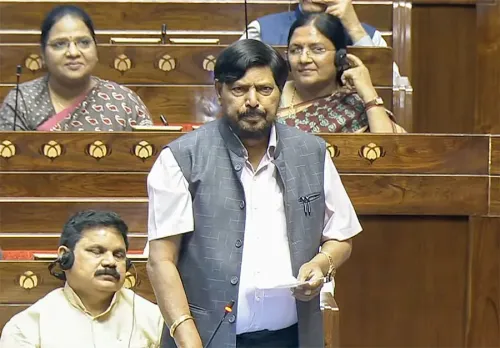
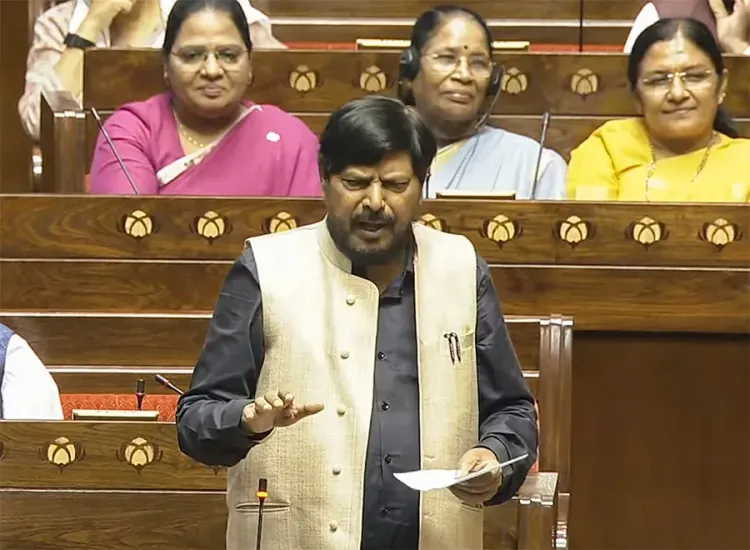
Minister of State Ramdas Athawale said periodic review meetings are chaired by the Minister and Secretary to improve absorption.
The government cited the general nature of certain schemes as a key reason for incomplete utilisation.
The actual expenditure under the Development Action Plan for Scheduled Castes (DAPSC) has fallen short of revised budget estimates every year since 2020-21, with fund utilisation slipping to 85.65% in 2025-26, the Ministry of Social Justice and Empowerment disclosed on Sunday, 9 August. The ministry said it has stepped up oversight across 38 ministries and departments to improve absorption of funds earmarked exclusively for Scheduled Caste welfare.
Key Developments
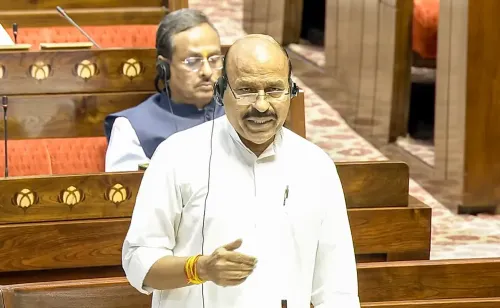
The disclosure came in response to a question raised in the Rajya Sabha by member Golla Baburao. Minister of State for Social Justice and Empowerment Ramdas Athawale confirmed that actual DAPSC expenditure has consistently trailed revised estimates across all six financial years from 2020-21 to 2025-26.
According to data tabled by the ministry, utilisation of revised allocations stood at 81.61% in 2020-21 — the lowest in the period under review. It recovered to 91.22% in 2021-22 and edged up to 91.90% in 2022-23, before peaking at 93.83% in 2023-24. The figure then eased to 92.57% in 2024-25 and dropped further to 85.65% in 2025-26.
Why Utilisation Falls Short
The government acknowledged that full utilisation is not always achieved, attributing the shortfall partly to the general nature of certain schemes implemented by the obligated ministries and departments. Because several schemes serve broader beneficiary groups rather than Scheduled Castes exclusively, earmarked DAPSC funds within them are not always fully drawn down.
Notably, the DAPSC framework — earlier known as the Scheduled Caste Sub-Plan (SCSP) — was restructured under NITI Aayog Guidelines, 2017, which mandated that 38 ministries and departments earmark funds proportionately across their schemes for the welfare and development of Scheduled Castes.
What the Government Said
Minister Athawale stated that the Department of Social Justice and Empowerment closely monitors DAPSC fund utilisation through periodic review meetings chaired by both the Minister and the Secretary of the department. The ministry has intensified this monitoring process to ensure that allocations translate into on-ground outcomes for Scheduled Caste communities.
The government reiterated that funds earmarked under DAPSC are meant exclusively for the welfare of Scheduled Castes and cannot be diverted to other purposes.
Impact on Scheduled Caste Communities
Persistent under-utilisation raises concerns about whether the intended beneficiaries — among India's most economically marginalised communities — are receiving the full benefit of parliamentary allocations. The 2025-26 dip to 85.65% reverses the improvement trend seen between 2021-22 and 2023-24, and is the second-lowest utilisation rate in the six-year period.
This comes amid broader scrutiny of welfare fund absorption across social sector ministries, where implementation capacity and scheme design often determine whether earmarked money reaches target groups. Going forward, the government's ability to close the utilisation gap will be closely watched by parliamentary committees and civil society organisations working on Dalit rights.
Point of View
After the system had improved to 93.83% in 2023-24, suggests the monitoring mechanisms that appeared to be working have since lost momentum. The core problem is design: when DAPSC funds are embedded in general-purpose schemes, the earmarking becomes notional. Periodic review meetings are a process fix, not a structural one. Until the Centre mandates scheme-level disaggregation of SC beneficiary outcomes — and ties future allocations to verified absorption — the gap between parliamentary intent and ground-level delivery will persist.
NationPress
23 Sept 2026
Frequently Asked Questions
What is the Development Action Plan for Scheduled Castes (DAPSC)?
The DAPSC is a framework under which 38 central ministries and departments earmark funds across their schemes exclusively for the welfare and development of Scheduled Castes. It was earlier known as the Scheduled Caste Sub-Plan (SCSP) and was restructured under NITI Aayog Guidelines in 2017.
What was the DAPSC fund utilisation rate in 2025-26?
DAPSC fund utilisation stood at 85.65% of revised estimates in 2025-26, according to data shared by the Ministry of Social Justice and Empowerment in the Rajya Sabha. This is the second-lowest utilisation rate in the six-year period from 2020-21 to 2025-26.
Why does DAPSC spending consistently fall short of revised estimates?
The government has attributed the shortfall partly to the general nature of certain schemes implemented by obligated ministries, where funds are not earmarked for Scheduled Castes exclusively. This makes it difficult to fully draw down the DAPSC portion within broader programmes.
What steps has the government taken to improve DAPSC fund utilisation?
The Department of Social Justice and Empowerment holds periodic review meetings chaired by the Minister and Secretary to monitor utilisation across the 38 obligated ministries. The government has said it has intensified this oversight process to ensure optimal absorption of earmarked funds.
Which year saw the highest DAPSC utilisation in recent years?
The highest utilisation rate in the 2020-21 to 2025-26 period was recorded in 2023-24, when actual expenditure reached 93.83% of revised estimates. Utilisation has declined in both subsequent years, falling to 85.65% in 2025-26.