How is WEF 2026 Tackling the World's Toughest Challenges?
Synopsis
Davos recently hosted the 56th annual World Economic Forum, where nearly 3,000 leaders gathered to tackle major global challenges. With prominent figures like Donald Trump pushing for dialogue, crucial discussions on economic resilience, US-China relations, and peace-building took center stage. Discover insights from Nobel laureates and industry leaders as they explore a transformative future.
Key Takeaways
Nearly 3,000 leaders convened in Davos for the WEF.
Key discussions focused on US-China relations and economic resilience.
Religious leaders emphasized the importance of interfaith dialogue.
Nobel laureates shared insights on global economic trends.
AI's impact on the labor market was a significant topic.
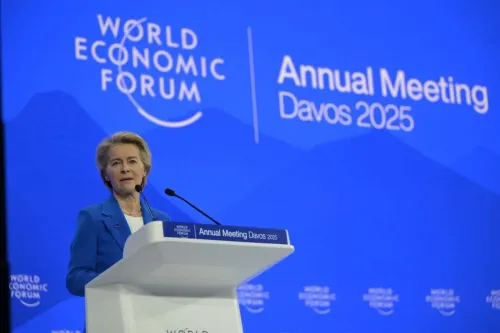
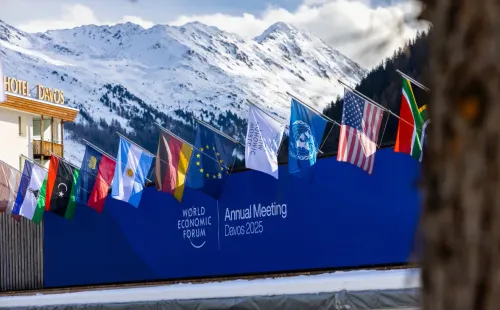
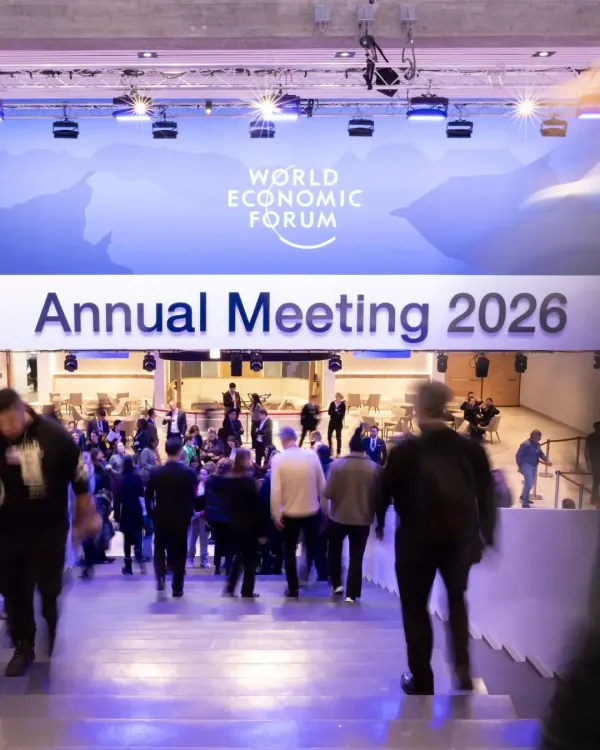
Davos, Jan 24 (NationPress) The 56th annual gathering of the World Economic Forum (WEF) this week emerged as a critical platform uniting influential decision-makers for significant discussions aimed at addressing the most pressing global issues.
As per the WEF, nearly 3,000 leaders from diverse regions, sectors, and generations across 130 countries participated, featuring a historic turnout of 400 high-ranking political figures, almost 65 heads of state and government, a majority of G7 leaders, close to 830 top CEOs and chairs, and around 80 leading unicorns and tech innovators.
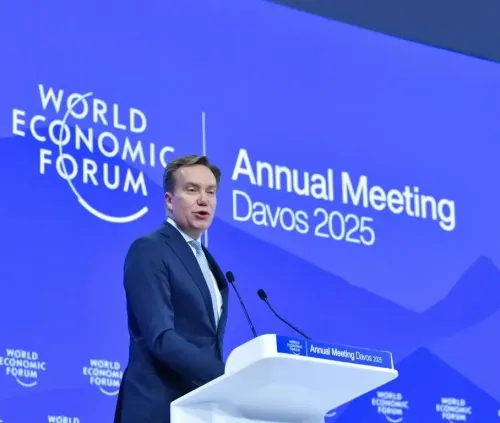
“This is a moment filled with uncertainty, yet also brimming with potential; it is not a time to withdraw, but to engage,” remarked Borge Brende, President and CEO of the World Economic Forum.
“The World Economic Forum is not merely about reacting to current events. It’s about establishing the right conditions to move forward,” Brende further noted.
Experts deliberated on the trajectory of US-China relations following the trade deal in November, evaluating its potential effects on global economic stability and geopolitical rivalries between the world’s two largest economies.
Another session pinpointed urgent actions to enhance financial-sector resilience in the West Bank and Gaza amidst economic challenges.
Religious leaders explored how interfaith cooperation could support stabilization efforts in Gaza and inform peace-building strategies in other conflict-affected areas, aligning with the Gaza Peace Plan.
“However, opportunities that are grander than ever before in human history lie ahead of us,” stated US President Donald Trump.
“We require dialogue not just with allies and partners, but if necessary, with our adversaries,” added Ursula von der Leyen, President of the European Commission. “The world has undergone permanent changes, and we must evolve with it,” she emphasized.
The ‘Chief Economists’ Outlook’ presented an up-to-date perspective on global economic sentiment for the upcoming year, highlighting the economy’s relative resilience amid turbulence and guiding leaders through uncertainties surrounding asset valuations, sovereign debt crises, and the widespread integration of artificial intelligence (AI).
“AI is like a tsunami hitting the labor market, and even in the best-prepared nations, we are still not sufficiently ready,” asserted Kristalina Georgieva, Managing Director of the International Monetary Fund.
“I would urge developing nations to enhance their infrastructure, engage with AI, and acknowledge that AI is likely to bridge the technology divide,” noted Jensen Huang, Founder and CEO of Nvidia.
The WEF indicated that five Nobel laureates in economics shared their latest research and insights regarding the global economy. Leaders also warned against the growing rifts in the global trade system, especially among some of the world’s largest economies, underscoring the benefits of international trade.
Point of View
Our commitment lies in providing an unbiased perspective, recognizing the significance of dialogue in addressing global challenges. The World Economic Forum stands as a beacon of collaboration, urging nations to engage constructively, regardless of their differences, while fostering economic resilience and peace-building efforts.
NationPress
29 Sept 2026
Frequently Asked Questions
What is the World Economic Forum?
The World Economic Forum (WEF) is an annual meeting where global leaders gather to discuss pressing economic and social challenges.
Who attended the 56th WEF?
Nearly 3,000 leaders from 130 countries participated, including political leaders, CEOs, and innovators.
What were the key topics discussed?
Key discussions included US-China relations, economic resilience in conflict zones, and the impact of artificial intelligence.
What is the significance of interfaith dialogue?
Interfaith dialogue can play a crucial role in peace-building efforts and stabilization in conflict-affected areas.
How can developing countries engage with AI?
Developing countries should invest in infrastructure and engage with AI to bridge the technology divide.