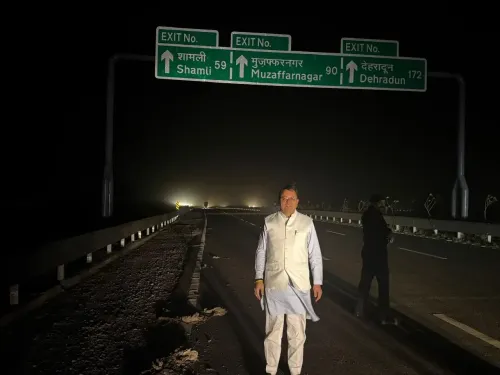
Delhi–Dehradun corridor cave-in: NHAI blames waterlogging, blocked drains
Synopsis
A road surface cave-in on the Delhi–Dehradun Economic Corridor was not a structural failure — it was a drainage system held hostage by local residents using a culvert as a road crossing. NHAI's own design worked on paper; execution was blocked on the ground, and a land dispute is preventing permanent fixes even now.
Key Takeaways
NHAI detected a road surface cave-in at Km 55+480 on the Delhi–Dehradun Economic Corridor during patrolling on 1 July 2025 .
The cave-in was caused by localised waterlogging after heavy rainfall, worsened by a non-operational balancing culvert.
Local residents have blocked commissioning of the culvert by using its opening as a vehicular crossing.
An interim parallel drain of approximately 1.5 km is under construction as a stopgap measure.
Permanent slope protection works remain stalled due to an ongoing land arbitration dispute with local landowners.
The damaged stretch has been repaired and traffic movement has been restored, according to the Ministry of Road Transport and Highways .
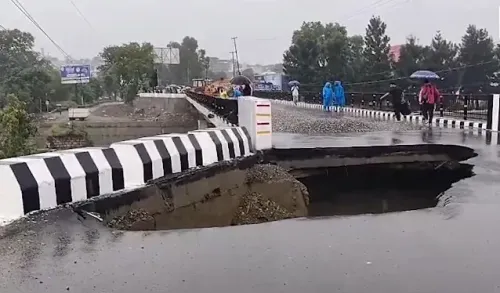
The National Highways Authority of India (NHAI) on Thursday, 3 July 2025, clarified that a road surface cave-in on the Delhi–Dehradun Economic Corridor at Km 55+480 was caused by localised water stagnation following heavy rainfall, compounded by an inoperative cross-drainage system. The incident was detected during routine patrolling in the early hours of 1 July, and restoration works were initiated immediately.
What Happened at Km 55+480
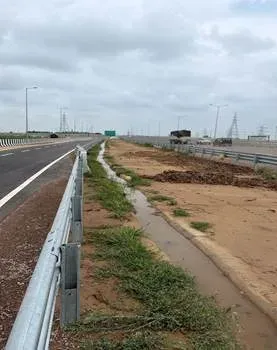
NHAI patrol teams spotted the cave-in along the corridor's carriageway and mobilised repair crews on priority, restoring the damaged stretch to ensure safe and uninterrupted traffic movement, according to the Ministry of Road Transport and Highways. The authority has since begun construction of an interim parallel drain spanning approximately 1.5 kilometres to manage rainwater runoff until permanent infrastructure is commissioned.
The drainage gradient at the site is being redesigned to channel rainwater safely toward the entry/exit point at Km 56+500, pending activation of a balancing culvert that was built specifically to convey water across the median and away from the road surface.
Why the Drainage System Failed
The balancing culvert — a key component of the corridor's cross-drainage design — has remained non-operational due to sustained resistance from local residents. According to the ministry's statement, residents have not permitted integration of the drainage system and have instead been using the culvert opening as a vehicular crossing, effectively blocking its intended function.
This meant that during heavy rainfall, water accumulated along the carriageway with no engineered outlet, directly contributing to the surface cave-in. Notably, this is not a structural failure of the road itself but a consequence of an incomplete drainage chain.
Land Disputes Stalling Permanent Fixes
Permanent slope protection and chute drain works at the affected location also remain unexecuted. NHAI cited an ongoing land-related arbitration dispute as the reason, stating that concerned landowners have repeatedly declined to permit execution of these works despite multiple outreach efforts by the authority.
As a result, the permanent protection measures envisaged under the project's original design could not be completed at the site, leaving the corridor exposed to weather-related vulnerabilities at this stretch.
What NHAI Is Doing Next
Beyond the interim parallel drain, NHAI has indicated that the redesigned drainage gradient will serve as a stopgap until the balancing culvert at Km 56+500 is formally commissioned. The authority has not specified a timeline for resolving either the resident resistance or the land arbitration, both of which remain active blockers to permanent remediation.
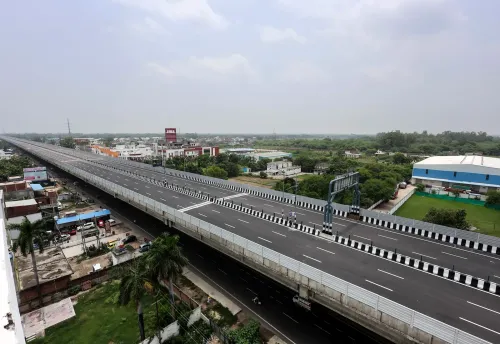
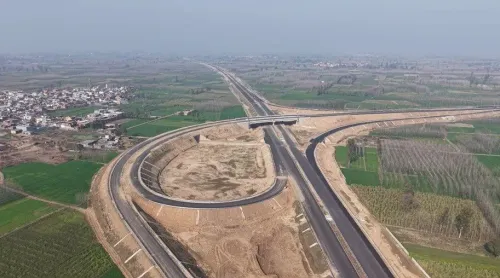
The Delhi–Dehradun Economic Corridor is a high-priority greenfield expressway project aimed at cutting travel time between the two cities significantly. Incidents of this nature, if recurring, could raise questions about the pace of ancillary infrastructure commissioning alongside the main carriageway.
Point of View
Compensation, or legal remedies were pursued and when. The Delhi–Dehradun corridor is a flagship project; if a single culvert's non-commissioning can trigger a carriageway cave-in, it raises a systemic question: how many other stretches along high-priority corridors carry similar unresolved drainage or land-dispute risks? The interim drain buys time, but without a resolution mechanism for the arbitration and resident standoff, the permanent fix remains indefinitely deferred.
NationPress
1 Oct 2026
Frequently Asked Questions
What caused the road surface cave-in on the Delhi–Dehradun Economic Corridor?
The cave-in at Km 55+480 was caused by localised water stagnation following heavy rainfall, combined with a non-operational cross-drainage system. The balancing culvert meant to divert rainwater has not been commissioned because local residents are using its opening as a vehicular crossing, blocking its integration.
Has the damaged road been repaired?
Yes. NHAI repair crews restored the affected stretch on priority after it was detected during routine patrolling on 1 July 2025. Traffic movement on the corridor has been confirmed as safe and uninterrupted, according to the Ministry of Road Transport and Highways.
What interim measures has NHAI taken?
NHAI has begun constructing an interim parallel drain of approximately 1.5 kilometres. The drainage gradient is also being redesigned to channel rainwater toward the exit point at Km 56+500 until the permanent balancing culvert is commissioned.
Why are permanent drainage and slope protection works not yet complete?
Permanent slope protection and chute drain works remain pending due to an ongoing land-related arbitration dispute. The concerned landowners have not permitted NHAI to execute these works despite repeated outreach efforts by the authority.
What is the Delhi–Dehradun Economic Corridor?
The Delhi–Dehradun Economic Corridor is a high-priority greenfield expressway project designed to significantly reduce travel time between New Delhi and Dehradun. It is one of several National Highway projects under NHAI's accelerated infrastructure programme.