Delhi PWD Minister inspects Chhatarpur waterlogging, new RCC drain planned

Synopsis
A lost natural drainage channel to Haryana is at the heart of Delhi’s recurring Chhatarpur waterlogging crisis. PWD Minister Parvesh Sahib Singh’s 17 July inspection has now triggered a plan to build a new precast RCC drain — but with no timeline announced, residents face an uncertain wait even as pumps run round the clock this monsoon.
Key Takeaways
Delhi PWD Minister Parvesh Sahib Singh inspected waterlogged Dera Mandi Road in Chhatarpur on 17 July .
The affected stretch falls under MCD jurisdiction; the Delhi government is coordinating with the corporation for relief.
PTO pumps have been deployed and are operating continuously as an immediate measure.
A new precast RCC drain from Dera Mandi Road to Dera Bhati Road, connecting to SSN Marg drain , has been approved as a permanent solution.
The root cause: a natural drainage channel to Haryana no longer exists due to rapid urbanisation and expansion of Gurugram .
No cost estimate or project completion timeline was announced during the inspection.
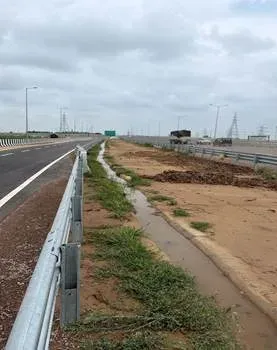
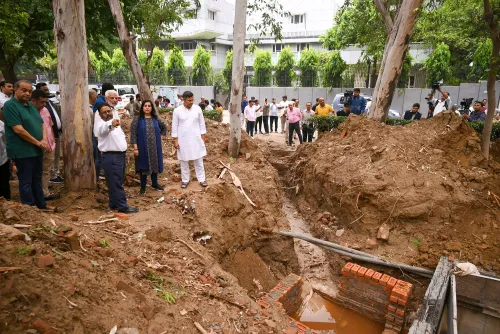
Delhi Public Works Department and Water Minister Parvesh Sahib Singh on Friday, 17 July conducted an on-site inspection of the Chhatarpur area, specifically the waterlogging-hit Dera Mandi Road near Mandi Village, and announced both immediate relief measures and a permanent drainage solution for the chronically affected stretch.
What the Minister Found on the Ground
Senior officials accompanied Singh as he reviewed the condition of the road surface, the drainage network, and the sewer system following heavy accumulation of rainwater on Dera Mandi Road. The affected stretch falls under the jurisdiction of the Municipal Corporation of Delhi (MCD).
Officials briefed the Minister that the location sits at a natural low-lying point where stormwater collects during heavy showers. Historically, this accumulated water drained through a natural channel towards Haryana — an outlet that is no longer functional, leaving rainwater trapped and causing recurring waterlogging with every significant rainfall event.
Immediate Relief Deployed
As a stopgap measure, PTO pumps have been deployed at the site and are operating continuously to drain accumulated water from the affected stretch, according to an official statement. The Delhi government said it is coordinating with all concerned agencies, including the MCD, to ensure public convenience is not disrupted further.
Permanent Infrastructure: The RCC Drain Plan
Following the detailed site review, it was decided that the PWD will construct a new precast RCC drain running from Dera Mandi Road to Dera Bhati Road, which will then connect to Bandh Road. From there, water will be pumped into the SSN Marg drain within Delhi, effectively creating an alternative discharge route to replace the lost natural channel.
The project is designed to provide a permanent drainage solution and significantly improve stormwater management across this vulnerable corridor. No timeline or cost estimate for the project was announced during the inspection.
The Urbanisation Factor
Explaining the root cause, Minister Parvesh Sahib Singh pointed to rapid urban expansion on both sides of the Delhi-Haryana border. “Mandi Gaon and Dera Gaon lie along the Delhi-Haryana border. Years ago, before large-scale urban development and before Gurugram expanded the way it has today, rainwater used to flow naturally through existing drainage channels,” he said.
“Today, with extensive concrete construction, rapid urbanisation and a significant increase in population, those natural pathways have disappeared. As a result, rainwater and even sewer water accumulate here during heavy rainfall,” he added. The observation reflects a pattern seen across several low-lying Delhi neighbourhoods, where legacy drainage infrastructure has been overwhelmed by decades of unplanned growth along the city’s periphery.
Government’s Stated Commitment
Singh said the Delhi government’s objective goes beyond reactive pumping after every rain spell. “Our objective is not merely to remove water after every spell of rain but to create infrastructure that prevents waterlogging in the first place. Every vulnerable location is being assessed, and long-term solutions are being implemented on priority,” he said.
The government said it remains committed to addressing legacy infrastructure challenges through “scientific planning and durable engineering solutions.” With the monsoon season well underway, the pace of execution on the proposed RCC drain will determine whether residents of Mandi Village and surrounding areas see relief before the next major rainfall event.
Point of View
But the absence of a cost figure or completion deadline from the Minister’s inspection is telling. Delhi has a long record of monsoon-season announcements that outlast the monsoon itself without materialising. The real test is whether this drain is tendered, funded, and built before the 2026 rains — or whether Dera Mandi Road residents are back to watching pumps run next July.
NationPress
16 Oct 2026
Frequently Asked Questions
Why does Dera Mandi Road in Chhatarpur flood repeatedly?
Dera Mandi Road sits at a natural low-lying point where stormwater collects. A natural drainage channel that previously carried this water towards Haryana no longer exists due to rapid urbanisation and construction, leaving rainwater trapped with no outlet.
What immediate steps has the Delhi government taken for waterlogging relief?
PTO pumps have been deployed at the affected stretch and are running continuously to drain accumulated water. The Delhi government says it is coordinating with the MCD, which has jurisdiction over the area, to ensure public convenience.
What is the permanent drainage solution announced by PWD Minister Parvesh Sahib Singh?
The PWD will construct a new precast RCC drain from Dera Mandi Road to Dera Bhati Road, connecting to Bandh Road, from where water will be pumped into the SSN Marg drain within Delhi. The project is intended to replace the lost natural drainage outlet.
Who is responsible for the Chhatarpur waterlogging area — PWD or MCD?
The affected stretch on Dera Mandi Road falls under the jurisdiction of the Municipal Corporation of Delhi (MCD). However, the PWD is taking the lead on constructing the permanent RCC drain solution, with both agencies coordinating under the Delhi government.
When will the new RCC drain in Chhatarpur be completed?
No timeline or cost estimate for the precast RCC drain project was announced during Minister Parvesh Sahib Singh’s 17 July inspection. The government has indicated that long-term solutions across vulnerable locations are being implemented on priority.