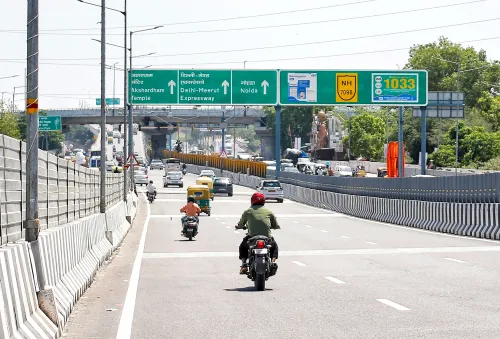
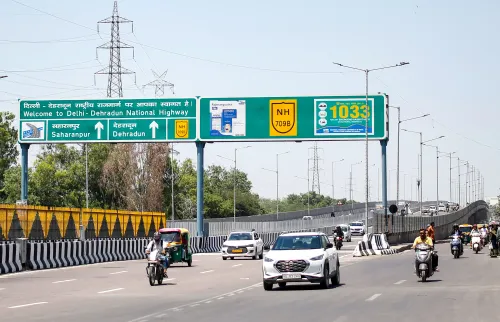
Delhi-Dehradun Economic Corridor: A Game Changer for Connectivity and Wildlife Safety

Synopsis
The newly opened Delhi-Dehradun Economic Corridor is transforming travel in Saharanpur, significantly reducing travel time while ensuring wildlife safety. Residents commend this project as a vital step toward regional development.
Key Takeaways
Delhi-Dehradun Economic Corridor inaugurated with significant community support.
Estimated cost of over Rs 12,000 crore highlights the project's scale.
Expected to enhance connectivity and promote economic growth.
Designed as Asia's largest wildlife corridor for animal safety.
Locals express optimism for reduced travel times and improved infrastructure.
Saharanpur, April 14 (NationPress) The recently launched Delhi–Dehradun Economic Corridor, constructed at a projected cost exceeding Rs 12,000 crore, has garnered enthusiastic support from youth, women, and seniors in Saharanpur. They assert that this project will greatly facilitate travel and foster development while also prioritizing wildlife safety.
Community members have described the corridor as a groundbreaking initiative, one that will not only shorten travel times but also improve connectivity and create new economic opportunities in Uttarakhand and the national capital.
Inaugurated on the birth anniversary of Bharat Ratna Dr. Bhimrao Ambedkar, the project has been celebrated as a significant public welfare effort. Residents feel that enhanced connectivity will inspire youth by providing better access to education, employment, and healthcare.
Complementary infrastructure projects, such as the Maa Shakambhari Corridor and the Sarsawa Air Terminal, have further magnified the project's impact.
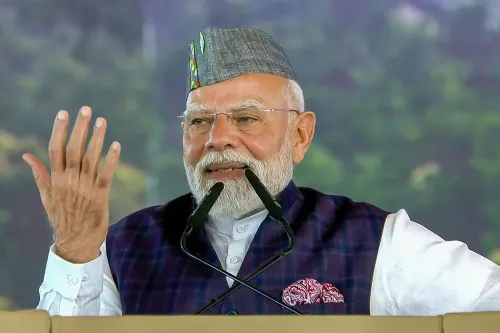
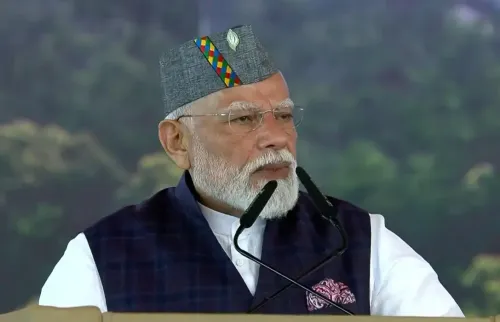
Residents have expressed their appreciation to Prime Minister Narendra Modi for what they regard as a "historic gift" to the region.
Young individuals, in particular, have emphasized the advantages of reduced travel times. A student remarked, "Previously, it took us four to six hours to reach Delhi or Dehradun for studies, which was both tiring and time-consuming. Now, with the new corridor, travel will be quicker, safer, and more convenient," as reported by IANS.
Many residents also highlighted that the upgraded road infrastructure is predicted to significantly lower accident rates. With improved road conditions and streamlined traffic flow, daily commuters look forward to a more dependable and stress-free journey.
The corridor has also gained recognition for being developed as Asia's largest wildlife corridor, designed to ensure the safe passage of animals. Locals noted that in the past, wild animals often wandered onto highways, causing accidents and loss of life.
"The greatest joy for me is that PM Modi has considered not only humans but also animals," stated a local youth. "Previously, animal crossings often resulted in accidents. Now, they will be free to roam without danger."
Elderly residents and women have also welcomed the initiative, recalling the difficulties they faced due to long travel durations and frequent traffic disruptions. They noted that during medical emergencies, delays caused by traffic congestion could be critical.
"Getting to Dehradun used to take several hours, and accidents were common. In emergencies, patients sometimes lost their lives due to delays. This expressway will now make travel faster and more comfortable," shared a local.
A retired Army officer recounted the challenges faced during the monsoon season. "Heavy rains sometimes left people in Dehradun stranded on one side, while those in Saharanpur were stuck on the other. Landslides would block the roads, making any movement impossible," he told IANS.
With the corridor now operational, residents are hopeful that such challenges will be a thing of the past. They believe this initiative marks a pivotal step towards modern infrastructure development while also considering environmental concerns.
The Delhi–Dehradun Economic Corridor is anticipated not only to revolutionize regional connectivity but also to act as a catalyst for tourism, trade, and overall socio-economic development in northern India.
Point of View
The launch of the Delhi-Dehradun Economic Corridor represents a significant advancement in infrastructure, prioritizing both connectivity and wildlife protection. This initiative not only addresses the pressing need for improved travel but also promotes socio-economic growth in the region, demonstrating a balanced approach to development.
NationPress
25 Sept 2026
Frequently Asked Questions
What is the cost of the Delhi-Dehradun Economic Corridor?
The corridor was constructed at an estimated cost exceeding Rs 12,000 crore.
How does the corridor benefit wildlife?
It is designed as Asia's largest wildlife corridor, ensuring safe movement for animals and reducing accidents caused by wildlife crossing roads.
What are the expected impacts of the corridor on travel times?
The corridor is expected to significantly reduce travel times between Delhi and Dehradun, making journeys faster and more convenient.
Who launched the corridor and when?
The Delhi-Dehradun Economic Corridor was launched on the birth anniversary of Dr. Bhimrao Ambedkar.
What additional infrastructure projects support the corridor?
Complementary projects include the Maa Shakambhari Corridor and the Sarsawa Air Terminal, enhancing the overall impact of the initiative.