Delhi-NCR air pollution: Experts push for coordinated, science-based airshed plan
Synopsis
At the onset of Delhi's worst pollution season, top scientists and ministry officials have called for a unified, science-backed airshed management plan for Delhi-NCR and the Indo-Gangetic Plains — with CSIR-NEERI committing to a formal policy brief covering priority interventions, AI decision-support tools, and cross-agency partnerships. The question now is whether institutional momentum can outlast the smog.
Key Takeaways
CSIR-NEERI convened a brainstorming workshop in New Delhi on 21 November 2026 to devise science-based solutions to Delhi-NCR air pollution.
SK Goyal called for coordinated airshed management and an integrated PAN-CSIR mission to convert research into policy.
CSIR technologies at TRL 6 and above should be fast-tracked for field deployment across the Indo-Gangetic Plains , per CSIR Headquarters.
MoEF&CC recommended a dedicated technical committee to plan India's CAAQM monitoring network for the region.
CSIR-NEERI Director Dr.
S Venkata Mohan committed to producing a formal policy-level brief covering priority interventions and demonstration projects.
Discussions also flagged links between air pollution and human microbiome health effects , opening new research directions.
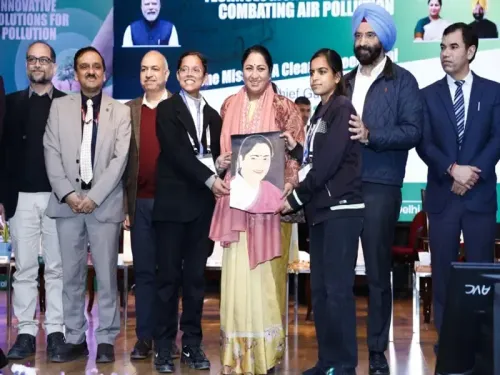
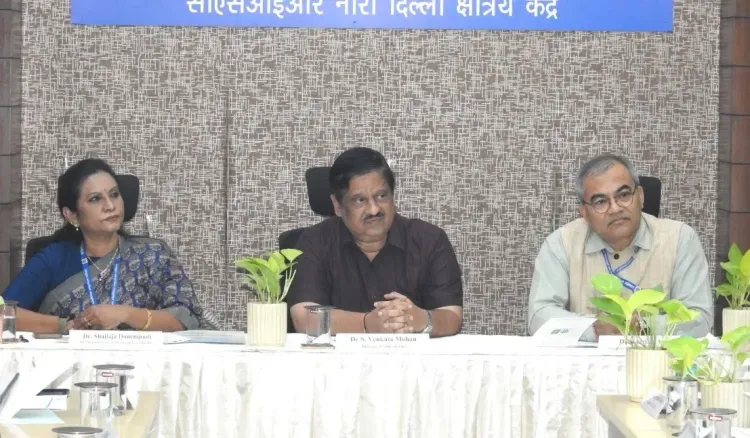
Scientists and policymakers on Saturday, 21 November 2026 called for a unified, science-driven strategy to tackle chronic air pollution in Delhi-NCR and the wider Indo-Gangetic Plains, moving decisively beyond the piecemeal interventions that have repeatedly fallen short. The call came from a high-level brainstorming workshop convened by the CSIR–National Environmental Engineering Research Institute (CSIR-NEERI) at its Delhi Regional Centre.
What the Workshop Covered
The day-long session brought together scientists, policymakers, and technical experts to map practical, large-scale solutions to the region's worsening air quality. Discussions spanned airshed management, identification of pollution sources, health impacts, climate vulnerability, pollution-control technologies, artificial intelligence (AI)-based decision-support systems, and institutional partnerships. The overarching aim was to identify interventions capable of delivering measurable, verifiable improvements in ambient air quality.
Key Voices and Recommendations
Dr. SK Goyal, Scientist-G and Chair of the CSIR-NEERI Delhi Regional Centre, underscored the gravity of the pollution challenge across Delhi-NCR and the Indo-Gangetic Plains. He called for coordinated airshed management, a strengthened air quality monitoring network, and an integrated PAN-CSIR mission that could translate scientific findings into actionable policy.
Dr. Shailaja Donempudi from CSIR Headquarters stressed greater deployment of CSIR technologies that have already reached Technology Readiness Level (TRL) 6 and above, urging field demonstrations across the Indo-Gangetic Plains to accelerate real-world impact.
Dr. N Subrahmanyam of the Ministry of Environment, Forest and Climate Change (MoEF&CC) proposed setting up a dedicated technical committee for the Indo-Gangetic Plains to identify priority action areas and design a scientific framework for India's Continuous Ambient Air Quality Monitoring (CAAQM) network. Dr. Balendra Singh of the Department of Biotechnology (DBT) flagged emerging research on precision nutrition and the human microbiome, noting their relevance to understanding health effects triggered by prolonged air pollution exposure.
CSIR-NEERI's Policy Brief Commitment
Dr. S Venkata Mohan, Director of CSIR-NEERI, announced that the institute would consolidate the workshop's scientific and institutional recommendations into a formal policy-level brief. The document is expected to outline priority interventions, technology readiness assessments, potential demonstration projects, and opportunities for multi-agency collaboration — providing a structured roadmap for science-backed decisions across Delhi-NCR and the Indo-Gangetic Plains.
Why This Matters Now
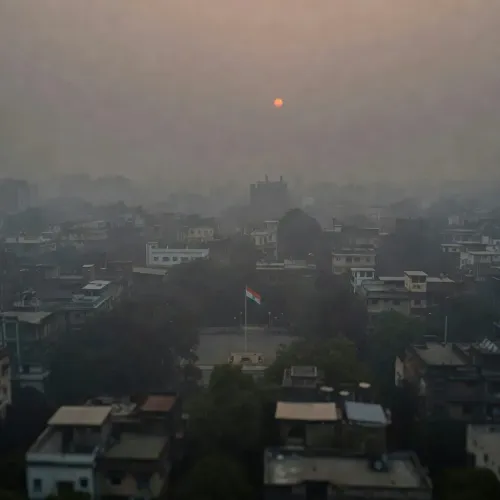
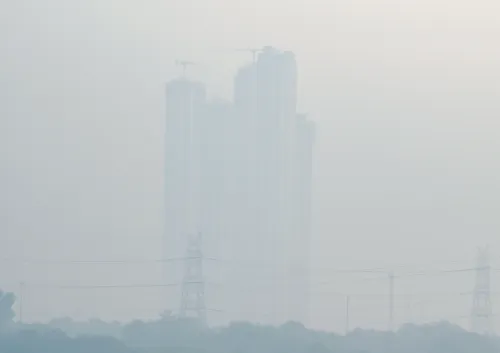
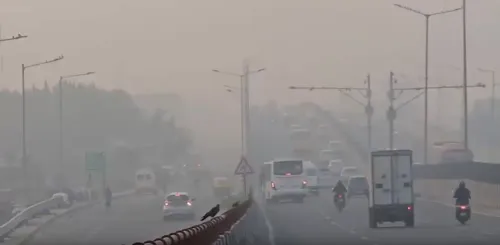
Delhi has ranked among the world's most polluted capitals for several consecutive years, with winter smog regularly breaching hazardous thresholds and triggering school closures, flight delays, and public health emergencies. Critics argue that existing measures — odd-even vehicle schemes, stubble-burning bans, and periodic construction halts — address symptoms rather than systemic causes. This workshop signals a potential institutional pivot toward an integrated, evidence-based framework. Notably, it arrives at the onset of Delhi's peak pollution season, when north-westerly winds carry agricultural residue smoke from Punjab and Haryana into the capital's airshed. How quickly CSIR-NEERI's forthcoming policy brief converts into binding government action will determine whether this effort produces lasting change or remains an advisory exercise.
Point of View
Technology deployment at scale, and a credible monitoring backbone. The more searching question is why TRL-6-ready technologies remain undeployed while hazardous air quality episodes repeat annually. A policy brief, however rigorous, is only as useful as the institutional will to implement it. Unless the forthcoming document carries a clear ownership matrix — which ministry acts, by when, with what measurable target — it risks becoming one more addition to India's well-documented but under-executed environmental literature.
NationPress
21 Nov 2026
Frequently Asked Questions
What was the CSIR-NEERI Delhi air pollution workshop about?
The CSIR-NEERI brainstorming workshop, held in New Delhi on 21 November 2026, brought together scientists, policymakers, and technical experts to identify coordinated, science-based solutions to recurring air pollution in Delhi-NCR and the Indo-Gangetic Plains. Topics covered included airshed management, AI decision-support tools, pollution-source identification, and institutional partnerships.
What is airshed management and why is it important for Delhi?
Airshed management treats the atmosphere over a geographical region as a single shared resource, coordinating pollution controls across multiple states and sectors rather than leaving each jurisdiction to act in isolation. For Delhi, it is critical because pollutants — especially crop-residue smoke from Punjab and Haryana — cross state boundaries, making unilateral city-level measures insufficient.
What action did CSIR-NEERI commit to after the workshop?
CSIR-NEERI Director Dr. S Venkata Mohan announced the institute would compile the workshop's recommendations into a formal policy-level brief covering priority interventions, technology readiness, demonstration projects, and collaboration opportunities, to guide science-based government decisions on air quality.
What is the CAAQM network and why does it need expansion?
The Continuous Ambient Air Quality Monitoring (CAAQM) network is India's real-time air quality surveillance infrastructure. MoEF&CC representative Dr. N Subrahmanyam called for a scientific framework to extend and plan the network specifically across the Indo-Gangetic Plains, where monitoring gaps limit data-driven policy responses.
How does air pollution link to human microbiome health, as discussed at the workshop?
Dr. Balendra Singh of the Department of Biotechnology highlighted emerging research showing that prolonged air pollution exposure may affect the human microbiome, with downstream implications for nutrition and systemic health. This was flagged as an emerging area for future research rather than a fully established finding.