India's economy set to triple in a decade, says JPMorgan CEO Jamie Dimon
Synopsis
JPMorgan's Jamie Dimon is betting big on India — projecting the economy could nearly triple in a decade while his bank has already scaled from 6,000 to 60,000 employees there. His call for a finalised India-US trade deal, combined with warnings of persistently high rates and a $1 trillion AI spending wave, paints a high-stakes picture of where global capital is heading.
Key Takeaways
Jamie Dimon , CEO of JPMorgan Chase , said India's economy could nearly triple in size over the next decade.
JPMorgan has grown from 6,000 to 60,000 employees in India since 2005 , spanning technical, investment banking, and other roles.
The bank plans to expand Indian research coverage from 200 companies to as many as 2,000 companies .
Dimon urged New Delhi and Washington to finalise a bilateral trade agreement, saying 'I would like to see it finished.' He warned that interest rates and bond yields could stay higher for longer, with global risks including inflation, geopolitical tensions, and rising capital demand.
AI-related hyperscaler spending is projected to reach around $1 trillion next year, up from approximately $700 billion this year.
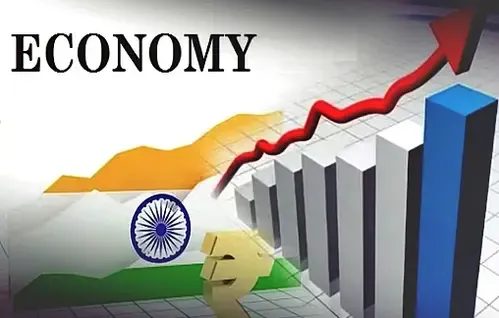
JPMorgan Chase Chief Executive Officer Jamie Dimon on 22 September 2026 said that India's economy could nearly triple in size over the next decade, underscoring the US investment bank's deepening commitment to the country and outlining ambitious plans to expand its local footprint significantly.
JPMorgan's India Expansion Plans
Dimon outlined a sharp scale-up in JPMorgan's India operations, saying the bank expects its research coverage to grow from roughly 200 companies today to 400 companies, with as many as 2,000 companies ultimately covered, according to reports. He highlighted the bank's rapid growth since his first visit to India in 2005, when the firm had just 6,000 employees in the country. That number has since surged to 60,000 professionals spanning technical functions, investment banking, and other specialisations. Dimon said JPMorgan intends to work closely with both the government and Indian businesses as this expansion continues.
A Push for India-US Trade Agreement
The JPMorgan CEO used the occasion to urge New Delhi and Washington to finalise a bilateral trade agreement, stressing the need for consistency in trade and investment rules. 'I would like to see it finished,' Dimon said, calling on both governments to 'sit down and try to finish it.' The push comes amid ongoing but fitful negotiations between the two countries on a trade framework that could unlock significant investment flows.
Global Risks on the Horizon
Beyond India, Dimon flagged a set of risks confronting the broader global economy, including persistent inflation, elevated government borrowing, geopolitical tensions, and rising demand for capital. He predicted that interest rates and bond yields could remain higher for longer than markets currently anticipate, noting that 'the odds of them going higher is more than other people think.' This comes amid a wider debate among global investors about the trajectory of monetary policy in the United States and Europe.
AI Spending and Productivity Outlook
On artificial intelligence, Dimon said investment in AI-related infrastructure and remilitarisation could push demand for capital significantly higher. He projected that spending across the hyperscaler ecosystem could reach around $1 trillion next year, compared with approximately $700 billion this year. Dimon added that the eventual productivity gains from AI could create deflationary pressures over time, offering a partial offset to the inflationary forces he flagged elsewhere.
What This Signals for India
Dimon's remarks arrive as India positions itself as one of the world's fastest-growing major economies, actively courting foreign investment from global financial institutions. A tripling of India's economy within a decade would represent a structural shift of historic proportions, placing the country firmly among the top three global economies. The scale of JPMorgan's workforce expansion — from 6,000 to 60,000 employees in roughly two decades — is itself a concrete indicator of where global capital sees long-run growth. The road ahead will depend, in part, on whether the trade and regulatory environment that Dimon described as essential is delivered.
Point of View
000 companies signal that JPMorgan is not merely cheerleading but repositioning capital at scale. The call for a finished India-US trade deal deserves closer attention; without that framework, the investment case Dimon is making remains partially exposed to policy risk on both sides. His warnings on rates, AI capital intensity, and geopolitical stress are not incidental — they are the set of variables that could either accelerate or derail the very India story he is championing.
NationPress
22 Sept 2026
Frequently Asked Questions
What did Jamie Dimon say about India's economy?
JPMorgan Chase CEO Jamie Dimon said India's economy could nearly triple in size over the next decade, describing it as one of the most compelling growth stories globally. He made the remarks on 22 September 2026, alongside an outline of JPMorgan's expanding India operations.
How many employees does JPMorgan have in India now?
JPMorgan currently employs 60,000 professionals in India, a tenfold increase from the 6,000 employees it had when Dimon first visited the country in 2005. The workforce spans technical functions, investment banking, and other specialisations.
What is JPMorgan's plan for India research coverage?
The bank currently covers around 200 Indian companies through its research operations and plans to expand that to 400 companies, with an eventual target of covering up to 2,000 companies, according to reports.
Why did Dimon urge India and the US to sign a trade deal?
Dimon stressed the need for consistency in trade and investment rules, saying he would like to see a bilateral India-US trade agreement finalised. He called on both governments to sit down and complete the negotiations, signalling that regulatory certainty is key to sustaining foreign investment flows.
What global risks did Jamie Dimon flag?
Dimon warned of persistent inflation, elevated government borrowing, geopolitical tensions, and rising demand for capital. He also predicted that interest rates and bond yields could remain higher for longer, and projected AI-related hyperscaler spending to reach around $1 trillion next year.