Has DRDO Achieved Major Advancements in Semiconductor Technology?

Synopsis
The DRDO is paving the way for India's future in semiconductor technology with groundbreaking advancements. Their participation in global forums emphasizes India's commitment to becoming a technology leader. Discover how these developments are set to reshape various sectors including healthcare, defense, and communications.
Key Takeaways
DRDO's advancements in semiconductor technology are pivotal for India's future.
Indigenous methods for Silicon Carbide wafers are now developed.
The RDI Scheme Fund promotes research in the private sector.
ESTIC 2025 gathers over 3,000 participants from various sectors.
Collaboration is key to strengthening India's science and technology ecosystem.
New Delhi, Nov 4 (NationPress) The Defence Research and Development Organisation (DRDO) has achieved remarkable advancements in semiconductor technology, as stated by the Ministry of Defence on Tuesday.
The ministry highlighted that through semiconductor technologies, DRDO has developed indigenous methods.
“Semiconductors are crucial in today's technology landscape, powering essential systems in healthcare, communications, transportation, defence, and space,” the Ministry remarked.
“DRDO has made significant progress in semiconductor technology by creating indigenous methods for manufacturing 4-inch Silicon Carbide wafers and fabricating Gallium Nitride High Electron Mobility Transistors up to 150W,” it added.
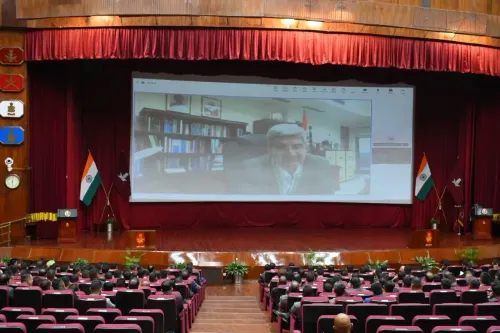
DRDO is set to join the Emerging Science, Technology, and Innovation Conclave (ESTIC) 2025, taking place at Bharat Mandapam in New Delhi from November 3-5.
As a key organizer, DRDO will also conduct the thematic session on ‘Electronics & Semiconductor Manufacturing’, with Chairman Dr. Samir V Kamat presiding over a Technical Session on Electronics and Semiconductor Manufacturing on November 5.
The conclave, themed ‘Viksit Bharat 2047 - Pioneering Sustainable Innovation, Technological Advancement, and Empowerment’, was inaugurated by Prime Minister Narendra Modi on November 3.
During the inaugural session, the Prime Minister introduced the Rs 1 lakh crore Research Development and Innovation (RDI) Scheme Fund aimed at fostering a private sector-driven research and innovation ecosystem to accelerate India's evolution into a global science and technology hub.
He underscored the ongoing initiatives to bolster research and development within the private sector.
The conclave includes discussions led by prominent scientists, panel discussions, presentations, and technology showcases, offering a platform for collaboration among researchers, industry, and young innovators to enhance the science and technology ecosystem.
ESTIC 2025 is expected to gather over 3,000 participants from academia, research institutions, industry, and government, along with Nobel laureates, distinguished scientists, innovators, and policymakers.
Point of View
It is essential to recognize the strategic importance of advancements in semiconductor technology by DRDO. These innovations not only enhance our defense capabilities but also position India as a key player in the global technology arena. The emphasis on indigenous development reflects a commitment to self-reliance and innovation, aligning with national interests.
NationPress
22 Sept 2026
Frequently Asked Questions
What advancements has DRDO made in semiconductor technology?
DRDO has developed indigenous methods for producing 4-inch Silicon Carbide wafers and fabricating Gallium Nitride High Electron Mobility Transistors up to 150W.
What is the purpose of the RDI Scheme Fund launched by PM Modi?
The Rs 1 lakh crore Research Development and Innovation Scheme Fund aims to promote a private sector-driven research and innovation ecosystem in India.
What is the significance of the ESTIC 2025 conclave?
The ESTIC 2025 conclave serves as a platform for collaboration among researchers, industry, and young innovators to strengthen the science and technology ecosystem in India.