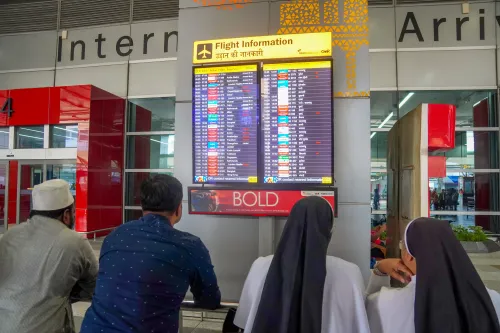
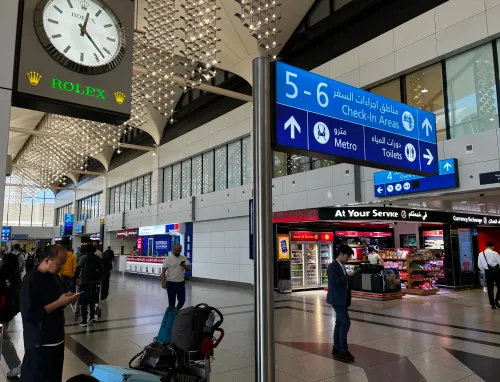
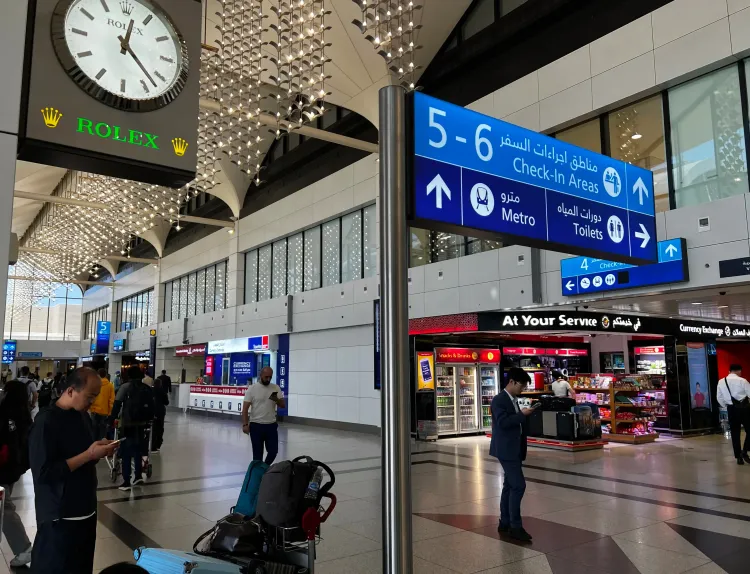
Dubai Airport passenger traffic plunges 66% in March amid West Asia conflict
Synopsis
The world's busiest international airport saw passenger volumes collapse by 66% in a single month — a stark illustration of how the West Asia conflict is reshaping global aviation flows. With India as the top source market and London as the busiest destination, the ripple effects stretch well beyond the Gulf.
Key Takeaways
Dubai International Airport saw passenger traffic fall 66% in March due to geopolitical tensions in West Asia .
First-quarter traffic stood at 25 lakh passengers , down 21% year-on-year.
A drone strike on a fuel tank near the airport triggered a temporary flight suspension in March.
India was the largest source market with 25 lakh passengers ; London was the top destination at 7.52 lakh passengers .
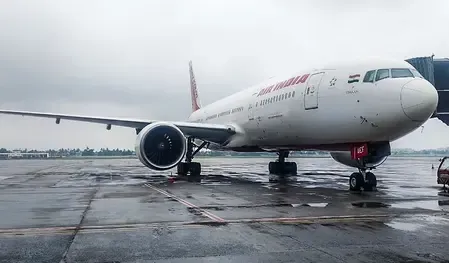
Air India Express resumed flights to Qatar and Bahrain in March, maintaining its broader Gulf network.
CEO Paul Griffiths said the airport is well-positioned for a traffic recovery as capacity is gradually restored.
Dubai International Airport recorded a 66% plunge in passenger traffic in March, as geopolitical tensions in West Asia — which erupted in February — triggered widespread flight disruptions and suppressed travel demand, according to reports. The sharp monthly decline dragged the airport's first-quarter traffic down to 25 lakh passengers, a fall of 21% compared to the same period last year.
Operational Disruptions at the World's Busiest Hub
The world's busiest international airport faced several operational setbacks during the period, including temporary shutdowns following drone-related incidents in nearby areas. In one such incident earlier in March, a drone struck a fuel tank in the vicinity of the airport, prompting authorities to halt flights as a precautionary measure. In a post on X, the airport stated that flights were suspended to ensure the safety of passengers and staff, and advised travellers to check with their airlines for updates.
The conflict linked to Iran caused cascading disruptions across the broader West Asia aviation network, curtailing both leisure and business travel demand significantly through the month.
CEO's Outlook and Recovery Signals
Despite the steep decline, airport authorities indicated that underlying travel demand remains robust. Chief Executive Officer Paul Griffiths reportedly said that the airport is well-positioned to handle a traffic recovery as capacity is gradually restored, reinforcing Dubai International Airport's status as a key global aviation hub. No full-year guidance was provided at this stage.
India Remains Top Source Market
India continued to be the largest source market for Dubai International Airport, contributing 25 lakh passengers during the quarter. Saudi Arabia, the United Kingdom, and Pakistan followed as the next largest source markets. Among destinations, London recorded the highest outbound traffic at 7.52 lakh passengers, with Mumbai and Jeddah next in line.
Air India Express Resumes Gulf Operations
Amid the regional turbulence, Air India Express announced the restoration of flight operations to Qatar and Bahrain in March. The airline confirmed it would continue operating to key destinations across the UAE — including Dubai, Abu Dhabi, Ras Al Khaimah, Sharjah, and Al Ain — as well as Muscat in Oman; Jeddah, Riyadh, and Dammam in Saudi Arabia; and Bahrain and Doha in Qatar. The airline also confirmed that Kuwait services would remain part of its Gulf network. This comes amid broader industry efforts to stabilise connectivity across a region that handles a significant share of India's outbound aviation traffic.
With capacity restoration underway and demand signals described as resilient, analysts will be watching whether Dubai International Airport can recoup lost volumes in the second quarter as the geopolitical situation evolves.
Point of View
Gulf-dependent tourism economies, and South Asian diaspora travel all absorb the shock. What is telling is that India remains the top source market even through the carnage, underscoring just how deeply the Dubai corridor is woven into Indian aviation demand. The recovery narrative from CEO Paul Griffiths is plausible, but the absence of full-year guidance suggests management itself is uncertain about the conflict's trajectory. The real question is whether a prolonged Iran-linked standoff rewires travel patterns permanently or merely delays them.
NationPress
23 Sept 2026
Frequently Asked Questions
Why did Dubai Airport passenger traffic fall 66% in March?
Dubai International Airport's traffic fell 66% in March due to geopolitical tensions in West Asia linked to the conflict involving Iran, which began in February. The disruptions included temporary flight shutdowns following a drone strike on a fuel tank near the airport, suppressing travel demand across the region.
How much did Dubai Airport's first-quarter traffic decline?
First-quarter passenger traffic at Dubai International Airport dropped to 25 lakh passengers, a decline of 21% compared to the same period the previous year, dragged down primarily by the sharp March fall.
Which country is the largest source market for Dubai Airport?
India is the largest source market for Dubai International Airport, contributing 25 lakh passengers during the quarter. Saudi Arabia, the United Kingdom, and Pakistan followed as the next largest source markets.
What is Air India Express doing amid the West Asia disruptions?
Air India Express resumed flights to Qatar and Bahrain in March and confirmed it would continue operating to key Gulf destinations including Dubai, Abu Dhabi, Muscat, Jeddah, Riyadh, Dammam, and Kuwait, maintaining its full Gulf network.
What did Dubai Airport CEO Paul Griffiths say about recovery?
CEO Paul Griffiths reportedly said the airport is well-positioned to handle a traffic recovery as capacity is gradually restored, though no full-year guidance was provided. Authorities noted that underlying travel demand remains robust despite the monthly decline.