E20 ethanol blend technically sound, benefits farmers: ICT Vice-Chancellor
Synopsis
ICT Vice-Chancellor Prof. Aniruddh B. Pandit has dismissed technical objections to India's E20 ethanol-blending policy as unfounded, pointing to historical precedent, rigorous pre-rollout studies, and the dual benefit of cutting crude import bills while boosting farmer incomes — even as an organised campaign against the programme, whose backers he says he cannot identify, gains traction.
Key Takeaways
ICT Vice-Chancellor Prof.
Pandit declared on 28 July that the E20 ethanol blend policy has no major technical difficulties.
Newer vehicles are fully compatible with E20 fuel; compatibility concerns are limited to older vehicle models with rubber and polymer fuel-system components.
The policy is expected to generate significant foreign exchange savings by reducing India's dependence on imported petroleum.
Greater ethanol demand is projected to benefit Indian farmers by creating a larger market for sugarcane and surplus grain.
India ran vehicles on 100% ethanol in the 1940s and 1950s , according to Prof.
Pandit, underscoring the engineering feasibility of a 20% blend.
Pandit noted what he described as an organised campaign against ethanol blending but said he could not identify its motivations.
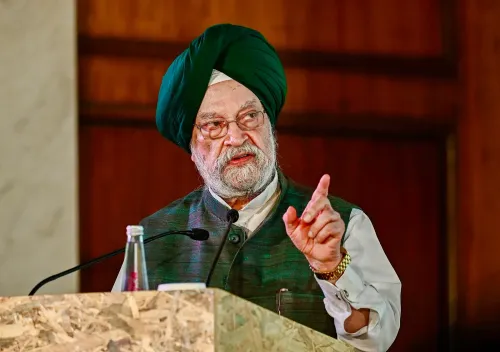
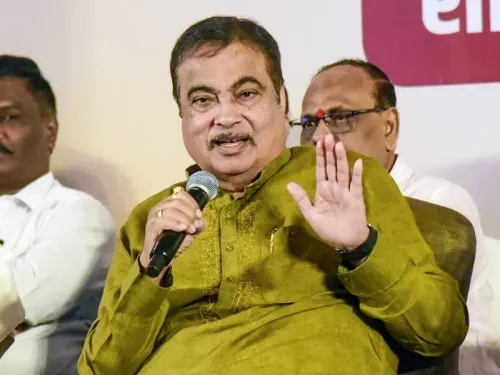
Institute of Chemical Technology (ICT) Vice-Chancellor Prof. Aniruddh B. Pandit on Tuesday, 28 July declared that India's E20 ethanol-blended fuel policy is technically sound, economically advantageous, and poised to strengthen the agricultural sector while cutting the country's reliance on imported petroleum. Speaking from Mumbai, Prof. Pandit pushed back against growing criticism of the blending programme, calling concerns largely unfounded from an engineering standpoint.
What Prof. Pandit Said
'From an overall point of view, this type of ethanol blending is likely to be extremely beneficial to Indian farmers. It is likely to save significant amount of foreign exchange because we are heavily dependent on petroleum,' Prof. Pandit said.
He also addressed what he described as an organised resistance to the policy: 'Whatever complaints which people are making and there appears to be some sort of a campaign to go against ethanol blending, I do not know the reasons for that. But there are no technical difficulties as far as 20 per cent ethanol blend is concerned.'
Compatibility With Vehicles
Prof. Pandit confirmed that newer vehicles are fully compatible with E20 fuel and face no operational issues. However, he acknowledged that older vehicle models could experience degradation of certain rubber and polymer-based components in their fuel systems when exposed to ethanol-blended petrol over time.
'A couple of other things which are there where there are certain rubber and polymeric components which are there where ethanol containing petrol passes through that as a result of which these polymeric materials are likely to get affected because of the blend of ethanol and petrol,' he explained, stressing that these concerns are confined to legacy vehicles rather than the broader fleet.
Historical and Technical Context
Prof. Pandit pointed to India's own automotive history to underline the policy's feasibility, noting that vehicles ran on 100 per cent ethanol during the 1940s and 1950s. He added that extensive scientific studies and technical evaluations were conducted before the E20 mandate was introduced, lending the policy a robust evidence base.
Economic and Agricultural Impact
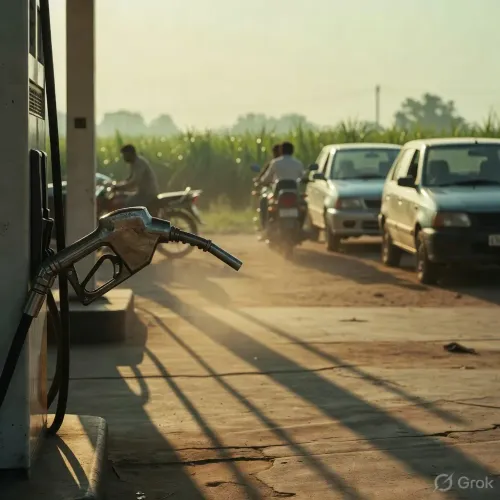
A key driver behind the E20 initiative is India's heavy dependence on crude oil imports, which places sustained pressure on the country's foreign exchange reserves. By substituting a 20 per cent share of petrol with domestically produced ethanol — largely derived from sugarcane and surplus grain — the policy is expected to generate greater demand for farm produce, directly benefiting Indian farmers.
This comes amid the government's broader push to achieve 20% ethanol blending across the country's fuel supply by 2025, a target that has gained momentum in recent years. Notably, India's ethanol production capacity has expanded significantly over the past decade, making the E20 rollout increasingly viable at scale.
What Comes Next
As the E20 rollout continues, the focus is expected to shift toward ensuring that fuel infrastructure and older vehicle segments are adequately managed through transition support or retrofitting guidance. Industry observers and policymakers will be watching whether the economic gains for farmers materialise at the pace the government has projected.
Point of View
But it addresses only the engineering half of the debate. The more contested question is whether the economic benefits — foreign exchange savings and farmer income gains — will be distributed equitably or captured largely by large sugar mills and blending intermediaries. India's ethanol programme has historically favoured sugarcane-surplus states like Uttar Pradesh and Maharashtra, raising questions about regional equity. The 'organised campaign' remark is also worth scrutiny: legitimate consumer and auto-industry concerns about older fleet compatibility deserve a policy response, not dismissal. A credible transition framework for legacy vehicles would do more to build public trust than characterising critics as bad-faith actors.
NationPress
27 Oct 2026
Frequently Asked Questions
What is the E20 ethanol blend policy in India?
The E20 policy mandates blending 20 per cent ethanol with petrol across India's fuel supply, with a target rollout by 2025. It aims to reduce crude oil import dependence, save foreign exchange, and create additional demand for domestically produced ethanol from sugarcane and grain.
Are there any technical problems with E20 fuel?
According to ICT Vice-Chancellor Prof. Aniruddh B. Pandit, there are no significant technical difficulties with E20 fuel for modern vehicles. Older vehicles may experience degradation of rubber and polymer components in their fuel systems, but these issues are limited to legacy models.
How does E20 ethanol blending benefit Indian farmers?
By increasing domestic demand for ethanol — primarily produced from sugarcane and surplus grain — the E20 policy is expected to provide farmers with a more stable and expanded market for their produce, according to Prof. Pandit.
Why is there opposition to the E20 ethanol blending programme?
Prof. Pandit acknowledged that complaints and what he described as an organised campaign exist against ethanol blending, but said he could not identify the reasons behind it. Critics have raised concerns about older vehicle compatibility and the equitable distribution of economic benefits.
Is ethanol blending new to India?
No. Prof. Pandit noted that India operated vehicles on 100 per cent ethanol during the 1940s and 1950s, indicating that a 20 per cent blend represents a well-precedented approach from an engineering perspective.