Electronics is India's 'new oil' as trade deficit nears $40 billion
Synopsis
India's electronics import bill has quietly grown to rival its oil deficit — a structural shift that HSBC Global Investment Research is now calling the 'new oil' problem. At nearly $40 billion since April and $8 billion in August alone, the electronics gap is exposing a dependency that rupee depreciation and trade deals alone may not fix quickly.
Key Takeaways
India's electronics trade deficit reached approximately $40 billion between April and August 2026 , according to HSBC Global Investment Research .
The electronics deficit stood at around $8 billion in August alone, now tracking close to the oil trade deficit in value terms.
Overall goods trade deficit narrowed to $27 billion in August from $32 billion in July; seasonally adjusted figure was $23 billion .
Non-oil export growth has risen sequentially for a fifth straight month , led by electronics and engineering, with strong shipments to Singapore, Malaysia, Hong Kong, South Africa , and Mainland China .
The rupee has depreciated 12% against the US Dollar, 21% against the Pound, and 25% against the Euro, boosting price competitiveness.
A structural 'missing middle' in labour-intensive mid-tech exports persists, with higher destination-market tariffs identified as a key barrier.
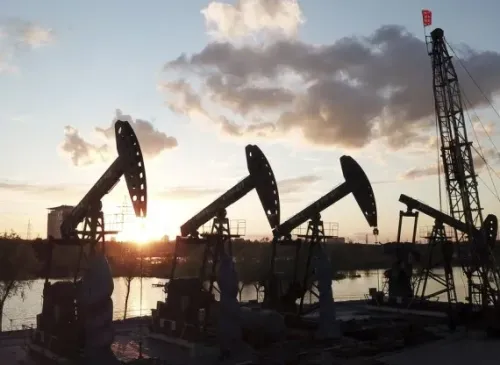
India's electronics trade deficit has climbed to roughly $40 billion since April 2026 and stood at approximately $8 billion in August alone, according to a report by HSBC Global Investment Research released on Wednesday, 16 September. The research house warned that electronics is fast becoming 'the new oil' for India, with the electronics and oil trade deficits now tracking each other closely in value terms.
Overall Trade Deficit Narrows
India's overall goods trade deficit contracted to $27 billion in August, down from $32 billion in July, driven primarily by a lower import bill even as export earnings held steady in dollar terms. On a seasonally adjusted basis, the deficit was narrower still at $23 billion, compared with $31 billion in the preceding month. The improvement, however, was concentrated in non-electronic categories, leaving the electronics gap stubbornly elevated.
Export Momentum and Key Markets
Non-oil export growth has logged sequential gains for a fifth consecutive month, with all major categories recording month-on-month increases. Electronics and engineering led the charge, while shipments to Singapore, Malaysia, Hong Kong, South Africa, and Mainland China have been particularly strong since the start of 2026. The HSBC report attributed part of this momentum to improved price competitiveness following a sharp depreciation of the Indian rupee — down 12% against the US Dollar, 21% against the British Pound, and 25% against the Euro.
India also continues to re-export roughly 40% of the oil it imports, which has helped compress the oil trade deficit. The gold trade deficit narrowed in August, though the report cautioned this relief may prove temporary as the festive season gets underway.
The 'Missing Middle' Problem
Despite the headline export strength, the HSBC report flagged a structural weakness it termed the 'missing middle': labour-intensive, mid-technology exports remain consistently subdued and have shown little sensitivity to the rupee's depreciation. These goods face comparatively higher tariffs in destination markets relative to India's regional peers, the report noted, creating both a drag on current export performance and a significant untapped opportunity.
Notably, India has recently accelerated the pace of signing trade agreements across multiple countries and regions. Once implemented, these deals are expected to lower tariff barriers on mid-tech exports and further improve the overall goods trade picture, according to the report.
Services Surplus and Provisional Estimates
The services trade balance for August is provisionally estimated at around $17 billion, slightly below July's final surplus of $18 billion. These figures are provisional estimates sourced from the Ministry of Commerce and Industry and are subject to revision. This comes amid a broader debate over India's trade architecture — one where a booming services surplus partially masks the structural vulnerabilities in goods trade, particularly in high-value electronics.
With the electronics deficit now rivalling oil in scale, policymakers and industry watchers will be closely tracking whether domestic manufacturing incentives and incoming trade agreements can meaningfully shift the import dependency curve in the months ahead.
Point of View
Even as exports grow, suggests domestic manufacturing is scaling too slowly to offset import demand. The 'missing middle' finding is the more uncomfortable truth: rupee depreciation, which theoretically boosts all exporters, has left labour-intensive mid-tech shipments cold — pointing to tariff and logistics barriers that exchange rates cannot fix. Trade agreements in the pipeline are the right lever, but implementation timelines and rules-of-origin rigour will determine whether they deliver or merely add to the list of structural reforms announced but incompletely executed.
NationPress
16 Sept 2026
Frequently Asked Questions
Why is electronics being called India's 'new oil' in trade terms?
HSBC Global Investment Research used the phrase because India's electronics trade deficit has grown to nearly $40 billion since April 2026, placing it in the same league as the country's oil trade deficit in value terms. Just as India is heavily dependent on crude oil imports, it is increasingly reliant on imported electronics, making the sector a major driver of the overall goods trade gap.
What was India's goods trade deficit in August 2026?
India's goods trade deficit narrowed to $27 billion in August 2026, down from $32 billion in July, according to the HSBC report. On a seasonally adjusted basis, the deficit was even lower at $23 billion, compared with $31 billion in the previous month.
Which export markets have driven India's recent export growth?
Shipments to Singapore, Malaysia, Hong Kong, South Africa, and Mainland China have been especially strong since the start of 2026. The HSBC report partly attributed this to improved price competitiveness following a sharp depreciation of the Indian rupee against major currencies.
What is the 'missing middle' problem in India's exports?
The 'missing middle' refers to consistently weak performance in labour-intensive, mid-technology exports, which have not responded to the rupee's depreciation. These goods face higher tariffs in destination markets compared to India's regional peers, limiting their competitiveness despite a weaker currency.
How could India's new trade agreements affect its export outlook?
India has recently accelerated the signing of trade agreements across multiple countries and regions. Once implemented, these deals are expected to reduce tariff rates on India's mid-tech exports, potentially closing the 'missing middle' gap and improving the overall goods trade balance, according to the HSBC report.