PM Modi calls top semiconductor CEOs to drive India's ISM 2.0 growth
Synopsis
Modi didn't just meet chip executives — he made a pitch for India to leapfrog from semiconductor student to global player. With ISM 2.0 on the table and firms like ASML, Intel, and Foxconn in the room, the roundtable is the clearest signal yet that India's semiconductor ambitions are moving from policy documents to boardroom agendas.
Key Takeaways
PM Narendra Modi chaired a semiconductor CEO roundtable in New Delhi on 16 September , focused on ISM 2.0 .
Over 20 global firms attended, including Intel , ASML , Micron , Foxconn , AMD , Tata Electronics , and IBM Research .
Modi called for greater industry participation in skilling , AI , and Quantum Computing , citing a target of training one crore people in AI .
The Centre reaffirmed a predictable and responsive policy environment and invited concrete industry suggestions on policy reform.
CEOs expressed confidence in India's potential to build capabilities across the full semiconductor value chain , including manufacturing, R&D, and advanced technologies.
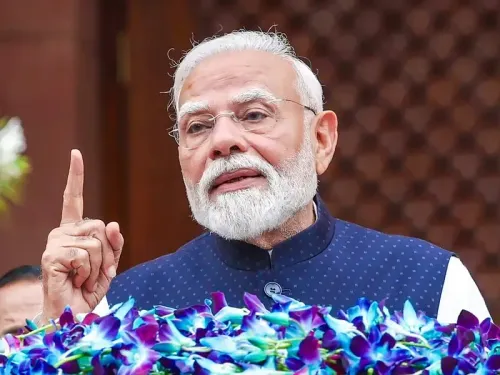
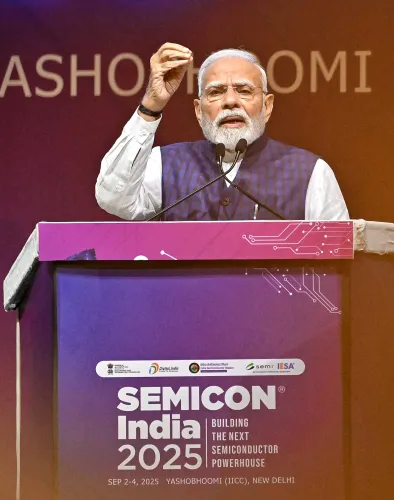
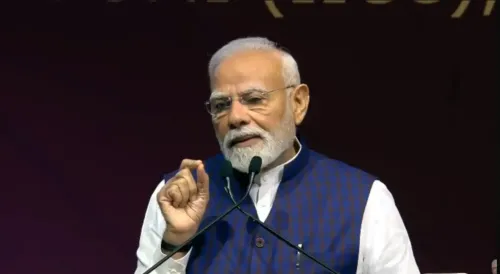
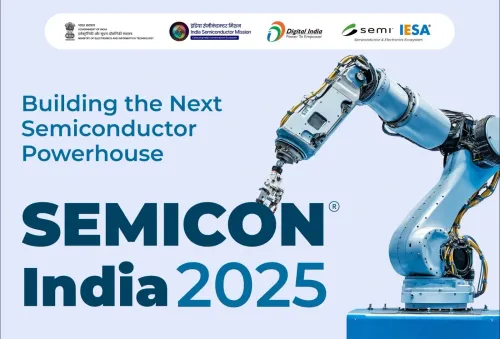
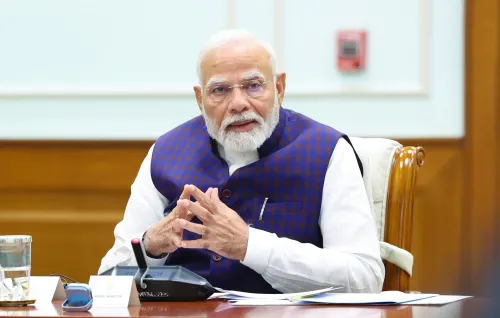
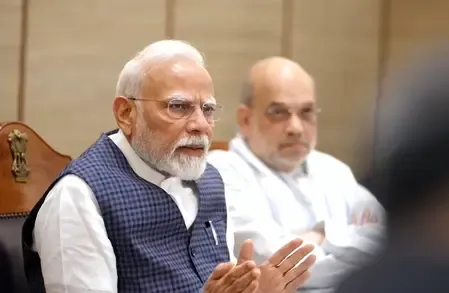
Prime Minister Narendra Modi on Wednesday, 16 September hosted a high-level roundtable in New Delhi with leading global semiconductor executives, urging them to actively participate in the next phase of India's semiconductor growth. The meeting, convened under the expanding India Semiconductor Mission (ISM) 2.0 framework, signals a deliberate push to move the sector from foundational groundwork to large-scale industrial deployment.
Key Developments at the Roundtable
According to a PMO statement, Modi stressed the critical importance of sustained collaboration between the government and the global semiconductor industry in shaping India's technology trajectory. He pointed to India's existing strengths — a deep talent pool, growing infrastructure, and rapid technology adoption — as the bedrock for the next leap forward.
The Prime Minister specifically called for greater industry involvement in skilling, innovation, and emerging fields such as Artificial Intelligence (AI) and Quantum Computing. Referencing the government's target of training one crore people in AI, he argued that India's human capital, combined with the expertise of global industry leaders, could generate transformational opportunities across the value chain.
Who Was in the Room
The roundtable brought together an unusually broad cross-section of the global semiconductor ecosystem. Attendees included senior representatives and CEOs from SEMI, Micron, Infineon, Applied Materials, ASML, Merck, Tokyo Electron Ltd, Fujifilm, AMD, Intel, Tata Electronics, Lam Research, Rapidus, NXP, Foxconn, Semi Conductor Devices, Advantest, Celesta Capital, CG Power, and IBM Research, among others. The list spans equipment makers, chip designers, materials suppliers, and manufacturers — effectively covering the full semiconductor stack.
What the Government Committed
Modi reiterated the Centre's commitment to a predictable and responsive policy environment, acknowledging that policies must evolve in step with technological change and industry needs. He invited the assembled executives to submit concrete suggestions on policy and administrative reforms, assuring them that such inputs would receive due consideration in further strengthening the sector. This open-door approach to policy co-creation is a departure from more top-down industrial strategies of the past.
Industry Response and Confidence in ISM 2.0
The assembled CEOs, according to the PMO statement, expressed appreciation for the government's sustained efforts across manufacturing, design, infrastructure, and talent development. They voiced confidence in the opportunities emerging under ISM 2.0 and in India's potential to build competitive capabilities spanning manufacturing, R&D, advanced technologies, and supporting industries.
Notably, the executives acknowledged that progress achieved in recent years has laid a credible foundation for deeper industry participation. They collectively affirmed their commitment to contributing to India's emergence as a globally competitive semiconductor and technology hub.
Why This Matters
This comes amid an intensifying global race to diversify semiconductor supply chains away from concentrated manufacturing in East Asia. The United States, the European Union, and Japan have each committed hundreds of billions of dollars to domestic chip production. India, through ISM and associated incentive schemes, is positioning itself as an alternative destination — particularly for design, packaging, and increasingly, fabrication. The breadth of companies at Wednesday's roundtable suggests that positioning is gaining traction among industry decision-makers. The next critical test will be whether policy commitments translate into firm investment announcements and on-ground capacity additions.
Point of View
The Dutch monopoly on extreme ultraviolet lithography, does not show up at aspirational meetings. Its presence, alongside Intel, Micron, and Foxconn, suggests India's semiconductor pitch has moved beyond diplomatic optics. Yet the gap between executive presence and capital commitment remains wide: India has yet to announce a fully operational leading-edge fab. The one-crore AI skilling target is ambitious but lacks a published measurement framework, echoing the accountability gap that has dogged earlier flagship skill missions. ISM 2.0's real test is not who sits at the roundtable — it is which of these firms files an investment application in the next twelve months.
NationPress
16 Sept 2026
Frequently Asked Questions
What is India Semiconductor Mission (ISM) 2.0?
ISM 2.0 is the expanded phase of India's national semiconductor programme, aimed at scaling up manufacturing, design, R&D, and supporting industries after the foundational groundwork of the first phase. PM Modi referenced it at the 16 September roundtable as the framework for the next stage of India's chip sector growth.
Which companies attended the semiconductor CEO roundtable with PM Modi?
The roundtable on 16 September in New Delhi included representatives from over 20 organisations, among them SEMI, Micron, Infineon, Applied Materials, ASML, Merck, Tokyo Electron Ltd, Fujifilm, AMD, Intel, Tata Electronics, Lam Research, Rapidus, NXP, Foxconn, Advantest, Celesta Capital, CG Power, and IBM Research.
What did PM Modi ask the semiconductor industry to do?
Modi urged the assembled CEOs to deepen participation in India's semiconductor ecosystem, specifically in skilling, innovation, AI, and Quantum Computing. He also invited them to submit policy and administrative suggestions, assuring that their inputs would be factored into further sector development.
What is the government's AI skilling target mentioned at the roundtable?
The government has set a target of training one crore people in AI. Modi cited this figure at the roundtable to illustrate the scale of India's talent ambitions and the opportunity it creates when combined with the expertise of global semiconductor and technology firms.
Why is India pushing so hard to build a semiconductor industry?
Global supply chain disruptions — most acutely felt during the post-pandemic chip shortage — exposed the risks of concentrated semiconductor manufacturing in East Asia. India, alongside the US, EU, and Japan, is investing in domestic chip capabilities. India's pitch centres on its engineering talent base, growing infrastructure, and government incentives under ISM and related schemes.