Xi Jinping's purge deepens: 40+ Central Committee members face expulsion
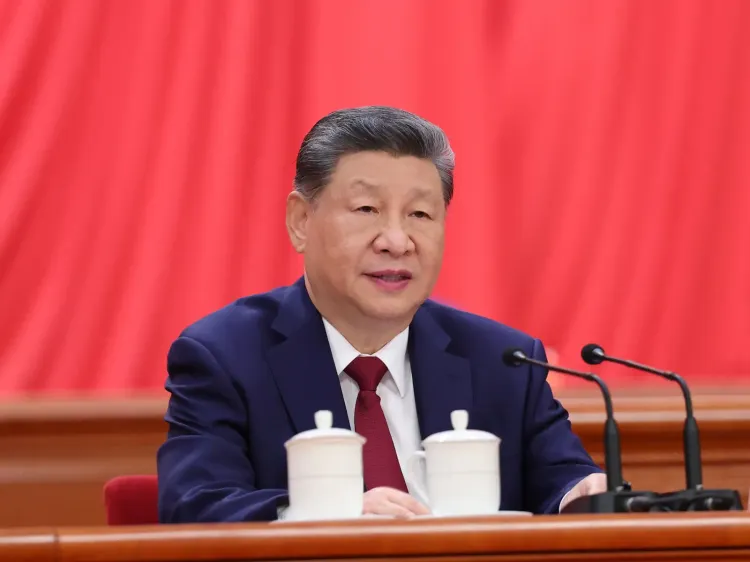
Synopsis
Xi Jinping's political purge has taken an overtly ideological turn — and the numbers are staggering. With over 40 Central Committee members set for expulsion at next month's Fifth Plenary, more than a quarter of the CCP's top elected body could be removed since the 20th Party Congress. Even long-trusted loyalists and senior military commanders are not safe, raising questions about whether this level of political consolidation can hold together a party — and an army — that still needs to function.
Key Takeaways
More than 40 Central Committee members are expected to be expelled at the Fifth Plenary Session in Beijing next month.
The purge targets three forms of CCP 'impurity': ideological disloyalty to Xi Jinping , organisational factionalism, and perceived pro-US or 'peaceful evolution' sympathies.
Combined with earlier expulsions, the removals could mean over a quarter of the 205-member Central Committee elected at the 20th Party Congress has been purged.
Senior military figures including former CMC vice chairman Zhang Youxia and Joint Staff Department chief Liu Zhenli were removed in January .
Analysts warn that the pace of turnover risks disrupting institutional continuity and military readiness.
The purge unfolds as Xi prepares to seek a fourth term , framing political loyalty as a prerequisite for governance.
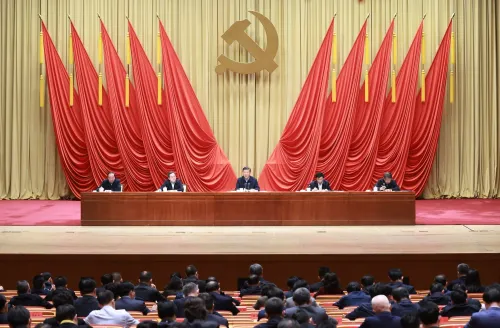
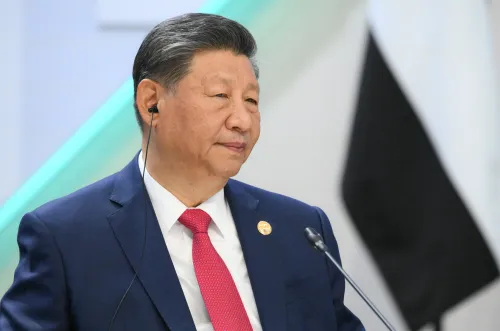
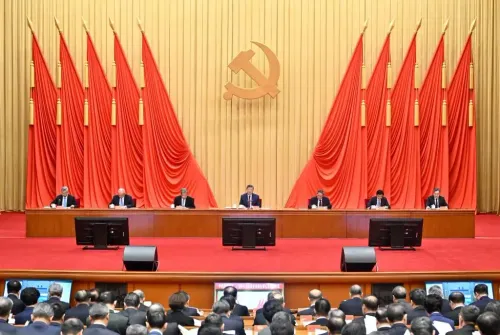
Chinese President Xi Jinping's sweeping political purge within the Chinese Communist Party (CCP) is widening dramatically, with more than 40 members of the Central Committee expected to be expelled at the Fifth Plenary Session next month in Beijing, according to a Chinese national security official cited in reports. The scale of the purge, if confirmed, would mark one of the most extensive leadership clearances in the CCP's recent history.
An Ideological Crackdown, Not Just Anti-Corruption
What distinguishes the current campaign from earlier anti-graft drives is its explicitly ideological character. According to the national security official, Xi's campaign is targeting three forms of what the party terms 'impurity': ideological disloyalty to Xi personally, organisational factionalism, and conduct perceived as overly pro-US or shaped by belief in 'peaceful evolution' — a term referring to the theory that Western influence could gradually transform socialist systems from within.
This framing signals that the purge extends well beyond rooting out financial misconduct. The objective, as detailed in a Mekong News Myanmar report, appears to be the dismantling of alternative power centres and the imposition of a unified political line across the CCP, the government, and the People's Liberation Army (PLA).
The Numbers: A Quarter of the Central Committee Under Scrutiny
The scale is striking by any historical measure. Four Central Committee members were expelled at the Third Plenary Session and another 10 at the Fourth. The addition of more than 40 at the Fifth would mean that over a quarter of the 205-member Central Committee elected at the 20th Party Congress has been purged or faces imminent expulsion.
Notably, this consolidation is unfolding as Xi prepares to seek a fourth term in power, underlining the political stakes involved.
Military Leadership Not Spared
The purge has cut deep into China's defence establishment. Former Central Military Commission (CMC) vice chairman Zhang Youxia and Joint Staff Department chief Liu Zhenli were removed in January. Zhong Shaojun, a long-serving Xi loyalist who headed the CMC General Office for 11 years, and former Strategic Support Force commander Ju Qiansheng have also lost their positions as National People's Congress deputies. All four are reportedly expected to be formally expelled from the party at the Fifth Plenary Session.
The fact that even officials once considered close Xi allies are now caught in the net suggests the campaign has moved into a phase where proximity to the leader offers diminishing protection.
Risks of Overreach
Analysts warn that the scale of the purge carries its own dangers. Rapid turnover at the apex of the party and military can disrupt institutional continuity, deepen uncertainty among officials, and encourage excessive political caution — the very dysfunction a governing party cannot afford. According to the report, the Fifth Plenary Session may therefore serve as a revealing test of Xi's strategy: whether tighter political control can strengthen the system without degrading its capacity to govern and, critically, to fight effectively.
The session is expected to draw intense international scrutiny, with its outcome likely to shape perceptions of CCP cohesion — and Xi's grip on power — heading into his anticipated fourth term.
Point of View
Not just conduct. The military dimension is particularly consequential: removing a CMC vice chairman and a Joint Staff chief in the same cycle is without modern precedent, and the operational risk to PLA readiness is not trivial. The deeper irony is structural: a purge of this scale, designed to eliminate uncertainty, may itself be the largest single source of elite-level uncertainty in China today. Whether a system hollowed of independent judgment can govern competently — let alone deter adversaries — is the question the Fifth Plenary cannot answer but will inevitably raise.
NationPress
16 Sept 2026
Frequently Asked Questions
How many Central Committee members does Xi Jinping's purge target?
More than 40 Central Committee members are expected to be expelled at the CCP's Fifth Plenary Session next month in Beijing. Combined with four expulsions at the Third Plenary and 10 at the Fourth, this would mean over a quarter of the 205-member Central Committee elected at the 20th Party Congress has been purged or faces expulsion.
Why is Xi Jinping's current political purge considered different from earlier anti-corruption drives?
The current campaign explicitly targets ideological disloyalty, organisational factionalism, and pro-US or 'peaceful evolution' sympathies — not just financial misconduct. This signals a shift from anti-graft enforcement to a broader political purification aimed at ensuring uniform allegiance to Xi across the CCP, government, and military.
Which military figures have been caught in the purge?
Former Central Military Commission vice chairman Zhang Youxia and Joint Staff Department chief Liu Zhenli were removed in January. Long-serving Xi loyalist Zhong Shaojun and former Strategic Support Force commander Ju Qiansheng have also lost their National People's Congress positions and are reportedly expected to be formally expelled at the Fifth Plenary Session.
What risks does such an extensive purge pose for China?
Analysts warn that rapid turnover at the top of the party and military can disrupt institutional continuity, create uncertainty among officials, and encourage excessive political caution. Critics argue this could impair China's ability to govern effectively and maintain military readiness, potentially undermining the very stability Xi seeks to enforce.
Why is the Fifth Plenary Session significant?
The Fifth Plenary Session in Beijing is expected to formally ratify the expulsion of more than 40 Central Committee members, making it the largest single round of leadership removals in recent CCP history. It will also be a key indicator of whether Xi's political consolidation strategy is sustainable ahead of his anticipated fourth term.