West Bengal mineral tax revenue jumps 33% to ₹567.82 crore in Apr–Aug 2026
Synopsis
West Bengal's mineral revenue collections jumped over 32% in just four months of FY 2026-27, with officials crediting a crackdown on corruption-linked leakages inherited from the previous TMC administration. Birbhum alone contributed ₹235 crore — nearly half the total — making this as much a political accountability story as a fiscal one.
Key Takeaways
West Bengal collected ₹567.82 crore in mineral tax revenue between April 16 and August 15, 2026 — up 32.60% from ₹428.20 crore in the same period of 2025-26 .
Birbhum was the top-contributing district at ₹235 crore , followed by Jhargram at ₹70.29 crore , East Burdwan at ₹56.12 crore , and West Burdwan at ₹48.59 crore .
The State Finance Department attributed the growth to plugging corruption-related revenue leakages under the mineral revenue head.
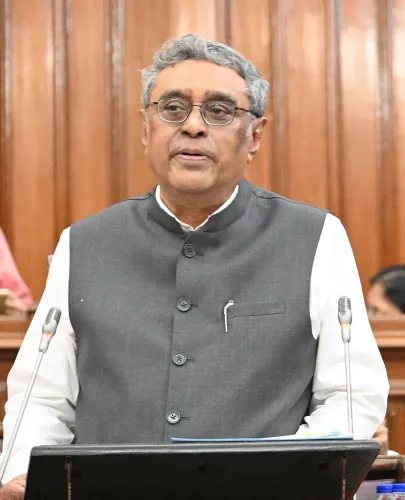
Finance Minister Swapan Dasgupta has publicly committed to improving collections through anti-leakage measures rather than new taxes.
West Bengal's projected own tax revenue for FY 2026-27 is ₹1,30,669.68 crore , with SGST as the largest component at ₹61,535 crore .
West Bengal's tax revenue collection from mineral resources surged 32.60 per cent to ₹567.82 crore in the first four months of the financial year 2026-27 — between April 16 and August 15, 2026 — compared to ₹428.20 crore collected during the same period in 2025-26, according to data released by the State Finance Department on Wednesday, 16 September 2026. Officials attributed the sharp uptick to systematic plugging of corruption-related revenue leakages under the mineral revenue head.
District-wise Breakdown
The mineral-rich districts of Birbhum and Jhargram were the top contributors to the improved collections. Birbhum led with ₹235 crore, followed by Jhargram at ₹70.29 crore. East Burdwan ranked third with ₹56.12 crore, while West Burdwan came in fourth at ₹48.59 crore, according to the State Finance Department official.
What the Government Said
A State Finance Department official stated that a back-calculation had identified mineral revenue collection as the segment most affected by corruption-linked leakages during the previous administration. 'A back calculation revealed that the maximum corruption-related revenue leakages during the previous regime was in the mineral revenue collection. So, the state government took all possible measures to plug these leakages as far as possible,' the official said. The official acknowledged that the anti-leakage exercise was not yet complete, but said the improved numbers were evidence of measurable progress.
Finance Minister's Stated Approach
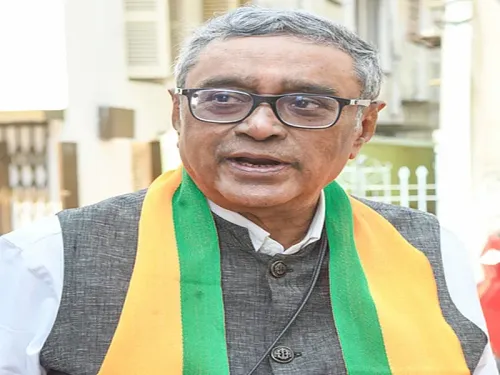
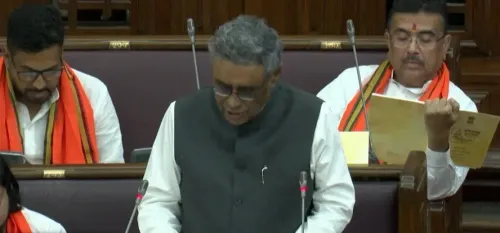
Since Swapan Dasgupta — a journalist-turned-politician — assumed charge as State Finance Minister, his publicly stated priority has been to raise the state's own tax revenue by closing corruption-driven gaps rather than imposing fresh tax burdens on ordinary citizens. The mineral revenue performance in the current fiscal is being cited by officials as an early validation of that approach.
Broader Revenue Picture for FY 2026-27
As per the budget estimates for 2026-27, West Bengal's projected own tax revenue stands at ₹1,30,669.68 crore, up from revised estimates of ₹1,11,737.13 crore for 2025-26. The largest contributor to that projected figure is State Goods and Services Tax (SGST) at ₹61,535 crore, followed by state excise at ₹24,922 crore. Mineral revenue, while a smaller line item in absolute terms, has drawn attention this year for its outsized growth rate relative to other heads.
Context and What It Signals
This comes amid a broader push by the current state administration to differentiate its fiscal governance from the preceding All India Trinamool Congress (TMC) tenure. Critics of the previous regime have long alleged systemic under-collection in mineral-rich belts, particularly in districts like Birbhum — a claim the current government appears to be leaning into with its leakage-plugging narrative. Whether the momentum holds through the remaining months of the fiscal year will be closely watched, as the state still needs to bridge a significant gap between current collections and its ambitious full-year own-tax-revenue target.
Point of View
But the government's framing deserves scrutiny. Attributing the entire gain to anti-leakage measures — while implicitly indicting the previous TMC administration — is a political argument dressed as an audit finding; independent verification of what exactly changed operationally is absent from the public record. Birbhum's outsized contribution of ₹235 crore out of a total ₹567.82 crore also raises a structural question: if one district accounts for nearly 41% of collections, how robust is the revenue base in the remaining mineral-belt districts? The real test will come at year-end, when the state must demonstrate that this momentum was systemic reform and not a one-time correction.
NationPress
16 Sept 2026
Frequently Asked Questions
By how much did West Bengal's mineral tax revenue grow in FY 2026-27?
West Bengal's mineral tax revenue grew by 32.60% in the first four months of FY 2026-27, rising to ₹567.82 crore between April 16 and August 15, 2026, from ₹428.20 crore in the same period of the previous year. The State Finance Department attributed the increase to plugging corruption-related leakages.
Which districts contributed the most to West Bengal's mineral revenue collection?
Birbhum was the top contributor at ₹235 crore, followed by Jhargram at ₹70.29 crore, East Burdwan at ₹56.12 crore, and West Burdwan at ₹48.59 crore, according to the State Finance Department.
What is West Bengal's total own tax revenue target for FY 2026-27?
West Bengal's budget estimate for its own tax revenue in FY 2026-27 is ₹1,30,669.68 crore, up from revised estimates of ₹1,11,737.13 crore for 2025-26. SGST is the largest projected contributor at ₹61,535 crore, followed by state excise at ₹24,922 crore.
Why does the government say mineral revenue collections improved?
State Finance Department officials stated that a back-calculation identified mineral revenue as the area most affected by corruption-linked leakages under the previous administration. The current government says it took targeted measures to close those gaps, though officials acknowledged that 100% success has not yet been achieved.
Who is West Bengal's Finance Minister and what is his revenue strategy?
Swapan Dasgupta, a journalist-turned-politician, serves as West Bengal's Finance Minister. He has publicly stated his approach is to improve state revenue by plugging corruption-driven leakages rather than imposing additional taxes on citizens.