India-EU FTA could cut tariffs and trade barriers, says Estonia envoy
Synopsis
Estonia's Ambassador to India says the proposed India-EU Free Trade Agreement could go beyond cutting customs duties to tackle the non-tariff barriers that most hurt smaller, tech-focused economies like Estonia — and she's hoping leaders seal the deal before 2026 is out. The statement signals growing EU-side pressure to close a pact that has been in negotiation, on and off, for years.
Key Takeaways
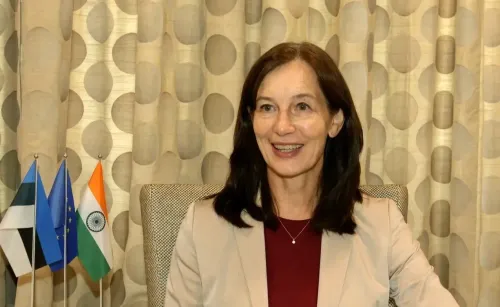
Estonia's Ambassador Kristi Karelsohn said the India-EU FTA could reduce both tariff and non-tariff barriers, benefiting businesses on both sides.
She expressed hope the deal will be signed by Indian and EU leaders before the end of 2026 .
Non-tariff barriers — including customs procedures and certification requirements — are described as particularly challenging for smaller companies .
Estonia sees strong cooperation potential in digital services, technology, and cybersecurity with India.
Karelsohn said Estonia fully supports India's ambition for a greater role in global organisations and multilateral forums.
India-Estonia bilateral ties are in 'excellent shape' and entering a particularly exciting phase, according to the ambassador.
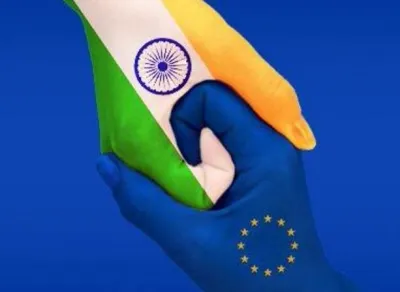
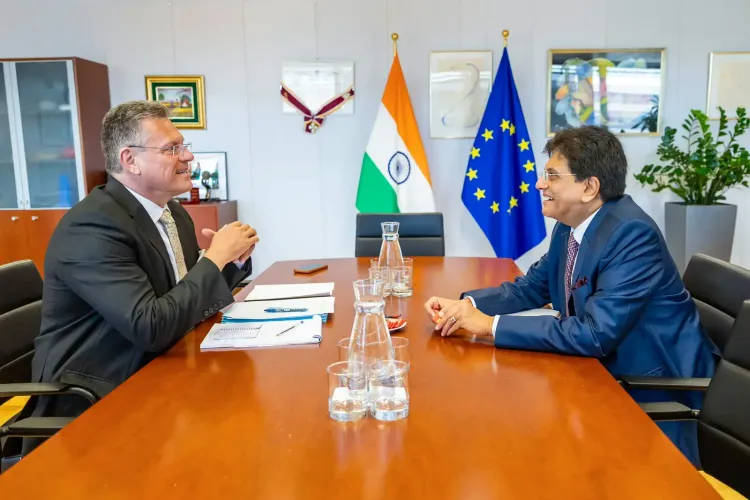
The proposed India-European Union Free Trade Agreement (FTA) has the potential to significantly reduce both tariff and non-tariff barriers, opening fresh business opportunities for companies on both sides, Estonia's Ambassador to India Kristi Karelsohn said on Wednesday, 21 October 2026. Karelsohn expressed hope that the landmark deal will be signed by leaders of India and the EU before the end of the year.
What the FTA Could Unlock
Speaking on the state of bilateral ties, Karelsohn said the agreement is expected to lower existing customs duties while addressing non-tariff hurdles that particularly burden smaller businesses. 'It is not just about tariffs. Customs procedures, certification requirements and other regulatory hurdles can be particularly difficult for smaller companies,' she said.
She noted that non-tariff barriers — covering everything from regulatory compliance to product certification — have long posed systemic challenges for companies attempting to access foreign markets, and that the FTA could meaningfully address these friction points beyond mere duty reductions.
Estonia's Stake in the Deal
While acknowledging that Estonia is a relatively small economy with a limited manufacturing base, Karelsohn highlighted strong potential in digital services, technology, and cybersecurity — sectors where Estonian firms have developed recognised global expertise. For companies of this profile, she argued, non-tariff barriers and procedural complexities are often a greater obstacle than customs duties alone.
India-Estonia relations are currently in 'excellent shape' and entering a 'particularly exciting phase', the ambassador said, aided by deepening engagement between New Delhi and Brussels at the broader India-EU level.
India's Growing Global Ambitions
Karelsohn also touched on India's expanding role in international affairs, signalling Tallinn's explicit support for New Delhi's bid for a stronger voice in multilateral forums. 'We have recently seen India's growing ambition to play a greater role in the world and in global organisations. I think this ambition needs to be supported because the international organisations and structures we see today were established a long time ago, in a very different era,' she said.
She added that Estonia fully understands and supports India's aspirations, and would like to see large democratic nations such as India exercise greater influence across global platforms and institutions.
Where the Negotiations Stand
The India-EU FTA has been under negotiation for several years, with both sides resuming formal talks in 2022 after a near-decade-long pause. The timeline for a year-end signing, as expressed by the Estonian envoy, would represent a significant acceleration in what has historically been a complex and drawn-out process. This comes amid broader efforts by the EU to diversify trade partnerships and reduce dependencies following geopolitical shifts in Europe and Asia. Whether all outstanding issues — including those around data flows, government procurement, and intellectual property — can be resolved within that window remains to be seen.
Point of View
Digitally advanced EU member states like Estonia, the real prize lies in dismantling non-tariff barriers around certification, data flows, and regulatory recognition. That distinction matters because large manufacturing economies within the EU may have different priorities, which is part of why these talks have dragged on for years. A year-end signing deadline sounds ambitious given the unresolved issues around government procurement and intellectual property, but the political signalling from both sides has rarely been this aligned. India's growing multipolarity push and the EU's post-Ukraine supply-chain diversification agenda give both parties structural reasons to close — the question is whether negotiators can move at a politician's pace.
NationPress
21 Oct 2026
Frequently Asked Questions
What is the India-EU Free Trade Agreement?
The India-EU Free Trade Agreement is a comprehensive trade deal under negotiation between India and the European Union, aimed at reducing customs tariffs and non-tariff barriers to boost bilateral commerce. Formal talks resumed in 2022 after a near-decade-long pause.
When could the India-EU FTA be signed?
Estonia's Ambassador Kristi Karelsohn expressed hope on 21 October 2026 that the agreement will be signed by the leaders of India and the EU before the end of 2026. No official signing date has been confirmed by either side.
Why do non-tariff barriers matter in the India-EU FTA talks?
Non-tariff barriers — such as customs procedures, certification requirements, and regulatory compliance standards — can be as restrictive as customs duties, particularly for smaller companies. The Estonian envoy highlighted these as a key concern for tech and digital-services firms seeking access to foreign markets.
What sectors does Estonia want to prioritise with India?
Estonia sees the strongest cooperation potential with India in digital services, technology, and cybersecurity, given the global expertise Estonian companies have developed in these fields. These sectors align with India's own digital economy ambitions.
Does Estonia support India's role in global organisations?
Yes. Ambassador Karelsohn explicitly stated that Estonia supports India's ambition to play a greater role in international organisations, arguing that global governance structures need to reflect today's changed geopolitical and economic realities.