FASTag exemption rules revised for Divyangjan: 5-year validity for 70%+ disability
Synopsis
The Centre has scrapped the annual renewal requirement for Divyangjan FASTags, replacing it with a disability-percentage-based validity: 5 years for 70–100% disability and 3 years for 40–70%. Effective 2 October 2026, the change reduces procedural burden on PwD vehicle owners and marks a more inclusive redesign of India's national highway tolling framework.
Key Takeaways
Revised exempted FASTag guidelines for Divyangjan/PwD take effect from 2 October 2026 .
Persons with 70% to 100% disability will receive a FASTag valid for five years ; those with 40% to less than 70% will get three years validity.
Earlier rules required annual renewal of exempted FASTags — that requirement has been scrapped.
Eligibility is based on a valid Disability Certificate , UDID Card , or other applicable records.
The FASTag Annual Pass has surpassed one crore activations since its launch on 15 August 2025 .
The Ministry of Road Transport and Highways on 1 October 2026 announced revised guidelines for the issuance and renewal of exempted FASTag for eligible Divyangjan and Persons with Disabilities (PwD) beneficiaries, with the updated rules taking effect from 2 October 2026. The changes are aimed at bringing greater uniformity to the process and reducing the burden of repeated procedural formalities on disabled vehicle owners.
Key Changes in FASTag Validity
Under the revised framework, the validity of an exempted FASTag will now be determined by the percentage of disability recorded in a valid Disability Certificate, Unique Disability Identity (UDID) Card, or other applicable records. Vehicles specially designed for persons with physical disabilities, as well as vehicles registered under the ownership type 'Divyangjan', will be issued exempted FASTags accordingly.
Specifically, FASTag issued to persons with 70% to 100% disability will carry a validity of five years, while those issued to persons with 40% to less than 70% disability will remain valid for three years. Renewal will be permitted thereafter, subject to continued eligibility and compliance with the National Highways Fee Rules, 2008.
What Changed From Earlier Rules
Previously, exempted FASTags for Divyangjan had to be renewed on an annual basis — a requirement that critics and disability rights advocates had flagged as unnecessarily burdensome for beneficiaries who hold permanent or long-term disability certifications. The new multi-year validity tiers are a direct response to that concern.
Notably, this revision aligns the tolling system more closely with the actual nature of disability, distinguishing between varying degrees of impairment rather than applying a uniform renewal timeline regardless of condition severity.
Impact on PwD Vehicle Owners
The revised rules are expected to benefit a significant number of PwD vehicle owners across India's national highway network. By linking FASTag validity to disability percentage, the government aims to make the National Highway tolling ecosystem more accessible, transparent, and user-friendly for this category of beneficiaries. The changes also ensure that toll exemptions continue to be administered in accordance with prescribed eligibility requirements.
FASTag Annual Pass Milestone
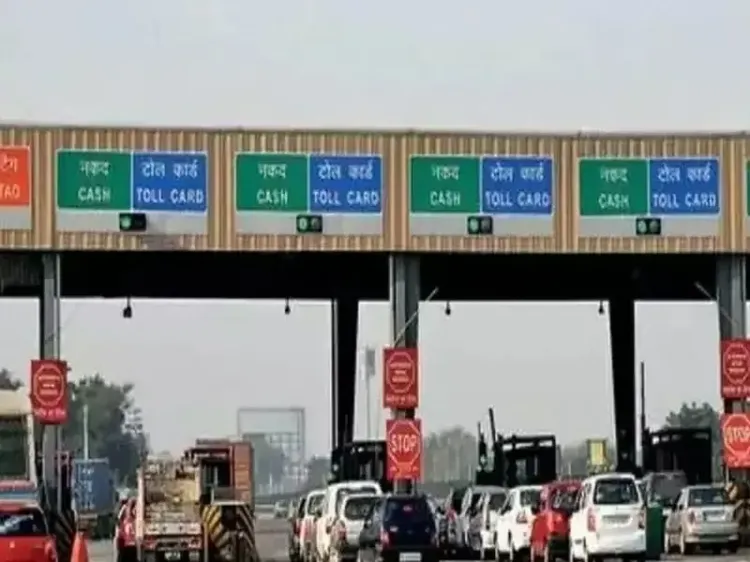
This policy revision comes shortly after the government confirmed that the FASTag Annual Pass has crossed the milestone of one crore activations since its launch on 15 August 2025. The pass is available for all non-commercial vehicles with a valid FASTag and is activated through the Rajmargyatra App upon a one-time payment of ₹3,075, which covers one year of validity or 200 toll plaza crossings, eliminating the need for frequent FASTag recharges.
With these reforms, the Centre is positioning India's tolling infrastructure as more inclusive — a step that disability advocacy groups have long sought, though implementation at toll plazas will determine whether the policy delivers on its promise.
Point of View
And that forcing annual renewals placed a disproportionate administrative burden on those the exemption was meant to protect. The more meaningful test, however, is at the toll plaza level: whether UDID-linked systems can verify eligibility in real time without delays or disputes. India's disability welfare architecture has historically suffered from implementation gaps even when policy intent is sound. The Ministry should pair this rule change with a clear directive to toll operators and banks on verification protocols, or the paperwork burden will simply shift downstream.
NationPress
1 Oct 2026
Frequently Asked Questions
What are the new FASTag exemption rules for Divyangjan?
From 2 October 2026, exempted FASTags for Divyangjan will be valid for five years for persons with 70% to 100% disability, and for three years for those with 40% to less than 70% disability. The earlier requirement of annual renewal has been removed.
Who is eligible for an exempted FASTag under the revised rules?
Vehicles specially designed and constructed for use by persons with physical disabilities, and vehicles registered under the ownership type 'Divyangjan', are eligible. Eligibility is verified through a valid Disability Certificate, UDID Card, or other applicable records.
When do the revised FASTag rules for PwD come into effect?
The revised guidelines issued by the Ministry of Road Transport and Highways take effect from 2 October 2026.
Can the exempted FASTag be renewed after it expires?
Yes. The exempted FASTag may be renewed after its validity period ends, subject to continued eligibility and compliance with the National Highways Fee Rules, 2008.
What is the FASTag Annual Pass and how does it relate to these changes?
The FASTag Annual Pass, launched on 15 August 2025, allows non-commercial vehicle owners to make a one-time payment of ₹3,075 for one year of validity or 200 toll plaza crossings via the Rajmargyatra App. It crossed one crore activations this week, and is a separate scheme from the Divyangjan exemption — though both are part of the government's broader effort to make national highway tolling more accessible.