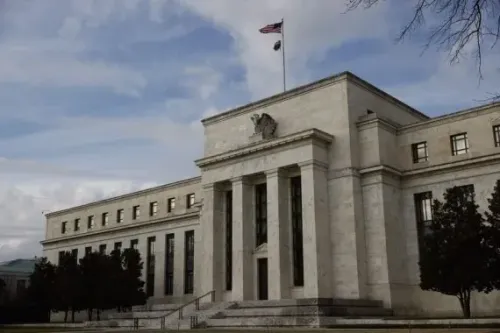
US Fed holds rates at 3.75-4%; two dissents signal December hike likely
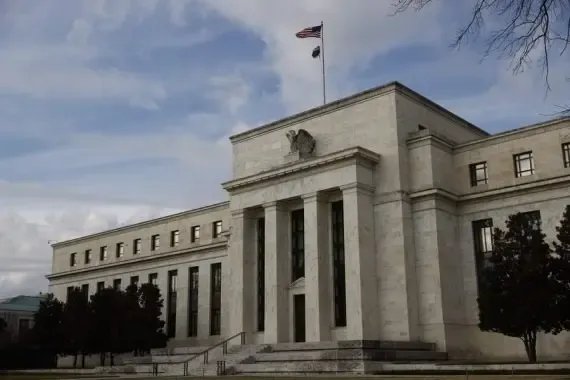
Synopsis
The US Federal Reserve held rates steady, but two dissenting votes in favour of an immediate hike and an upgraded 'strong' growth assessment are the clearest signals yet that December is live. With the 10-year Treasury yield near 5.02% and dollar assets competing hard for global capital, India's foreign inflow outlook hangs in the balance.
Key Takeaways
The US Federal Reserve held its benchmark rate unchanged at 3.75–4% at its latest meeting.
Two dissenting votes in favour of an immediate rate increase point to growing support for a December hike .
The Fed upgraded its economic growth assessment from 'solid' to 'strong' , compared with its September language.
The US 10-year Treasury yield moved to approximately 5.02% after the decision, signalling tight global financial conditions.
Elevated energy costs, tariffs, consumer spending, and an AI-driven investment boom are the key inflation risk factors the Fed is monitoring.
A December hike could pressure the Indian rupee and slow foreign portfolio inflows into India, analysts warn.
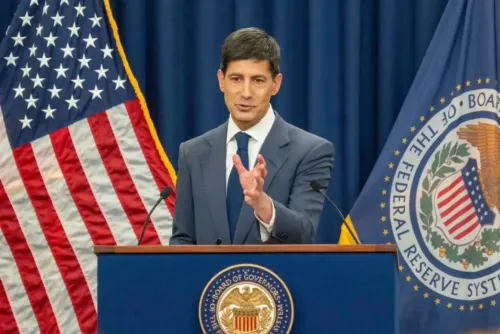
The US Federal Reserve has held its benchmark interest rate steady at 3.75–4%, but two dissenting votes in favour of an immediate increase are stoking expectations that a December rate hike is increasingly on the table, according to an analysis by Axis Bank released on Thursday, 29 October 2026. The split within the central bank's policy committee signals that the consensus around further monetary tightening is quietly hardening.
What the Fed's Statement Said
The Federal Open Market Committee's policy statement acknowledged strong economic growth and persistent inflationary pressures, but indicated that policymakers preferred to await additional data before acting. The Fed also upgraded its characterisation of economic activity from a 'solid' expansion — the language used at its September meeting — to a 'strong' pace, a subtle but meaningful shift in tone.
The Axis Bank report noted that 'strong growth prints and September PCE inflation are now the immediate tests, with labour market uncertainty potentially providing some room to wait despite broadening price pressures.'
What Is Driving Inflation Concerns
The central bank is weighing a confluence of price pressures: elevated energy costs, import tariffs, resilient consumer spending, and an artificial intelligence-driven investment boom — each of which, individually or together, could warrant additional monetary tightening. The September rate increase had given the Fed some breathing room, but analysts warn that energy prices remain a persistent upside risk to the inflation outlook.
The Fed's current framework, according to the report, 'remains focused on monitoring inflationary pressures — specifically the breadth and sources of inflation,' suggesting the committee is watching whether price increases are becoming more entrenched across sectors rather than concentrated in a few volatile categories.
Market Signals and Yield Movements
The US 10-year Treasury yield moved to around 5.02% following the decision, indicating that financial markets have not interpreted the pause as a loosening of global monetary conditions. For emerging markets including India, this is a critical signal: market participants noted that yields need to stabilise below recent levels for dollar-denominated assets to stop competing with emerging market inflows for global capital.
Labour market data, which remains mixed, could give the Fed political and technical cover to hold through year-end if hiring softens — but the two dissenting votes suggest that patience within the committee may be wearing thin.
Implications for India and Emerging Markets
A December Fed rate hike would likely strengthen the US dollar, tighten global liquidity, and put pressure on foreign portfolio inflows into India. Any sustained outflow could weigh on the Indian rupee and complicate the Reserve Bank of India's own monetary policy calculus. Analysts say a durable revival of foreign inflows into Indian equities and bonds is contingent on Treasury yields stabilising at lower levels — a condition that a December hike would make harder to meet.
The next US inflation print and labour market data will be closely watched as the Fed heads into its final policy meeting of the year.
Point of View
Or whether the inflation breadth argument wins out. For India, this is not abstract: a December hike combined with a 5%-plus Treasury yield makes the case for FPI inflows structurally harder, and the RBI will be watching whether it needs to respond with its own posture shift. The Axis Bank note is careful, but the arithmetic points one way.
NationPress
29 Oct 2026
Frequently Asked Questions
Why did the US Federal Reserve keep interest rates unchanged?
The Fed held rates at 3.75–4% because policymakers wanted to wait for additional data — particularly on inflation and the labour market — before acting further. While growth is strong and inflation persistent, mixed jobs signals gave the committee reason to pause, according to the Axis Bank analysis.
What do the two dissenting votes at the Fed mean?
Two Fed policymakers voted in favour of an immediate rate increase rather than a hold, signalling that support for further tightening within the committee is growing. Analysts read this as a strong indicator that a rate hike in December is increasingly likely.
How does the Fed's decision affect India?
A potential December US rate hike would likely strengthen the dollar and push Treasury yields higher, making dollar assets more attractive relative to emerging markets like India. This could slow or reverse foreign portfolio inflows into Indian equities and bonds and put pressure on the rupee.
What is driving US inflation concerns despite the rate hold?
The Fed is monitoring several persistent pressures: elevated energy prices, import tariffs, resilient consumer spending, and an AI-driven investment boom. Together, these factors risk broadening inflation beyond volatile categories, which is what the central bank is most concerned about.
What will determine whether the Fed hikes in December?
Upcoming US data — specifically the September PCE inflation reading and labour market figures — will be the key inputs. If growth remains strong and inflation broad-based, the two dissenting votes suggest the committee may shift to a majority for a December increase.