US Fed holds rate at 3.5-3.75% under new Chair Warsh, fourth straight pause
Synopsis
The Fed's first rate call under Kevin Warsh kept borrowing costs frozen — but the real story is in the projections. With PCE inflation revised up to 3.6% and nine of 19 FOMC members expecting higher rates by year-end, the new chair is signalling a harder line on inflation than markets had priced in.
Key Takeaways
The US Federal Reserve held its benchmark rate at 3.5–3.75 percent on 18 June — its fourth consecutive pause .
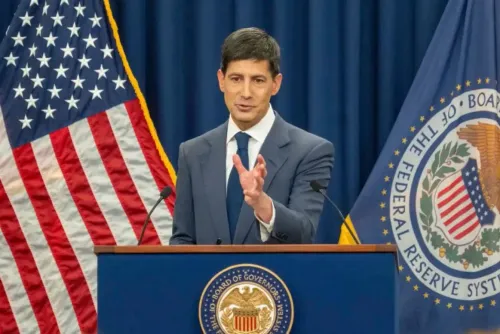
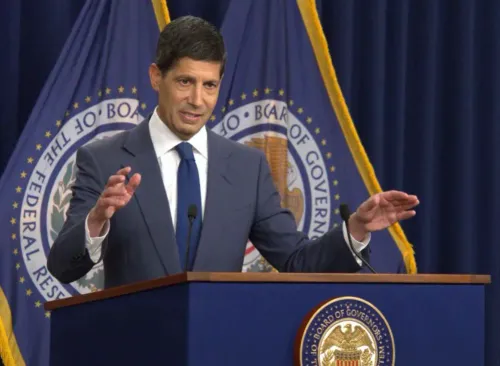
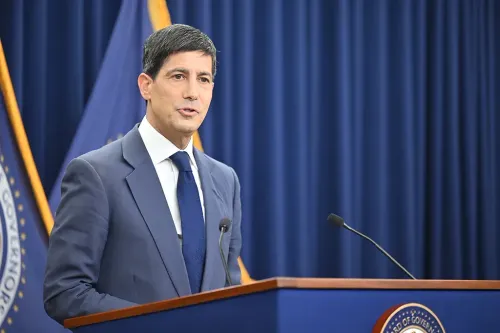
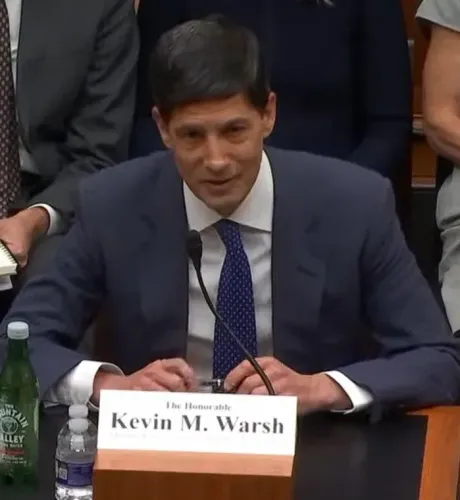
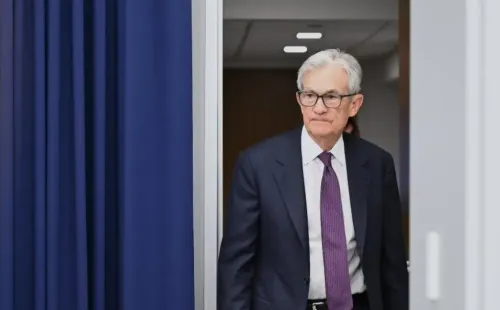
It was the first rate decision under new Chair Kevin Warsh , who took office on 22 May , succeeding Jerome Powell .
Nine of 19 FOMC members expect rates to be higher by year-end; the median projection for the federal funds rate rose to 3.8 percent from 3.4 percent in March.
PCE inflation forecast for year-end was revised sharply upward to 3.6 percent from 2.7 percent .
US CPI rose 4.2 percent in May year-on-year — the largest annual rise since 2023 — driven by energy prices linked to the US-Israeli war against Iran .
US GDP growth forecast for 2025 was trimmed to 2.2 percent from 2.4 percent .
The US Federal Reserve held its benchmark interest rate unchanged at the 3.5–3.75 percent range on 18 June, marking its fourth consecutive pause — and the first rate decision under new Chair Kevin Warsh, who assumed office last month. At least half of the Fed's policymakers now anticipate a higher rate by year-end, signalling a more hawkish tilt than previously projected.
Key Developments
The Federal Open Market Committee (FOMC) voted unanimously to hold rates steady during its two-day meeting, citing lingering concerns over the economic fallout of the US-Israeli war against Iran. The decision was in line with market expectations but the revised projections that accompanied it were notably more hawkish.
The updated 'dot plot' showed that nine of the 19 FOMC participants expect borrowing costs to be higher by the end of this year. Notably, Chair Warsh did not submit a dot plot projection of his own.
Revised Economic Projections
The FOMC's new median projection now places the federal funds rate at 3.8 percent at the end of 2025, up from the March projection of 3.4 percent — a meaningful upward revision. Personal Consumption Expenditures (PCE) inflation is now projected at 3.6 percent by year-end, sharply higher than the March forecast of 2.7 percent.
US GDP growth is expected at 2.2 percent this year, down from the earlier projection of 2.4 percent, while next year's growth forecast holds at 2.3 percent. PCE inflation for next year is projected at 2.3 percent, marginally above the previous estimate of 2.2 percent.
What Warsh Said on Inflation
Addressing the inflation outlook, Chair Warsh said the FOMC under his leadership will deliver price stability, describing the committee's commitment as 'unambiguous and unanimous.' He acknowledged that inflation has run well above the Fed's 2 percent long-term goal for more than five years.
'Persistently high prices are a burden for the American people, but the recent past need not be prologue,' Warsh said. The remarks were widely read as a signal that the new chair intends to hold a firmer line on inflation than his predecessor.
Inflation Context: Iran War Effect
The meeting came a week after the US Labor Department reported that the consumer price index (CPI) rose 4.2 percent in May from a year earlier — the largest annual increase since 2023. The surge was largely attributed to higher energy prices driven by the ongoing US-Israeli war against Iran.
This comes amid a broader geopolitical premium on energy markets that has complicated the Fed's path toward its inflation target, making rate cuts harder to justify in the near term.
Warsh's Appointment and the Powell Era
Kevin Warsh was sworn in as Fed Chair on 22 May, succeeding Jerome Powell, who had repeatedly faced public criticism from US President Donald Trump for not cutting interest rates. The rate gap between the United States and South Korea now stands at up to 1.25 percentage points following the latest decision.
With inflation projections revised sharply upward and a majority of FOMC members leaning hawkish, the trajectory of US monetary policy under Warsh will be closely watched in the months ahead.
Point of View
And the revised dot plot suggests the new chair is in no hurry to cut. The Iran war's energy shock has made the Fed's 2% target a distant aspiration rather than an imminent destination. For India and other emerging markets, a higher-for-longer US rate environment means continued pressure on capital flows and currency stability — a dynamic that the Reserve Bank of India cannot afford to ignore as it manages its own rate cycle.
NationPress
21 Sept 2026
Frequently Asked Questions
What did the US Federal Reserve decide on 18 June 2025?
The Federal Reserve unanimously held its benchmark interest rate at 3.5–3.75 percent, marking the fourth consecutive pause. It was the first rate decision under new Chair Kevin Warsh, who took over from Jerome Powell on 22 May.
Who is Kevin Warsh and why does his appointment matter?
Kevin Warsh is the new Chair of the US Federal Reserve, sworn in on 22 May after Jerome Powell's tenure ended. Powell had repeatedly faced criticism from President Donald Trump for not cutting rates; Warsh's hawkish early signals suggest he may chart a more independent but inflation-focused course.
Why are US inflation projections rising?
The FOMC revised its PCE inflation forecast for year-end to 3.6 percent, up sharply from 2.7 percent projected in March. A key driver is higher energy prices stemming from the US-Israeli war against Iran, which pushed CPI to a 4.2 percent annual rise in May — the highest since 2023.
What does the dot plot say about future rate cuts?
Nine of the 19 FOMC participants expect borrowing costs to be higher by year-end, and the median federal funds rate projection for 2025 was revised up to 3.8 percent from 3.4 percent in March. Chair Warsh did not submit a personal dot plot projection.
How does the Fed's decision affect India and other emerging markets?
A higher-for-longer US interest rate environment typically pressures emerging market currencies and capital flows, as investors favour dollar-denominated assets. The widening rate differential — the US-South Korea gap now stands at up to 1.25 percentage points — illustrates the global ripple effect of the Fed's stance.