US Fed holds rates at 3.5–3.75%, Warsh vows to crush inflation
Synopsis
New Fed Chairman Kevin Warsh used his first congressional testimony to hold rates steady at 3.5–3.75%, declare zero tolerance for persistent inflation, and announce a sweeping five-area review of the Fed's own practices — all while fielding pointed questions about political independence from both sides of the aisle.
Key Takeaways
The Federal Open Market Committee held the federal funds rate at 3.5%–3.75% at its June meeting .
Fed Chairman Kevin Warsh made his first congressional appearance on 15 July , reaffirming the 2% inflation target with 'no tolerance' for persistent price rises.
US equipment investment rose ~8% in Q1 ; high-tech equipment spending surged nearly 25% , driven by AI and data-centre demand.
The Fed announced reviews across five areas — communications, balance-sheet policy, data use, productivity/employment, and inflation frameworks — with findings due by end of year .
Warsh defended the Fed's independence from political pressure, stating: 'I would continue to do my job.'
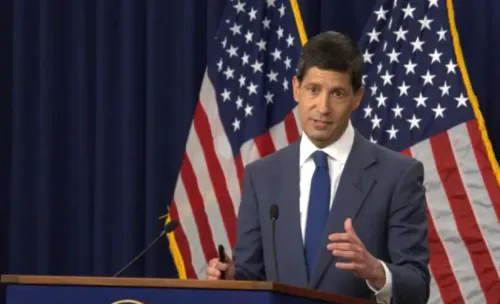
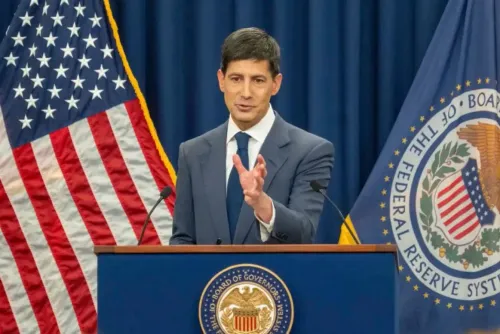
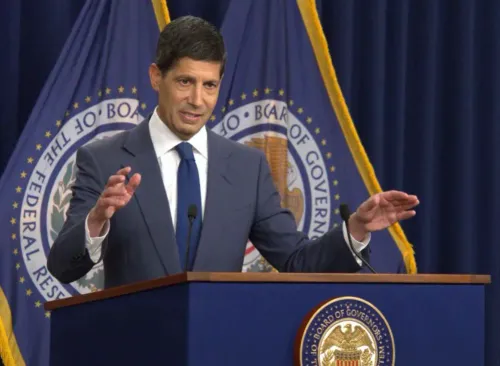
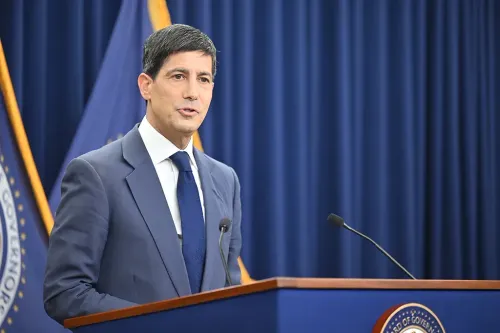
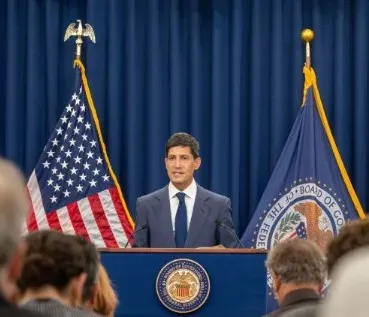
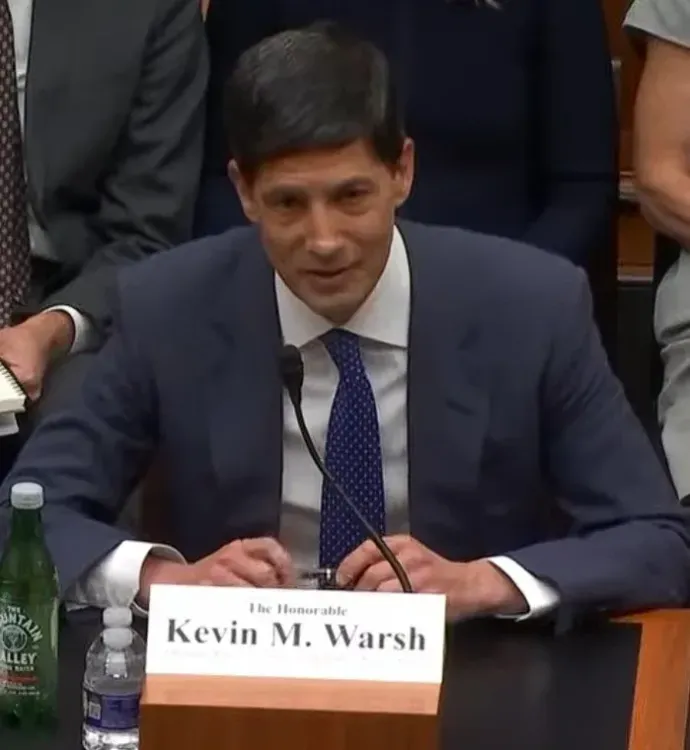
US Federal Reserve Chairman Kevin Warsh told Congress on 15 July that the central bank would bring inflation firmly under control, as policymakers held the federal funds rate steady in a range of 3.5% to 3.75% and signalled a sweeping internal review of monetary policy practices. The testimony marked Warsh's first appearance before Congress as Fed chairman.
Rate Decision and Inflation Commitment
The Federal Open Market Committee (FOMC) maintained its benchmark rate at the June meeting, opting for stability amid mixed global signals. Warsh was unambiguous on the inflation mandate: 'The members of our committee have no tolerance for persistently elevated inflation,' he told the House Financial Services Committee. 'And we share a resolute commitment to ensure price stability.'
He reaffirmed the Fed's 2% inflation target, adding: 'This isn't a time for us to pass the buck, to blame others.' The chairman acknowledged that overseas conflicts and external shocks lay beyond the Fed's control, but insisted the central bank retained the tools — interest rates and balance-sheet management — to deliver stable prices. 'We're three for three and we'll deliver,' he said.
State of the US Economy
Warsh described the US economy as continuing to expand at a solid pace despite recent global headwinds. He noted that household consumption had moderated, manufacturing output had risen steadily, and the labour market remained resilient. The housing sector, however, continued to lag behind the broader recovery.
Business investment emerged as what Warsh called 'the most striking feature' of the current economic cycle. Investment in equipment rose approximately 8% in the first quarter, while spending on high-technology equipment surged nearly 25%. Much of that acceleration, he said, reflected the rapid construction of data centres and surging demand for artificial intelligence-related equipment and software.
AI, Productivity and the Fed's Outlook
Warsh addressed the growing role of artificial intelligence in the economy with notable candour. 'At the Fed, we don't yet know fully the extent to which the economy will benefit from AI,' he said, adding: 'Yet it seems inevitable that that which we're now calling AI investment will soon just be called investment.' The Fed is actively monitoring how AI adoption could affect both employment levels and inflation dynamics, he noted, with productivity growth currently remaining strong and job creation keeping pace with workforce expansion.
Five-Area Policy Review Announced
In a significant institutional signal, Warsh announced that the Fed would conduct reviews across five areas: communications strategy, balance-sheet policy, the use of existing economic data, productivity and employment frameworks, and inflation-targeting methodology. Internal task forces are expected to present findings by the end of the year, potentially reshaping how the central bank communicates and operates going forward.
Political Pressure and Fed Independence
The hearing exposed sharp partisan fault lines. Republican committee Chairman French Hill urged the Fed to remain laser-focused on price stability. Democrat Ranking Member Maxine Waters pressed Warsh to defend the central bank's independence from President Donald Trump. Warsh was direct: 'We're an independent central bank, we're honoured to be independent.' Asked how he would respond to political pressure, he replied: 'I would continue to do my job.' The exchange underscored the heightened scrutiny the Fed faces as monetary policy intersects with an increasingly polarised political environment. With the five-area review set to conclude by year-end, Warsh's next congressional appearance will be closely watched for any shift in the Fed's policy framework.
Point of View
Which could redefine how the Fed communicates its inflation framework — a process that, if handled poorly, risks unsettling bond markets already sensitive to any perceived softening of the 2% commitment. The AI investment surge Warsh highlighted is real, but its inflationary or deflationary net effect remains genuinely unknown, making the Fed's caution understandable. The sharper concern is the partisan theatre around Fed independence: every congressional hearing that forces the chairman to publicly pledge autonomy from the White House subtly erodes the institutional credibility that makes that independence meaningful.
NationPress
13 Oct 2026
Frequently Asked Questions
What did the US Federal Reserve decide on interest rates?
The Federal Reserve held its benchmark federal funds rate steady in a range of 3.5% to 3.75% at its June meeting. Chairman Kevin Warsh confirmed the decision during congressional testimony on 15 July.
Who is Kevin Warsh and why does his testimony matter?
Kevin Warsh is the current Chairman of the US Federal Reserve, making his first appearance before Congress in that role on 15 July. His testimony sets the tone for Fed communication and signals the direction of US monetary policy, which influences global borrowing costs and investment flows.
What is the Fed's five-area policy review?
The Fed announced internal reviews covering communications strategy, balance-sheet policy, use of existing economic data, productivity and employment frameworks, and inflation-targeting methodology. Task forces are expected to share findings by the end of the year.
How is AI affecting the US economy according to the Fed?
Warsh identified AI-related investment as a key driver of the surge in high-technology equipment spending, which rose nearly 25% in Q1. The Fed is monitoring AI's potential impact on employment and inflation but has not yet drawn firm conclusions about its net economic effect.
Is the Federal Reserve under political pressure from President Trump?
The question of Fed independence was raised directly at the hearing by Democrat Ranking Member Maxine Waters. Warsh stated the Fed is 'an independent central bank' and said he would respond to political pressure by continuing to do his job.