Fed Chair Warsh vows independence, says 'I'd continue to do my job' under Trump pressure
Synopsis
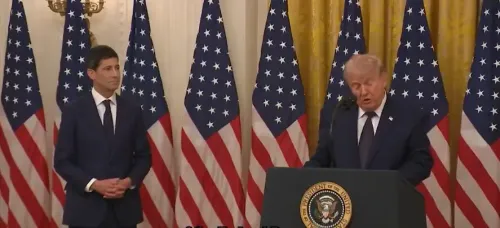
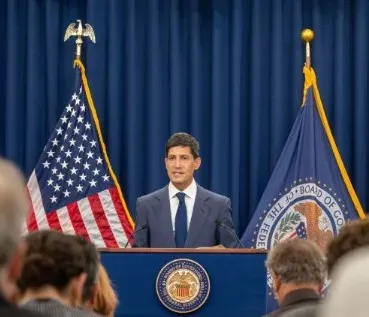
New Fed Chair Kevin Warsh faced a pointed 'Do you work for Donald Trump?' from a Democratic lawmaker and replied with a defence of central bank independence — and a four-word answer that will define his tenure: 'I would continue to do my job.' With Trump's pressure on the Fed already on the record, Warsh's first House hearing set the stage for a high-stakes test of institutional independence.
Key Takeaways
Fed Chair Kevin Warsh appeared before the House Financial Services Committee on 15 July for his first hearing since taking over the chairmanship.
When asked if he would resist Trump administration pressure on interest-rate policy, Warsh said: 'I would continue to do my job.' Warsh reaffirmed that monetary policy would remain 'strictly independent', a pledge he had made at his confirmation hearing.
Democratic Congresswoman Maxine Waters cited Trump's repeated attacks on former Fed Chair Jerome Powell as context for her concerns.
The Supreme Court has recognised the Fed's independence in conducting monetary policy, Warsh noted.
The Fed's rate decisions affect US borrowing costs, employment, inflation, and global capital flows, including in emerging markets.
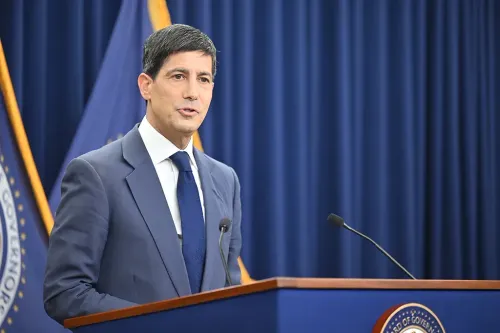
Federal Reserve Chairman Kevin Warsh on Tuesday, 15 July pledged to defend the central bank's independence from political interference, telling Democratic lawmakers at the House Financial Services Committee that he would 'continue to do my job' even if the Trump administration targeted Fed governors over their interest-rate votes.
Key Exchanges at the Committee Hearing
The sharpest moment came when Democratic Congresswoman Nydia Velazquez asked Warsh directly: 'Do you work for Donald Trump? Yes or no?' Warsh replied: 'We're an independent central bank; we're honoured to be independent. Our independence came from you.'
When Velazquez pressed him on what he would do if administration officials retaliated against Fed governors for their monetary policy votes, Warsh initially declined to engage with the hypothetical. He noted that the Supreme Court had recognised the Fed's independence in conducting monetary policy. Pressed a second time, he said simply: 'I would continue to do my job.'
What Warsh Said on Keeping Politics Out
Warsh acknowledged that the environment surrounding the central bank had become intensely political, but drew a firm line at the institution's doors. 'Outside the four walls of the Federal Reserve there's no doubt a lot of politics,' he said. 'But my goal inside the central bank is for there to be no politics. The extent there's politics there, we're going to get rid of them.'
He also reiterated a pledge made during his confirmation hearing, affirming 'absolutely' that monetary policy would remain 'strictly independent' — a commitment Velazquez specifically recalled and asked him to reconfirm.
Democrats Raise Trump's Treatment of Jerome Powell
Democratic Congresswoman Maxine Waters raised the spectre of former Fed Chairman Jerome Powell, whom President Donald Trump had repeatedly attacked over interest-rate decisions. Waters asked Warsh how he intended to protect his colleagues and the institution from similar pressure.
Warsh said he had demonstrated 'a commitment to independence and a commitment to reform' in his first six or seven weeks as chairman. 'Those two are of common importance, and I'm going to deliver on both of them,' he said.
Why Fed Independence Matters
The US Congress created the Federal Reserve as an independent institution, though its chairman and governors are nominated by the president and confirmed by the Senate. The Fed chair presents a monetary policy report to lawmakers twice a year, making Tuesday's hearing one of those formal accountability moments.
The stakes extend well beyond Washington. The Fed's interest-rate decisions shape borrowing costs, employment, inflation, financial markets, and the broader US economy. Internationally, they influence the dollar's value, global capital flows, and sovereign borrowing costs — including in emerging markets such as India.
Notably, this is Warsh's first appearance before the committee since taking over the chairmanship, and the political temperature around the Fed has risen sharply since Trump's public clashes with Powell. With the Fed's rate path still uncertain and the White House watching closely, Warsh's repeated insistence on institutional independence will be tested in the months ahead.
Point of View
And the difference matters enormously. Trump's campaign against Powell was sustained and public; a chairman who merely says he will 'do his job' without specifying what he would do if governors faced retaliation leaves the institutional guardrails vague. The Fed's independence is a structural feature, not a personal pledge, and Congress's own record of defending it when tested is thin. Warsh's insistence on 'reform alongside independence' also bears watching — reform can be a cover for accommodation, and the markets will be parsing every rate decision for signs of political drift.
NationPress
13 Oct 2026
Frequently Asked Questions
What did Fed Chair Kevin Warsh say about Trump administration pressure on interest rates?
Warsh told the House Financial Services Committee on 15 July that he would 'continue to do my job' even if the Trump administration targeted Fed governors over their interest-rate votes. He reaffirmed that the Federal Reserve is an independent central bank and pledged to keep partisan considerations out of its decisions.
Why are Democrats concerned about political pressure on the Federal Reserve?
Democrats raised concerns because President Donald Trump had repeatedly and publicly attacked former Fed Chair Jerome Powell over interest-rate policy. They pressed Warsh on whether he would similarly face — or resist — White House interference in monetary decisions that affect borrowing costs, employment, and inflation.
Is the Federal Reserve legally independent from the US president?
Yes. The US Congress created the Federal Reserve as an independent central bank, and the Supreme Court has recognised its independence in conducting monetary policy. While the president nominates the chair and governors, and the Senate confirms them, the Fed is accountable to Congress — not the White House.
Who is Kevin Warsh and when did he become Fed Chair?
Kevin Warsh is the current Chairman of the US Federal Reserve, having taken over from Jerome Powell. His 15 July appearance before the House Financial Services Committee was his first since becoming chairman, roughly six to seven weeks into his tenure, according to his own remarks.
Why does Fed independence matter for countries like India?
The Federal Reserve's interest-rate decisions influence the US dollar's value, global borrowing costs, and capital flows to emerging markets, including India. When the Fed raises or holds rates, it affects foreign investment patterns, rupee-dollar dynamics, and the cost of dollar-denominated debt for Indian companies and the government.