IMF backs Fed rate pause as US economy logs 2.1% Q1 growth
Synopsis
The IMF has given the Federal Reserve's rate pause a formal thumbs-up, pointing to stronger-than-expected 2.1% US Q1 growth and resilient labour productivity as justification. But the Fund's caveat is equally significant: any future cuts must be data-driven, not calendar-driven — a quiet pushback against market expectations of imminent easing.
Key Takeaways
The IMF endorsed the US Federal Reserve's decision to keep interest rates on hold at its latest policy meeting.
The US economy grew at 2.1% in Q1 2026 , stronger than the preliminary estimate, boosted by a rebound in government spending post-shutdown and robust business investment.
IMF spokesperson Julie Kozack called US labour productivity 'very strong' and described the country as a 'global outlier' on that metric.
Inflation remains above the Fed's 2% target but is expected to reach it by end- 2027 , according to the IMF.
The IMF cautioned that future rate moves must be 'carefully calibrated to incoming data' rather than predetermined timelines.
The Fund welcomed Fed Chair Kevin Walsh's commitment to price stability through the FOMC .
The International Monetary Fund (IMF) on Thursday, 25 June 2026 endorsed the US Federal Reserve's decision to hold interest rates steady, citing solid economic momentum in the world's largest economy even as inflation remains above the Fed's 2% target. The IMF cautioned, however, that any future rate adjustments must be carefully calibrated to incoming data rather than fixed timelines.
Solid Growth Despite Inflation Overhang
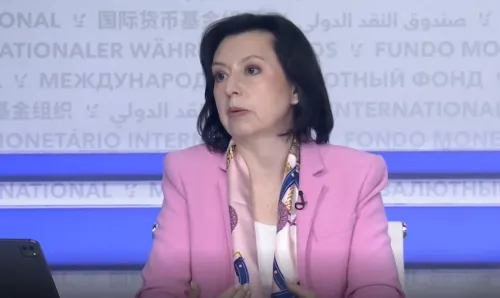
Julie Kozack, Director of the IMF's Communications Department, told a regular press briefing that the US economy had demonstrated continued resilience. She pointed to revised first-quarter figures showing growth of 2.1% — stronger than the preliminary estimate — as evidence of that momentum.
'Growth momentum in the US economy has been solid,' Kozack said. She attributed the stronger-than-expected print partly to a rebound in government spending following the federal government shutdown in late 2025, alongside robust business investment that was also driving strong capital imports.
Labour Productivity a Standout Strength
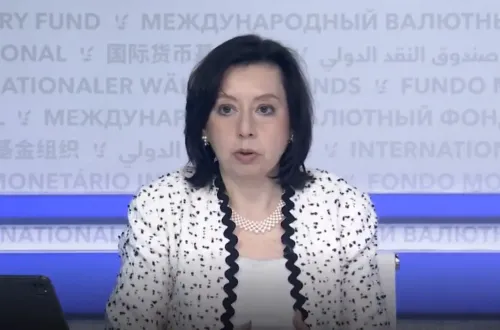
Kozack highlighted labour productivity as a distinguishing feature of the US economy, calling it 'very strong' at a time when much of the world is grappling with weak productivity growth. 'The US, in that sense, is a bit of an outlier globally,' she said. This productivity edge, according to the IMF, underpins the economy's capacity to sustain growth even under restrictive monetary conditions.
IMF Backs Fed's Cautious Stance on Rates
On monetary policy, Kozack acknowledged that inflation remains above the central bank's objective but expressed confidence it would ease over time. 'We do see inflation is still above target, even though we do expect it to come down to reach the 2% target by the end of 2027,' she said.
The IMF described the Fed's decision to keep its benchmark rate on hold as appropriate given this dynamic. 'Any further policy actions by the Fed will need to proceed with caution, and they would need to be carefully calibrated to the incoming data,' Kozack said, signalling that the Fund does not anticipate — or recommend — any rush toward cuts.
Welcome for Fed Chair Walsh's Commitment
Kozack also offered a pointed endorsement of Federal Reserve Chair Kevin Walsh, welcoming his 'strong commitment to lead the FOMC in delivering price stability' — a signal that the IMF views the Fed's current leadership posture as aligned with global financial stability objectives. The Federal Open Market Committee (FOMC) has indicated that future decisions will hinge on the trajectory of inflation, employment, and broader economic conditions.
Why the Fed's Moves Matter Beyond the US
The IMF has consistently described the US economy as a primary engine of global growth, given its scale and deep integration with international financial markets. Federal Reserve decisions reverberate across capital flows, borrowing costs, exchange rates, and investment decisions in both advanced and emerging economies — including India, where dollar strength and US rate expectations directly influence the rupee and foreign institutional investor behaviour. This comes amid a broader global environment where central banks in Europe and Asia are navigating their own inflation-versus-growth trade-offs, making the Fed's data-dependent posture a closely watched benchmark.
Point of View
The subtext is significant: a higher-for-longer US rate environment means sustained pressure on the rupee and cautious FII positioning. The productivity outlier framing, while accurate, also papers over structural questions about whether AI-driven productivity gains are broadly shared or concentrated in a narrow tech sector.
NationPress
24 Sept 2026
Frequently Asked Questions
Why did the IMF back the Federal Reserve's decision to hold interest rates?
The IMF backed the Fed's rate hold because US inflation remains above the central bank's 2% target, even though the economy is growing solidly. IMF spokesperson Julie Kozack said the hold was 'appropriate' given this dynamic, and that any future cuts must be guided by incoming data rather than fixed timelines.
How fast did the US economy grow in Q1 2026?
The US economy grew at 2.1% in Q1 2026, stronger than the preliminary estimate. The upward revision was driven by a rebound in government spending following the late-2025 federal shutdown and continued strength in business investment.
When does the IMF expect US inflation to return to the 2% target?
The IMF expects US inflation to reach the Federal Reserve's 2% target by the end of 2027. Kozack said the Fund still sees inflation above target currently but anticipates a gradual easing over the coming period.
Who is Kevin Walsh and why did the IMF mention him?
Kevin Walsh is the Chair of the US Federal Reserve. The IMF's Julie Kozack welcomed his 'strong commitment to lead the FOMC in delivering price stability,' signalling that the Fund views the Fed's current leadership stance as aligned with global financial stability goals.
Why do Federal Reserve decisions matter for India and other emerging markets?
Federal Reserve rate decisions influence global capital flows, the US dollar's strength, and borrowing costs worldwide. For India, a higher-for-longer US rate environment typically pressures the rupee and affects the pace of foreign institutional investment into Indian equities and bonds.