FM Sitharaman meets Iran's finance minister at BRICS, eyes economic cooperation
Synopsis
On the sidelines of the 18th BRICS Summit, Finance Minister Sitharaman met Iran's finance chief, agreed to advance a Bilateral Investment Treaty with Russia, and discussed deepening India's AIIB partnership — all in a single diplomatic sprint that mirrors Modi's New Delhi Declaration push for concrete economic outcomes over symbolic multilateralism.
Key Takeaways
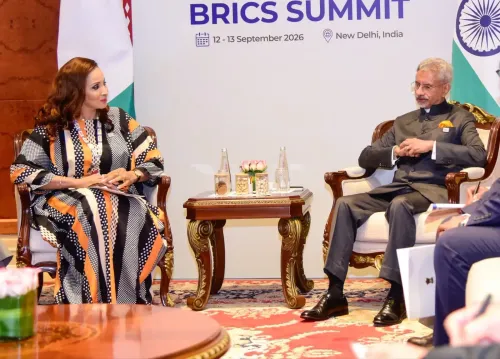
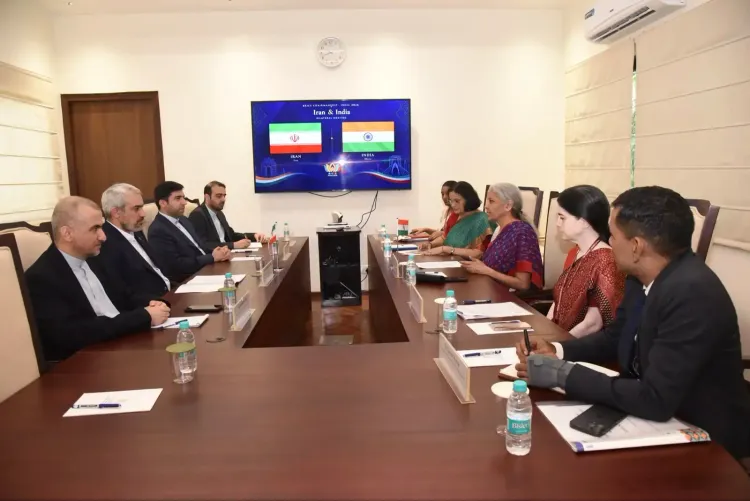
Finance Minister Nirmala Sitharaman met Iranian counterpart Dr Seyed Ali Madanizadeh on 13 September 2026 in New Delhi on the BRICS sidelines.
Sitharaman thanked Iran for its active participation in the BRICS Summit Finance Track .
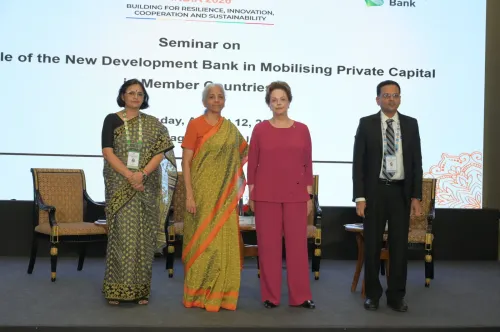
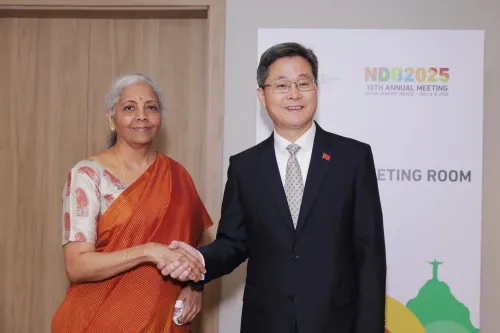
She also met AIIB President Zou Jiayi to discuss India's infrastructure, local-currency financing, and private-sector priorities.
Talks with Russian First Deputy PM Denis Manturov focused on advancing a Bilateral Investment Treaty (BIT) and financial services cooperation.
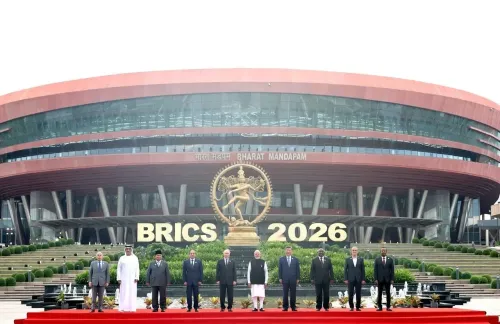
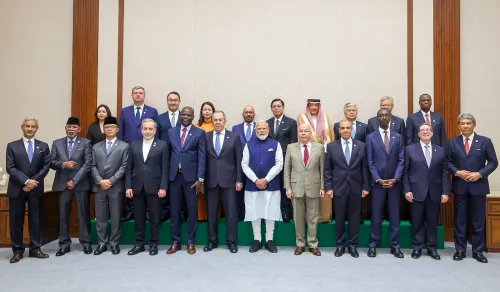
PM Modi announced the unanimous adoption of the New Delhi Declaration 2026 at the 18th BRICS Summit , calling for concrete follow-through on agreed resolutions.
Union Finance Minister Nirmala Sitharaman on Sunday, 13 September 2026 met her Iranian counterpart Dr Seyed Ali Madanizadeh in New Delhi on the sidelines of the 18th BRICS Summit, holding discussions on strengthening economic cooperation across areas of mutual interest. The meeting signals a broadening of India's bilateral economic engagement at the summit, even as Prime Minister Narendra Modi announced the unanimous adoption of the New Delhi Declaration 2026.
Key Developments at the Bilateral Meeting
According to the Finance Ministry, Sitharaman thanked Iran for its active participation in the BRICS Summit and for its productive engagement in deliberations under the Finance Track. The two sides exchanged views on deepening economic ties, exploring areas of convergence in trade and investment. The ministry shared details of the meeting in an official post on X.
Sitharaman's Diplomatic Marathon at BRICS
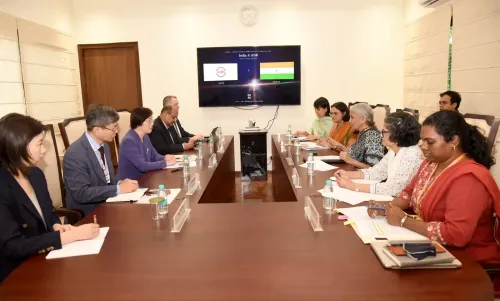
The India-Iran meeting was one of several high-level bilateral engagements Sitharaman conducted around the summit. She met Asian Infrastructure Investment Bank (AIIB) President Zou Jiayi earlier in September to discuss deepening the India-AIIB partnership. Those discussions covered supporting India's infrastructure and transport connectivity priorities, expanding local-currency financing, increasing private-sector participation, and broadening AIIB's global footprint.
Separately, Sitharaman held talks with Russian First Deputy Prime Minister Denis Manturov, with the two sides agreeing to advance negotiations on a Bilateral Investment Treaty (BIT). The treaty is intended to establish a mutually beneficial framework for investment flows and economic engagement. The discussions also explored deeper cooperation in the financial services sector, as both countries work toward ambitious trade and investment targets.
Modi Closes BRICS Summit with New Delhi Declaration
On the preceding day, Saturday, Prime Minister Modi announced the unanimous adoption of the New Delhi Declaration 2026 at the summit, describing the outcome as giving 'clear direction to the shared resolve of BRICS members.' Modi called on participants to translate agreed resolutions into concrete results and characterised the leadership deliberations as 'meaningful and constructive.'
Notably, Modi also remarked that the 'changing world order cannot be managed by old institutions' — a signal of BRICS nations' collective push for reformed multilateral structures. The declaration's adoption against the backdrop of multiple bilateral finance-track meetings underscores the summit's dual character: a geopolitical statement and an economic agenda-setting exercise.
What This Means for India's Multilateral Engagement
India's flurry of finance-track bilateral meetings at the BRICS Summit reflects a deliberate strategy to leverage the multilateral platform for country-specific economic objectives — from Iran to Russia to multilateral development banks. The India-Iran engagement, in particular, carries strategic weight given the two countries' longstanding connectivity and energy interests, though specifics of any agreements were not disclosed. How these bilateral understandings translate into formal frameworks — treaties, financing agreements, or trade protocols — will determine their lasting impact.
Point of View
Russia, AIIB — reflects a matured Indian playbook: use multilateral gatherings to compress months of diplomatic groundwork into days. The Iran meeting is the most intriguing, given sanctions-era constraints on India-Iran trade and the unresolved Chabahar financing question; the absence of any specifics in the readout suggests talks are exploratory. The Russia BIT push is more advanced but faces its own friction from Western pressure on India to limit economic normalisation with Moscow. Modi's 'old institutions' remark, meanwhile, is the summit's real headline — it signals BRICS is no longer just a photo opportunity but a deliberate counter-architecture to Bretton Woods, and Sitharaman's finance-track hustle is the operational expression of that ambition.
NationPress
13 Sept 2026
Frequently Asked Questions
Why did Nirmala Sitharaman meet Iran's finance minister?
Finance Minister Nirmala Sitharaman met Iranian counterpart Dr Seyed Ali Madanizadeh on 13 September 2026 on the sidelines of the 18th BRICS Summit in New Delhi to discuss economic cooperation in areas of mutual interest. India also acknowledged Iran's active participation in the BRICS Finance Track.
What is the New Delhi Declaration 2026?
The New Delhi Declaration 2026 is the consensus outcome document of the 18th BRICS Summit, announced by Prime Minister Narendra Modi on Saturday. Modi described it as giving 'clear direction to the shared resolve of BRICS members' and called for translating agreed resolutions into concrete results.
What did India and Russia agree at the BRICS Summit?
India and Russia agreed to advance negotiations on a Bilateral Investment Treaty (BIT) aimed at creating a framework for enhanced investment flows and economic engagement. The two sides, represented by FM Sitharaman and Russian First Deputy PM Denis Manturov, also discussed deepening cooperation in financial services.
What did Sitharaman discuss with the AIIB President?
Sitharaman met AIIB President Zou Jiayi earlier in September to discuss India's infrastructure and transport connectivity priorities, expanding local-currency financing, increasing private-sector participation, and broadening AIIB's global presence.
What is the significance of India's meetings at the BRICS Finance Track?
The Finance Track meetings signal India's intent to convert the BRICS multilateral platform into country-specific economic agreements — covering connectivity, investment treaties, and development financing. They align with PM Modi's call at the summit for concrete outcomes rather than symbolic declarations.