Is Foxconn's Departure from China a Signal for MNCs to Shift to India and Vietnam?
Synopsis
Foxconn's abrupt exit from China highlights a significant shift in manufacturing dynamics. With its closure exposing severe flaws in China's industrial economy, MNCs are now accelerating their transition to countries like India and Vietnam, which promise better stability and incentives.
Key Takeaways
Foxconn's departure highlights vulnerabilities in China's industrial economy.
Rising costs and erratic policies are driving MNCs to seek alternatives.
India and Vietnam are emerging as preferred destinations for relocation.
Local economies are suffering due to reduced export volumes.
Corruption and labor exploitation remain pressing issues in China.
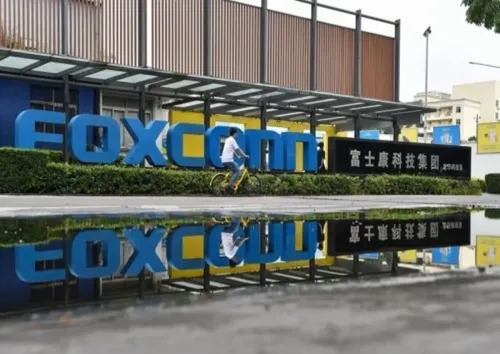
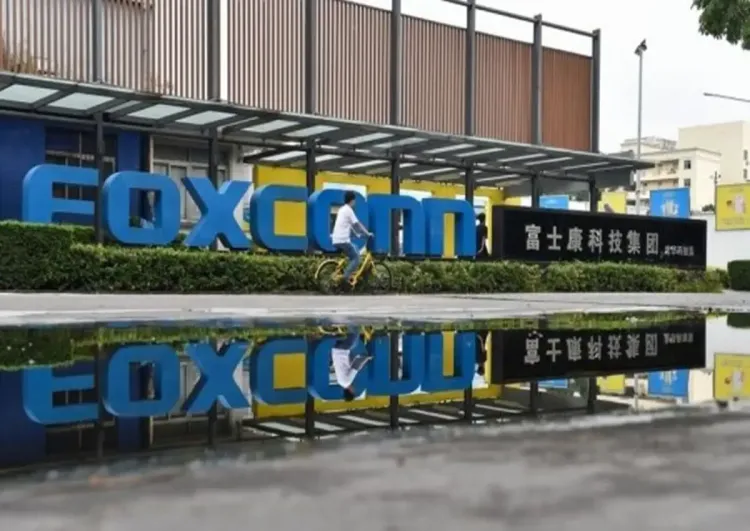
New Delhi, Dec 5 (NationPress) The abrupt shutdown of Foxconn's Henyang Hongfujin Precision Industry plant, a key supplier for Apple, due to erratic government policies has unveiled the "hollow core of China’s industrial economy," according to a report released on Friday.
This facility, which previously employed 30,000 workers and generated billions in revenue, ceased operations on September 30, 2025, leaving commercial areas once thriving due to Foxconn's presence resembling ghost towns, as highlighted by the Daily Mirror.
Factors such as rising operational costs, arbitrary regulatory measures, and the adverse impacts of the US-China trade war have fostered an environment where foreign enterprises can no longer function with confidence.
The report further noted, "The once-busy commercial zones now look like deserted towns, with closed shops and displaced workers forced into precarious jobs, such as food delivery."
In light of Beijing's tightening grip and unpredictable regulations, Apple has hastened its relocation strategy, moving Foxconn's capabilities to more stable environments. India and Vietnam, which offer tax benefits and consistent policies, have emerged as appealing alternatives.
Foxconn accounted for over 80% of Zhengzhou’s export volume and more than half of the total exports from Henan province. Following Foxconn's reduction of its operations and relocation of resources, Henan’s phone exports plummeted by 60% in the first quarter of 2024, significantly dragging provincial trade down by 23%.
Additionally, Microsoft’s CSS team has shifted its positions to Japan and Australia, ceasing rehiring within China, reflecting a broader trend where multinational corporations are increasingly looking to alternatives like India and Vietnam.
The ongoing situation is exacerbated by corruption, an unpredictable regulatory landscape, and the exploitation of labor. Local officials seem focused on short-term GDP metrics rather than sustainable growth, according to the report.
Foxconn's exit has left many workers vulnerable to exploitation by "black factories" that thrive under lax enforcement and corruption. The report emphasizes that the Chinese Communist Party (CCP) has failed to tackle corruption, enforce fair labor standards, and provide economic stability, leaving ordinary citizens in distress.
Point of View
The shift towards India and Vietnam reflects a broader trend that prioritizes stability and sustainability over short-term gains. This situation warrants close attention from policymakers and stakeholders alike.
NationPress
4 Oct 2026
Frequently Asked Questions
Why did Foxconn close its plant in China?
Foxconn closed its plant due to erratic government policies, rising operational costs, and the unpredictable environment created by the US-China trade war.
What are the implications of Foxconn's exit?
Foxconn's exit signifies a shift for multinational corporations towards countries like India and Vietnam, which offer better stability and incentives for business operations.
How has this affected the local economy in Henan?
The closure has drastically affected Henan's economy, leading to a 60% drop in phone exports and a 23% decrease in provincial trade.