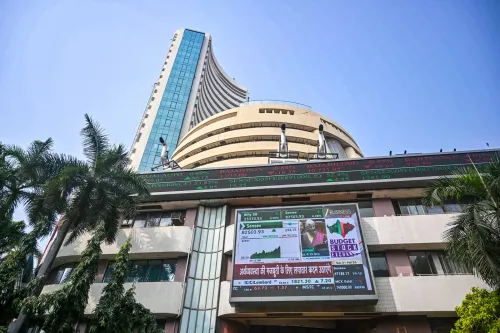
FPIs dump ₹45,536 crore in Sep equities; large-cap valuations turn attractive

Synopsis
FPIs dumped ₹45,536 crore in Indian secondary markets in September — the heaviest monthly sell-off in recent memory — yet kept buying in primary markets. With US bond yields above 5.2%, monsoon deficiency at 13%, and eight straight weeks of market losses, the real story is not a foreign exit but a radical selectivity that could reshape how India's equity market is priced through year-end.
Key Takeaways
FPIs sold ₹45,536 crore in Indian equities in September 2026 , the heaviest selling in recent months.
FPIs simultaneously invested ₹9,676 crore through the primary market, signalling selective — not wholesale — retreat.
The US 10-year bond yield crossing 5.2% and elevated crude prices were the key triggers, according to analysts.
India's market recorded eight consecutive weeks of losses ; monsoon rains were 13% deficient this year.
DIIs bought ₹76,030 crore in the cash market in September, more than offsetting FPI outflows, per provisional NSE data.
Large-cap valuations have turned attractive after the correction; analysts say a trend reversal hinges on easing US yields and crude prices.
Foreign portfolio investors (FPIs) offloaded a net ₹45,536 crore worth of equities in September 2026, emerging as heavy sellers in secondary markets even as they continued to deploy ₹9,676 crore through the primary market during the same period. The divergence underscores a sharp but selective retreat from Indian equities, not a wholesale exit, according to market analysts.
What Triggered the Sell-Off
The selling pressure was amplified by two global macro headwinds: the US 10-year bond yield surging past 5.2%, and concerns that crude oil prices could remain elevated for longer than anticipated. Both factors eroded the risk appetite that had briefly drawn FPIs back into Indian markets in July and August.
Dr VK Vijayakumar, Chief Investment Strategist at Geojit Investments Ltd, noted that sustained FPI selling had significantly weakened the Indian market, which witnessed eight consecutive weeks of losses. He added that poor monsoon rains — 13% below normal this year — had also weighed on investor sentiment.
Scale of Selling at Month-End
The selling accelerated sharply in the final days of September and spilled into October. Across the four sessions from 28 September to 1 October, provisional equity selling totalled approximately ₹34,965 crore, while settled equity selling for the corresponding period stood at roughly ₹27,962 crore. This concentrated month-end wave points to portfolio rebalancing rather than a routine drawdown.
DIIs Step In as a Counterweight
Domestic institutional investors (DIIs) provided a significant buffer against the FPI exodus. According to provisional NSE data, DIIs bought ₹76,030 crore in the cash equity market in September 2026 — more than offsetting total FPI equity sales. Sustained buying by DIIs and retail investors has, analysts say, prevented a more severe market correction.
Primary Market vs Secondary Market: What It Signals
Dheeraj Gaur, Chief Investment Strategy Officer at Choice Wealth, said the split between secondary-market selling and primary-market buying indicated that foreign investors are 'becoming much more selective about where they deploy capital, a trend likely to continue into October.' In other words, FPIs are reducing exposure to listed stocks while still participating in new issuances — a pattern that reflects caution, not abandonment.
Notably, the positive FPI flows seen in July and August — built on expectations of easing crude prices — have now reversed, confirming analysts' warnings that the inflows were a temporary positioning call rather than a structural shift.
What Comes Next
Analysts say a reversal of FPI outflows will require a combination of declining crude oil prices and a retreat in US bond yields. Near-term market direction is expected to hinge on FY27 second-quarter (Q2) corporate earnings, with companies reporting strong numbers and positive management commentary likely to attract selective buying. The sharp correction has, however, made valuations of large-cap stocks look more attractive, potentially offering a re-entry case if macro conditions stabilise.
Point of View
536 crore FPI sell-off is large in absolute terms, but the simultaneous ₹9,676 crore primary-market buying is the more revealing number — it suggests foreign capital is repricing risk exposure, not writing India off. What mainstream coverage underplays is the structural DII absorption story: domestic institutions bought ₹76,030 crore in a single month, quietly becoming the market's load-bearing wall. The real vulnerability is a scenario where US yields stay elevated long enough to force DII redemption pressure too — at that point, the buffer disappears. Q2 earnings season will be the first stress test of whether corporate India can give FPIs a fundamental reason to return before that scenario plays out.
NationPress
4 Oct 2026
Frequently Asked Questions
How much did FPIs sell in Indian equities in September 2026?
FPIs sold a net ₹45,536 crore worth of equities in the secondary market in September 2026, marking one of the heaviest monthly sell-offs in recent periods. They did, however, invest ₹9,676 crore through the primary market during the same month.
Why are FPIs selling Indian stocks?
The primary triggers are the US 10-year bond yield rising above 5.2% — making dollar-denominated assets more attractive — and concerns that crude oil prices will stay elevated for longer. India-specific factors such as a 13% monsoon deficiency also weighed on sentiment, according to analysts.
Are domestic investors buying even as FPIs sell?
Yes. Domestic institutional investors (DIIs) bought ₹76,030 crore in the cash equity market in September 2026, provisional NSE data showed — more than offsetting FPI equity sales. Retail investors have also continued to support the market, preventing a sharper crash.
What will it take for FPI selling to reverse?
Analysts say a sustained reversal in FPI flows will require a decline in both US bond yields and crude oil prices. Near-term, FY27 Q2 corporate earnings results and management commentary will also be closely watched as a catalyst for selective re-entry.
Has the market correction made any segment look attractive?
Yes. The sharp correction in Indian equities has made large-cap stock valuations look attractive, according to market observers. However, analysts caution that a broader recovery will depend on improvement in global macro conditions rather than valuations alone.