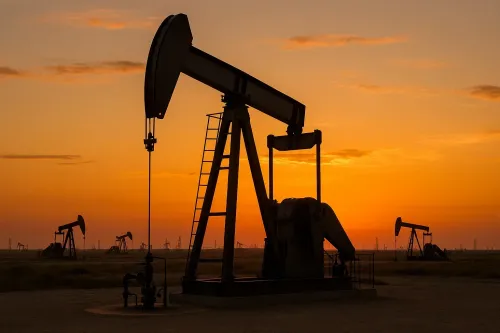
Crude oil tops $90 a barrel as US-Iran military tensions escalate
Synopsis
Global crude oil has breached $90 a barrel for the first time in recent months — not on a supply cut, but on the threat of war. With the US now into a ninth straight night of strikes on Iran and Tehran declaring the ceasefire dead, the Strait of Hormuz — gateway for a fifth of the world's oil — is suddenly the most consequential chokepoint in global energy markets.
Key Takeaways
Brent crude crossed $90 a barrel on 20 July , rising nearly 3 per cent or $2.63 in the session.
WTI crude advanced 3.51 per cent to $85.39 a barrel .
MCX crude oil futures (August) hit an intraday high of ₹8,120 , up ₹210 or 2.65 per cent .
The US Central Command confirmed a ninth consecutive night of strikes on Iranian targets.
Iran declared the ceasefire with the US had effectively collapsed and its navy stopped four vessels in the Strait of Hormuz .
Analysts see near-term crude bias as cautiously bullish , with consolidation possible at elevated levels.
Global crude oil prices surged past the $90-a-barrel mark on Monday, 20 July, as escalating military exchanges between the United States and Iran stoked fears of supply disruptions through the Strait of Hormuz, one of the world's most critical energy shipping corridors. The rally extended gains from the previous session, where prices had already climbed more than 3 per cent.
How Far Prices Have Climbed
International benchmark Brent crude rose nearly 3 per cent, adding $2.63 to trade above $90 a barrel. US West Texas Intermediate (WTI) crude advanced 3.51 per cent, or around $3, to $85.39 a barrel. On the domestic front, MCX crude oil futures (August contract) climbed 2.65 per cent, or ₹210, to an intraday high of ₹8,120 as of 10:29 am IST.
What Triggered the Surge
The price spike followed fresh military exchanges over the weekend. Tehran declared that the ceasefire between the two countries had effectively collapsed, sharpening concerns over potential disruptions to crude shipments through the Strait of Hormuz. The US Central Command confirmed that American forces carried out a ninth consecutive night of strikes on Iranian targets, describing the operations as aimed at weakening military capabilities allegedly used in attacks on commercial and civilian shipping.
This comes amid a broader pattern of periodic US-Iran confrontations that have repeatedly rattled energy markets. The Strait of Hormuz is the transit point for roughly 20 per cent of global oil trade, making any threat to its security an immediate price catalyst.
Maritime Security Concerns Deepen
Tensions on the water intensified separately, with Iran's navy reporting that it stopped four unidentified vessels attempting to pass through what it described as an unsafe route in the Strait of Hormuz. According to reports, two of the vessels were involved in accidents and halted, while the remaining ships turned back — adding to anxieties over the security of the waterway.
What Market Experts Are Saying
Market analysts say crude prices are likely to remain supported in the near term. MCX crude breaking above the ₹8,000 level is being read as a signal of strong bullish momentum. 'MCX crude has broken above the ₹8,000 level, reflecting strong bullish momentum. The near-term bias for both domestic and global crude remains cautiously bullish, although elevated prices may trigger phases of consolidation,' analysts noted.
What to Watch Next
Any further deterioration in US-Iran relations or fresh incidents in the Strait of Hormuz could push Brent toward the $95 level, analysts caution. For India — a major crude importer — a sustained rally above $90 risks widening the current account deficit and putting upward pressure on domestic fuel prices. The next key trigger will be whether diplomatic back-channels can stabilise the situation or whether the military exchanges continue into a tenth consecutive night.
Point of View
And those are the hardest to price and the fastest to reverse. The US has now struck Iran for nine consecutive nights, yet no diplomatic off-ramp is visible; that asymmetry is what markets are pricing in. For India, the real risk is not today's MCX print but a sustained rally that widens the current account deficit and forces the government's hand on domestic fuel prices ahead of state elections. The Strait of Hormuz has been threatened before without closing — but each cycle of brinkmanship leaves less margin for error.
NationPress
21 Jul 2026
Frequently Asked Questions
Why did crude oil prices cross $90 a barrel on 20 July?
Crude oil surged past $90 a barrel on 20 July after escalating military exchanges between the US and Iran over the weekend raised fears of supply disruptions through the Strait of Hormuz. Iran's declaration that the ceasefire had collapsed, combined with a ninth consecutive night of US strikes on Iranian targets, drove the rally.
How much did Brent crude and WTI rise?
Brent crude rose nearly 3 per cent, adding $2.63 to trade above $90 a barrel. WTI advanced 3.51 per cent, or around $3, to $85.39 a barrel. Both benchmarks extended gains from the previous session, where prices had already climbed more than 3 per cent.
What happened in the Strait of Hormuz?
Iran's navy reportedly stopped four unidentified vessels attempting to pass through what it described as an unsafe route in the Strait of Hormuz. Two vessels were involved in accidents and halted, while the remaining ships turned back, deepening maritime security concerns at the critical chokepoint.
What does the crude oil surge mean for India?
India is a major crude importer, so a sustained rally above $90 a barrel risks widening the current account deficit and could put upward pressure on domestic fuel prices. MCX crude futures hit ₹8,120 on 20 July, reflecting the global price surge in domestic markets.
What is the near-term outlook for crude oil prices?
Market analysts say crude prices are likely to remain supported in the near term, with MCX crude breaking above ₹8,000 seen as a bullish signal. However, analysts also caution that elevated prices may trigger phases of consolidation, and the trajectory will depend heavily on further developments in US-Iran relations.