Global economists praise India's growth path at Kautilya Conclave 2024
Synopsis
At the 5th Kautilya Economic Conclave in New Delhi, former ECB President Jean-Claude Trichet, Swedish economist Daniel Waldenström, French economist Jean-Pierre Landau, and Chinese professor Zhang Liqing all converged on a rare consensus: India is not just growing fast — it is becoming the defining actor in global economic problem-solving. The call for income-based taxation over wealth taxes adds a pointed policy dimension to the praise.
Key Takeaways
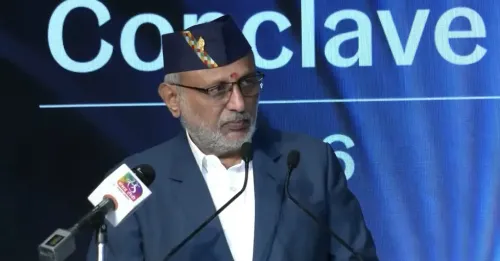
Global economists addressed the 5th Kautilya Economic Conclave in New Delhi on 3 October 2024 .
Swedish economist Daniel Waldenström praised India's growth-oriented policies and advocated taxing capital income over wealth or inheritance taxes.
Former ECB President Jean-Claude Trichet called India's transformation 'very impressive' and urged it to stay the course.
French economist Jean-Pierre Landau described India as 'a major, if not the major, player' in solving global problems today.
Chinese economics professor Zhang Liqing called the Indian economy 'quite dynamic and quite strong' and a highlight of world growth.
Experts broadly aligned on the importance of free trade , education investment , and income-based taxation for India's continued rise.
Leading global economists on Saturday, 3 October praised India's economic trajectory at the 5th Kautilya Economic Conclave in New Delhi, calling for sustained focus on growth, education, free trade, and income-based taxation to cement the country's rise as a major world economic force.
Key Assessments from Global Voices
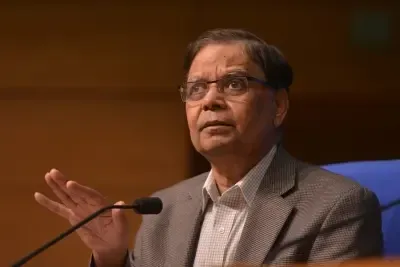
Swedish economist Daniel Waldenström, speaking on the sidelines of the conclave, said India has made impressive strides through growth-oriented policies and is well-placed to convert economic expansion into broader social gains. 'India is on a good path in terms of increasing its economy at a fast pace. The focus on growth has been very positive and will help expand education, infrastructure and overall living standards,' he said.
Waldenström also urged policymakers to prioritise income inequality over wealth inequality, arguing that income levels offer a sharper lens on poverty and economic opportunity. He noted that rising entrepreneurial wealth can reflect a globally competitive economy, and advocated taxing capital income — including corporate profits, dividends, and interest earnings — rather than relying on wealth or inheritance taxes, which many OECD countries have progressively phased out.
Trichet and Landau: India as a Global Leader
Former European Central Bank (ECB) President and former Bank of France Governor Jean-Claude Trichet described India's transformation as happening 'very impressively' and in a direction befitting one of the world's most consequential nations. 'Certainly one of the two major emerging countries, but one leader in the international community. So I would encourage India to continue to go in the same direction and with great success,' Trichet said.
French economist Jean-Pierre Landau praised the deepening India-France partnership and described India as a key actor in resolving global challenges. Despite rising protectionism and geopolitical tensions, Landau noted that trade and investment flows across Asia remain robust. 'We are facing a challenging global environment, but India is a major, if not the major, player in trying to solve the world's problems right now,' he said.
Chinese Economist Flags India's Dynamism
Zhang Liqing, Professor of Economics from China, called the Indian economy 'quite dynamic and quite strong,' adding that it has become one of the standout contributors to global growth. 'I think now it's become one of the highlights of the world economic growth. So I look forward to India's economy being sustainable and making a great contribution to the world economy,' Zhang said.
Why This Conclave Matters
The Kautilya Economic Conclave, now in its fifth edition, has emerged as one of India's premier forums for global economic dialogue, drawing policymakers, central bankers, and academics. This year's gathering comes amid a broader global debate on protectionism, geopolitical fragmentation, and the shifting architecture of world trade — contexts in which India's relatively stable growth story stands out. Notably, India is currently the world's fifth-largest economy and is widely projected to reach the third spot within this decade, lending weight to the assessments offered at the conclave.
What Comes Next
The convergence of expert opinion around income-based taxation, free trade, and human capital investment signals a broad consensus on the policy levers India should pull. Whether the government translates this external validation into concrete reform momentum — particularly on trade liberalisation and tax restructuring — will determine how quickly these projections materialise on the ground.
Point of View
But the Kautilya Conclave's real value lies in the specificity of its recommendations — particularly Waldenström's push for income over wealth taxation, which cuts against populist instincts in Indian politics. India's growth story is real, but the gap between headline GDP performance and on-the-ground social gains remains wide. The chorus of praise risks papering over structural challenges — sluggish formal job creation, uneven state-level development, and a trade policy still hedging on full liberalisation. The question is not whether India is rising, but whether the policy architecture is durable enough to sustain it past the current demographic window.
NationPress
3 Oct 2026
Frequently Asked Questions
What is the Kautilya Economic Conclave?
The Kautilya Economic Conclave is an annual economic policy forum held in New Delhi that brings together global economists, policymakers, and central bankers to discuss major economic trends. The 5th edition took place on 3 October 2024.
What did global economists say about India's economy at the conclave?
Economists from Sweden, France, and China, along with former ECB President Jean-Claude Trichet, praised India's growth trajectory, calling it one of the most dynamic and impactful economies in the world. They urged India to stay focused on growth, free trade, education, and income-based taxation.
What tax reforms did economist Daniel Waldenström recommend for India?
Waldenström recommended that India focus on taxing capital income — such as corporate profits, dividends, and interest earnings — rather than wealth or inheritance taxes, which many OECD countries have moved away from. He argued income levels are a better indicator of poverty and economic opportunity than wealth levels.
Why did Jean-Pierre Landau highlight the India-France partnership?
Landau described India as a key actor in addressing global challenges and praised the growing India-France bilateral relationship. He noted that despite global protectionism and geopolitical tensions, trade and investment across Asia remain resilient, with India playing a central role.
What is India's current global economic ranking?
India is currently the world's fifth-largest economy and is widely projected to become the third-largest within this decade, a trajectory that underpinned much of the positive assessment at the Kautilya Economic Conclave.