Global markets crash on AI regulation fears: Nasdaq plunges 5.5%, Asia follows
Synopsis
A single regulatory fear — that a stronger Democratic Congress could tighten AI oversight — erased $3 trillion in S&P 500 value overnight and sent Asian indices into freefall, with South Korea and Taiwan each dropping over 8%. This is the first global selloff of this magnitude driven purely by AI governance risk, and it signals that markets have been pricing in a permissive regulatory environment that may no longer be guaranteed.
Key Takeaways
Nasdaq Composite plunged 5.5 per cent ; S&P 500 fell over 4 per cent ; Dow Jones dropped 3.4 per cent on Thursday.
Roughly $3 trillion in market value was erased from S&P 500 companies in a single session.
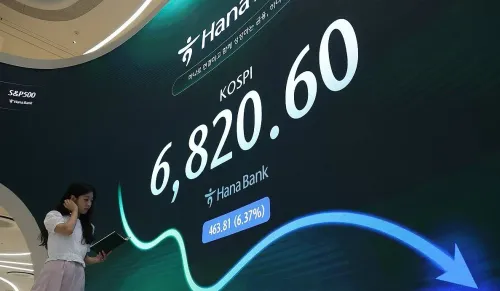
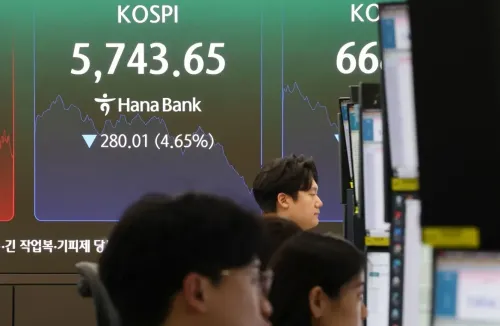
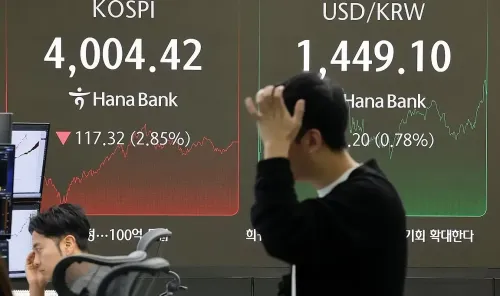
South Korea's KOSPI and Taiwan's benchmark index each fell more than 8 per cent ; Japan's Nikkei dropped around 6 per cent .
Samsung Electronics declined nearly 10 per cent ; SK Hynix slid almost 12 per cent ; SoftBank Group fell 11 per cent .
Trigger: investor fears that a stronger Democratic presence in Congress could increase regulatory scrutiny of the AI sector.
Brent crude rose about 2 per cent to $100.31 per barrel as capital rotated out of equities.
Global financial markets suffered a severe rout on Friday, 6 November, as fears of tighter regulation of artificial intelligence (AI) and a potential slowdown in AI-driven capital spending triggered a sweeping selloff across technology stocks — first on Wall Street overnight and then across Asian bourses. The carnage wiped out roughly $3 trillion in market value from S&P 500 companies alone, marking one of the most punishing sessions for tech equities in recent memory.
Wall Street Sets Off the Alarm
The selloff originated in the United States on Thursday evening, where technology shares came under intense pressure after investors grew concerned that a stronger Democratic presence in Congress could lead to heightened scrutiny of the fast-expanding AI sector. The Nasdaq Composite plunged 5.5 per cent, while the S&P 500 fell over 4 per cent and the Dow Jones Industrial Average dropped 3.4 per cent. Wall Street's volatility index surged sharply higher as forced selling amplified the decline.
Asia Bears the Brunt
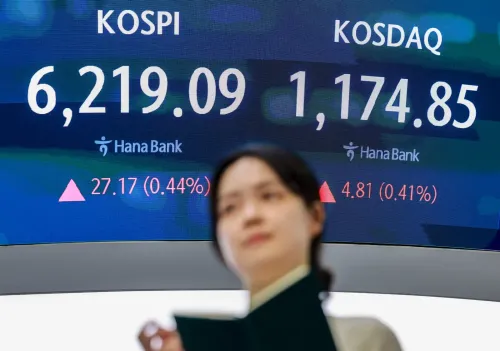
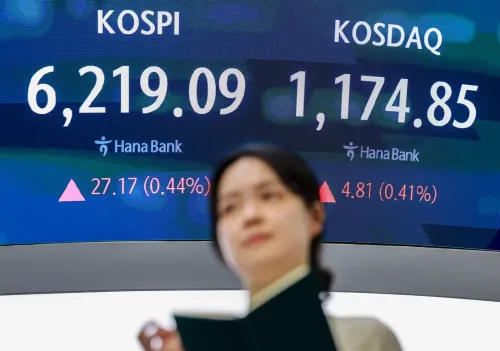
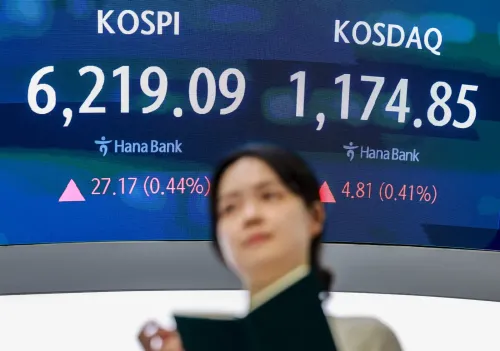
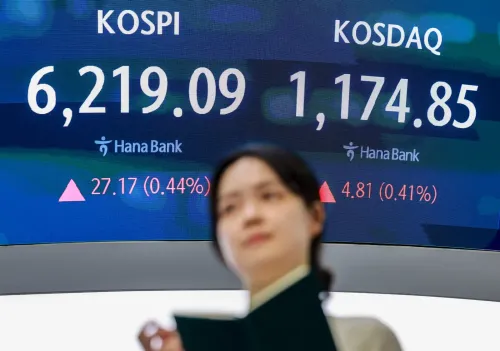
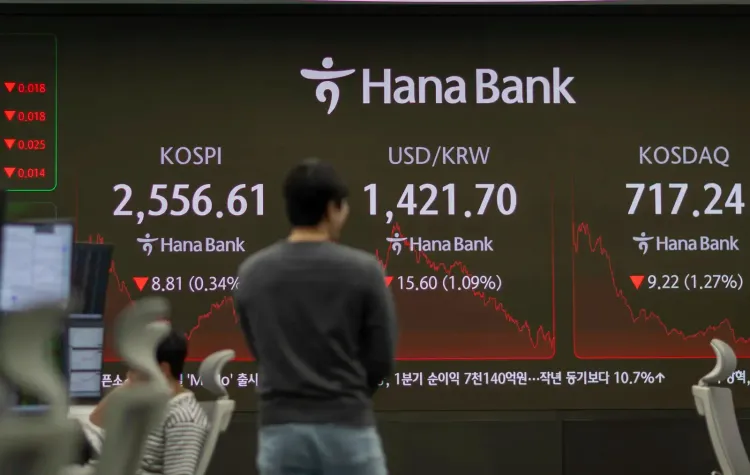
South Korea's KOSPI index fell more than 8 per cent, triggering an automatic trading halt before recovering slightly after the market reopened. Japan's Nikkei dropped around 6 per cent, while Taiwan's benchmark index also declined by more than 8 per cent — with technology-heavy markets recording some of the region's steepest single-session losses in recent years.
Key Stocks Hit Hard
Major semiconductor and AI-linked companies bore the heaviest losses. Samsung Electronics declined nearly 10 per cent and SK Hynix slid almost 12 per cent. SoftBank Group — one of the world's largest investors in AI businesses — fell 11 per cent amid mounting concerns over future returns from the sector. According to market experts, the broader decline reflected growing doubts over whether the massive investments being poured into AI infrastructure, chips, and data centres would continue at their current pace if regulators adopt a stricter stance toward the industry.
What Experts Say
Analysts pointed to investor positioning and forced selling as factors that amplified the severity of the downturn beyond what fundamentals alone would justify. The concern, critics argue, is not merely regulatory — it is structural: if AI spending plateaus, the entire supply chain of semiconductors, cloud infrastructure, and data-centre hardware faces an earnings reset. This is notably the first major AI-regulation-driven global selloff of this scale since the sector's investment boom began in earnest.
Commodities and What Comes Next
Not all asset classes suffered. On the commodities front, international benchmark Brent crude rose about 2 per cent to $100.31 per barrel, while US West Texas Intermediate (WTI) crude gained more than 1 per cent to $91.91 per barrel. Markets will now watch closely for any formal regulatory proposals from Washington and responses from major AI companies, which could either stabilise sentiment or deepen the rout in the sessions ahead.
Point of View
That premium evaporated. What mainstream coverage underweights is the forced-selling dynamic: leveraged positions in semiconductor and AI-infrastructure names amplified losses well beyond what a policy signal alone would justify. The deeper question is whether this is a correction or a regime change — if Washington formalises AI oversight, the entire investment thesis for data-centre build-out, chip demand, and AI cloud spending requires a fundamental reset.
NationPress
6 Nov 2026
Frequently Asked Questions
Why did global markets crash today?
Global markets crashed on 6 November as investors feared that a stronger Democratic presence in Congress could lead to tighter regulation of the AI sector, potentially slowing the massive capital spending on AI infrastructure, chips, and data centres. The Nasdaq plunged 5.5 per cent, triggering a broad selloff that spread from Wall Street to Asian bourses.
How much market value was wiped out in the selloff?
The selloff erased roughly $3 trillion in market value from S&P 500 companies in a single session. Wall Street's volatility index also surged sharply higher as forced selling amplified the decline.
Which Asian markets were worst affected?
South Korea's KOSPI and Taiwan's benchmark index each fell more than 8 per cent, with the KOSPI triggering an automatic trading halt. Japan's Nikkei dropped around 6 per cent, marking some of the steepest single-session losses across Asia in recent years.
Which individual stocks suffered the biggest losses?
SK Hynix slid almost 12 per cent, SoftBank Group fell 11 per cent, Samsung Electronics declined nearly 10 per cent, and other semiconductor and AI-linked companies also posted heavy losses.
What happens next for global markets?
Markets will closely watch for any formal AI regulatory proposals from Washington and responses from major technology companies. Analysts warn that if AI spending plateaus due to stricter oversight, the semiconductor and data-centre supply chain faces a significant earnings reset in the quarters ahead.