Musk says Google wants to rent more SpaceX computing power
Synopsis
A rocket company is becoming one of Big Tech's landlords. Google already pays SpaceX about $920 million a month for AI computing, and Elon Musk now says it wants more. Even one of the world's largest cloud providers is apparently short of capacity as the AI arms race intensifies.
Key Takeaways
Elon Musk said in an X post that Google is interested in renting more computing capacity from SpaceX , without giving details.
Under a deal announced in June , Google pays SpaceX about $920 million per month from October this year through June 2029 .
The existing agreement covers roughly 110,000 Nvidia GPUs , plus CPUs, memory and supporting hardware.
SpaceX's compute deals with Google and Anthropic are valued at more than $70 billion combined, according to a June regulatory filing.
SpaceX plans to invest more than $74 billion in a new supercomputer facility at Starbase, Texas , and a campus in Cochise County, Arizona .
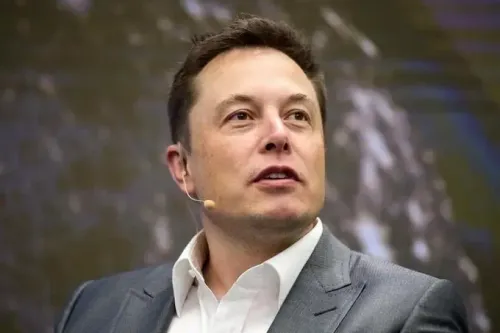
Elon Musk has said that Google is interested in renting additional computing capacity from SpaceX, a sign of how fiercely technology companies are competing for access to artificial intelligence (AI) infrastructure. Musk disclosed the interest in a post on social media platform X on 29 November 2026, though he gave no details about the size, cost or timing of any potential arrangement.
The remark points to a possible expansion of an existing commercial relationship between the two companies. Google is already one of SpaceX's largest computing customers.
The Existing Google–SpaceX Deal
SpaceX and Google already have a multi-year cloud services agreement, which was signed before SpaceX's high-profile initial public offering. Under the deal, announced in June, Google is set to pay SpaceX about $920 million per month from October this year through June 2029.
The capacity covered by the agreement includes roughly 110,000 Nvidia graphics processing units (GPUs). It also includes CPUs, memory and other supporting hardware used to run large-scale AI applications and cloud workloads.
Any additional capacity would come on top of this commitment. Neither company has publicly confirmed how much more computing power Google may seek.
SpaceX's Push Into AI Infrastructure
SpaceX has steadily positioned itself as a supplier of large-scale computing resources, alongside its core rocket and satellite businesses. In May, AI startup Anthropic said it had reached a deal to access SpaceX's computing capacity.
According to a regulatory filing in June, SpaceX disclosed compute-capacity agreements with Google and Anthropic valued at more than $70 billion in aggregate. That figure underlines how quickly computing has grown into a meaningful revenue line for the company.
Expansion Beyond Memphis
The company is also building beyond its existing computing hub near Memphis. Earlier this month, SpaceX said it planned to invest more than $74 billion in a new supercomputer facility at Starbase in Texas' Rio Grande Valley, along with a second campus in Cochise County, Arizona.
The company said the expansion is meant to meet rising demand for AI infrastructure. If Google's interest becomes a formal order, the new sites would likely play a role in supplying it.
Why It Matters
Demand for AI computing has surged since generative AI services took off. Major technology firms have poured billions of dollars into data centres equipped with advanced chips from Nvidia and other manufacturers.
Notably, Google, which runs one of the world's largest cloud businesses, is renting capacity from an outside provider rather than relying only on its own facilities. This suggests that even the largest players are struggling to build fast enough to keep up with AI workloads.
Further details may emerge through SpaceX regulatory filings or a formal announcement from either company in the coming months.
Point of View
Which runs one of the planet's biggest cloud businesses, is renting it from a rocket company. That shows how severe the AI capacity crunch has become, and how quickly SpaceX has turned Nvidia chips into a second business worth tens of billions of dollars. There is a caution, though. Musk disclosed the interest in a single social media post with no terms attached, so investors should wait for a signed contract or regulatory filing before treating it as revenue. For India, which is still building sovereign AI compute capacity, the episode is a reminder that capacity is being locked up years in advance by a handful of deep-pocketed buyers.
NationPress
29 Nov 2026
Frequently Asked Questions
What did Elon Musk say about Google and SpaceX?
Elon Musk said in a post on X that Google is interested in renting more computing capacity from SpaceX. He did not share details of any potential arrangement.
How much does Google pay SpaceX for computing capacity?
Under a deal announced in June, Google is set to pay SpaceX about $920 million per month from October this year through June 2029. The agreement covers roughly 110,000 Nvidia GPUs along with CPUs, memory and other hardware.
Which other companies use SpaceX's computing capacity?
AI startup Anthropic said in May that it had reached a deal to access SpaceX's computing capacity. A June regulatory filing valued SpaceX's compute agreements with Google and Anthropic at more than $70 billion combined.
Where is SpaceX building new AI computing facilities?
SpaceX plans to invest more than $74 billion in a new supercomputer facility at Starbase in Texas' Rio Grande Valley and a second campus in Cochise County, Arizona. These would add to its existing computing hub near Memphis.
Why is demand for AI computing capacity rising?
Demand has surged since generative AI services took off. Major technology firms are spending billions of dollars on data centres equipped with advanced chips from Nvidia and other manufacturers.