Nvidia Hails SpaceX IPO, Recalls Decade-Long AI Partnership
Synopsis
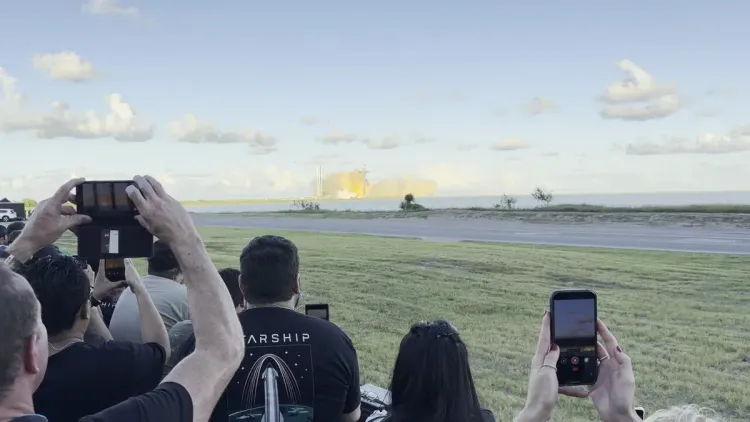
Nvidia marked SpaceX's IPO debut on June 12, 2026, by recalling a nearly decade-long AI hardware partnership that began with the hand-delivery of the world's first DGX-1 supercomputer to SpaceX in 2016 and continues with the latest DGX Spark system.
Key Takeaways
Nvidia publicly congratulated SpaceX on its IPO debut on June 12, 2026 , calling it 'historic.' Nvidia's partnership with SpaceX spans nearly a decade , rooted in shared AI and space computing goals.
In 2016 , Nvidia hand-delivered the world's first DGX-1 supercomputer — its first purpose-built AI system — to SpaceX.
The post references a more recent DGX Spark handoff, confirming continued hardware supply across product generations.
The collaboration reflects a broader industry trend of AI accelerator firms deepening ties with commercial aerospace operators.
Chip giant Nvidia on Friday, June 12, 2026, publicly congratulated the SpaceX team on what it called a 'historic IPO debut,' marking the occasion by highlighting a partnership spanning nearly a decade of AI hardware collaboration between the two companies.
Context
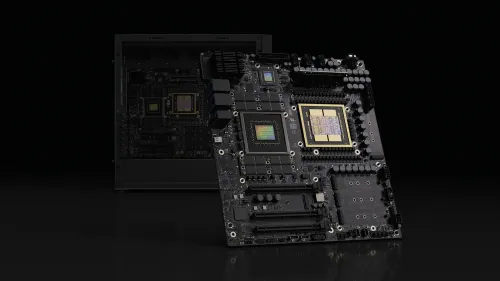
In its post on X, Nvidia described the milestone as 'fueling the next frontier of space and AI,' and pointed to the arc of its relationship with SpaceX stretching back to 2016. That year, Nvidia hand-delivered the world's first DGX-1 supercomputer — its inaugural purpose-built AI system — directly to SpaceX, an act the company now frames as the foundation of a sustained technical alliance. The post also referenced a more recent 'custom DGX Spark handoff,' signalling continued hardware supply to the aerospace firm.
The DGX-1, introduced by Nvidia in 2016, was the first commercially available AI supercomputer designed for deep learning workloads. Delivering the first unit to SpaceX was a deliberate signal of where Nvidia saw the frontier of applied AI computing heading — into aerospace, simulation, and autonomous systems.
Policy Backdrop
The convergence of AI accelerators with commercial space operations reflects a broader industry pattern that has deepened since the mid-2010s. Reusable launch vehicles and large satellite constellations require significant computational power for simulation, trajectory modelling, and real-time data processing — workloads that align directly with Nvidia's GPU and DGX product lines.
Nvidia's sustained supply of DGX systems to SpaceX illustrates a wider movement toward vertically integrated compute stacks for autonomy and modelling in extreme environments. As private aerospace firms have scaled operations, their dependence on specialised AI hardware has grown correspondingly, making partnerships with chip infrastructure leaders strategically significant.
Stakeholders and Impact
For Nvidia, the public acknowledgement of SpaceX's IPO serves a dual purpose: it celebrates a long-standing customer relationship while reinforcing the company's positioning as the preferred AI infrastructure partner for frontier industries. The reference to both the 2016 DGX-1 delivery and the newer DGX Spark handoff underscores continuity of supply across multiple hardware generations.
For the broader space industry and AI hardware sector, the post signals that the compute requirements of commercial spaceflight have become a meaningful and growing segment of enterprise AI infrastructure demand. Investors and competitors in both sectors will note the depth of the Nvidia-SpaceX technical relationship now placed on public record.
What's Next
Analysts and industry observers will watch for further integration of Nvidia platforms into upcoming SpaceX vehicles and ground systems, as well as any disclosures in SpaceX's corporate filings that detail its AI and compute infrastructure investments. The post's mention of 'the next frontier of space and AI' suggests Nvidia anticipates the relationship will deepen as both companies expand their operational footprints. The convergence of AI-accelerated computing and commercial aerospace is likely to draw increased attention from institutional investors and policymakers tracking critical technology supply chains.
Point of View
Reinforcing its claim as the AI infrastructure backbone of frontier industries. This fits a broader pattern of Nvidia using high-profile customer relationships to validate its enterprise positioning at a time when competition in the AI chip market is intensifying. For observers tracking the intersection of AI hardware and commercial space, the post is a data point confirming that compute infrastructure has become as strategically significant to aerospace as propulsion or materials.
NationPress
26 Oct 2026
Frequently Asked Questions
What is the Nvidia and SpaceX partnership about?
Nvidia and SpaceX have maintained an AI hardware partnership for nearly a decade, with Nvidia supplying purpose-built AI supercomputers — beginning with the first DGX-1 in 2016 — to support SpaceX's computing and simulation workloads.
What is the Nvidia DGX-1 supercomputer?
The DGX-1, introduced by Nvidia in 2016, was the world's first purpose-built AI supercomputer designed for deep learning. The very first unit was hand-delivered by Nvidia to SpaceX, marking the start of their collaboration.
Did SpaceX have an IPO in 2026?
Nvidia's June 12, 2026 post on X congratulated SpaceX on a 'historic IPO debut,' publicly acknowledging the event, though details of the offering would be contained in SpaceX's own corporate disclosures.
What is the Nvidia DGX Spark?
The DGX Spark is a more recent Nvidia AI computing system. Nvidia's post referenced a 'custom DGX Spark handoff' to SpaceX, indicating the company has continued supplying updated hardware generations to the aerospace firm.
Why does Nvidia partner with aerospace companies like SpaceX?
Commercial space operations require large-scale simulation, trajectory modelling, and real-time data processing — workloads that align with Nvidia's GPU and DGX product lines, making AI hardware partnerships strategically valuable for both sides.