Nvidia begins DGX Station shipments with GB300-powered systems
Synopsis
Chip giant Nvidia has confirmed that its DGX Station workstation-class AI systems are beginning to arrive at developers' desks. The GB300-powered units are shipping through partners including ASUS, Dell, GIGABYTE, HP, MSI and Supermicro, extending data-centre-class AI performance into on-premises environments for enterprise teams and researchers worldwide.
Key Takeaways
Nvidia announced on 2 June 2026 that DGX Station systems are shipping to developers and researchers.
The workstations are powered by Nvidia's GB300 platform.
Shipping partners named are ASUS, Dell, GIGABYTE, HP, MSI and Supermicro.
The line aims to deliver data-centre-level AI performance in an on-premises desk-side form factor.
The rollout extends Nvidia's strategy of using its OEM network to widen AI hardware distribution.
Pricing, India-specific availability and detailed GB300 specifications were not disclosed in the post.
Chip giant Nvidia said on Tuesday, 2 June 2026 that its DGX Station workstation-class AI systems have started arriving at the desks of developers and researchers, marking the commercial rollout of the company's latest on-premises AI appliance. The post, issued from Nvidia's official corporate handle, confirmed that GB300-powered units are shipping through a slate of long-standing original-equipment manufacturer partners.
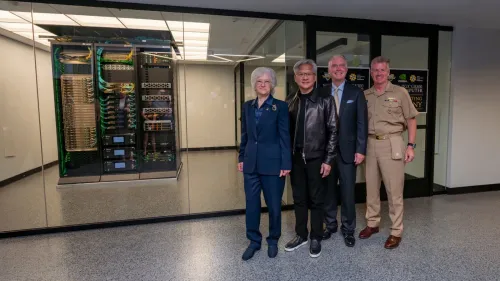
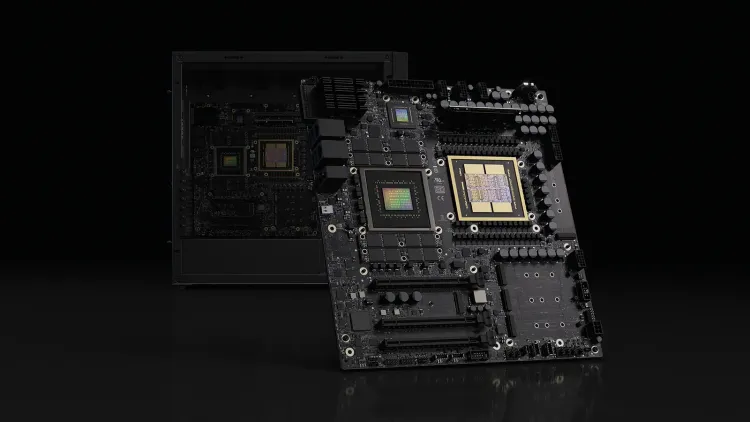
'NVIDIA DGX Station systems are beginning to arrive at the desks of developers and researchers,' the company said, adding that 'enterprise teams can deploy data center-level performance locally with GB300-powered systems arriving from partners like ASUS, Dell, GIGABYTE, HP, MSI and Supermicro.' The announcement was accompanied by a single product image and a link to Nvidia's partner page.
Context
The DGX brand traces back to 2016, when Nvidia unveiled the original DGX-1 as an integrated AI training appliance. Successive generations have transitioned from the Volta and Hopper architectures to newer designs aimed at handling progressively larger model-training and inference workloads.
The DGX Station line specifically targets individual developers, small research teams and enterprise pilot units that want data-centre-class compute without provisioning rack-scale infrastructure. By routing GB300 systems through six named partners, Nvidia is extending distribution well beyond its direct-sales channel.
Policy backdrop
The launch lands amid a broader industry pivot toward on-premises and edge AI, driven in part by enterprises seeking to limit dependence on public-cloud GPU capacity. Sovereign-AI initiatives in several markets, including India's IndiaAI compute mission, have similarly emphasised local hardware availability for training and fine-tuning workloads.
Nvidia has consistently used its OEM partner network — anchored by firms such as Dell and Supermicro — to scale availability of certified AI systems. The GB300 rollout follows that template, with multiple vendors offering differentiated form factors and service packages around a common Nvidia reference design.
Stakeholders and impact
For enterprise AI teams, the immediate implication is the option to bring large-model workloads in-house on a single workstation footprint, reducing data-egress concerns and recurring cloud spend. Academic and corporate researchers, traditionally reliant on shared cluster time, gain a desk-side alternative for prototyping and experimentation.
For partners, the timing is significant. ASUS, Dell, GIGABYTE, HP, MSI and Supermicro each compete to differentiate on price, support and integration services. Indian system integrators that resell these vendors' AI appliances stand to benefit as enterprise procurement cycles increasingly include on-premises AI line items.
The announcement carries a corporate voice rather than a personal one from chief executive Jensen Huang, signalling that the company is treating shipment commencement as a product-availability milestone rather than a strategic reset.
What's next
Attention now turns to partner-specific availability windows and pricing tiers for GB300 systems, which Nvidia did not detail in the post. Further configuration and roadmap disclosures are typically reserved for the company's GTC developer conference cycle.
For Indian buyers, the practical questions are import timelines, local warranty arrangements and whether system integrators will bundle DGX Station units into government and university tenders aligned with national AI compute targets. As GB300 hardware percolates through the channel, the pace of on-premises AI deployment in India will be a key indicator of how quickly the broader enterprise market shifts from cloud-only to hybrid AI infrastructure.
Point of View
The company is signalling that GB300 supply is healthy enough to support a broad channel rather than a tightly rationed launch. For markets like India, where sovereign-AI and IndiaAI compute ambitions are reshaping procurement, desk-side DGX units could accelerate enterprise adoption beyond cloud-only deployments. The absence of pricing detail, however, keeps the near-term India impact contingent on how aggressively partners localise.
NationPress
17 Oct 2026
Frequently Asked Questions
What is the Nvidia DGX Station?
The DGX Station is Nvidia's workstation-class AI system designed to deliver data-centre-level performance in a desk-side form factor. It targets individual developers, researchers and enterprise teams that need on-premises AI compute.
What is the GB300 in Nvidia DGX Station?
GB300 is the Nvidia platform powering the latest DGX Station systems now shipping. Nvidia has positioned it as the engine that enables local deployment of data-centre-class AI workloads.
Which companies are shipping Nvidia DGX Station systems?
Six OEM partners are shipping GB300-powered DGX Station systems: ASUS, Dell, GIGABYTE, HP, MSI and Supermicro. Each offers its own configurations and service packages around the Nvidia reference design.
When did Nvidia announce DGX Station shipments?
Nvidia's corporate account announced the start of shipments on 2 June 2026. The post said systems are beginning to arrive at the desks of developers and researchers.
Will Nvidia DGX Station be available in India?
Nvidia did not disclose India-specific availability or pricing in its announcement. Local availability typically depends on the named OEM partners and their Indian distribution networks.