Nvidia Deploys 248-GPU DGX SuperPOD at Stanford University

Synopsis
Nvidia, in partnership with Mark III Systems, has deployed 'Marlowe' — a DGX SuperPOD with 248 Hopper GPUs — at Stanford University, giving over 500 researchers across all seven schools a major upgrade in AI computing power.
Key Takeaways
Nvidia and Mark III Systems have deployed a DGX SuperPOD named 'Marlowe' at Stanford University .
The cluster is equipped with 248 NVIDIA Hopper GPUs , designed for large-scale AI training workloads.
More than 500 researchers across all seven schools of Stanford now have access to the system.
The Hopper GPU architecture was introduced by Nvidia in 2022 as a successor to the Ampere line.
The deployment reflects a broader US industry-academia push to build on-campus AI compute capacity amid global AI competition.
Initial research outputs and benchmark results from the Marlowe cluster are expected to be published in the coming months.
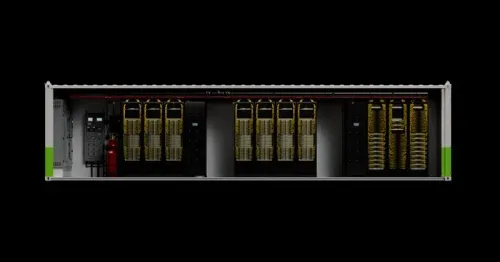
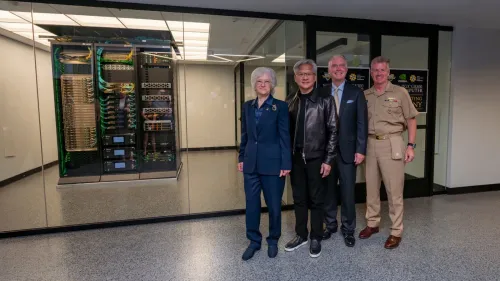
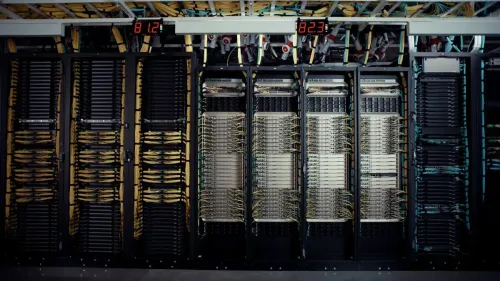
Chip giant Nvidia announced on Wednesday, June 10, 2026, that Stanford University has deployed a major AI computing cluster named 'Marlowe' — a DGX SuperPOD system equipped with 248 NVIDIA Hopper GPUs — giving more than 500 researchers across all seven of the university's schools a significant upgrade in computing power.
Context
The deployment was carried out in partnership with Nvidia and infrastructure solutions firm Mark III Systems. Stanford's 'Marlowe' cluster represents one of the largest academic AI computing installations anchored on Nvidia's Hopper GPU architecture, which the company introduced in 2022 as a successor to its Ampere line, specifically targeting large-scale AI training workloads.
Nvidia's post stated the goal of the partnership is to expand access to high-performance computing across the breadth of Stanford's research enterprise — spanning disciplines from engineering and medicine to the humanities. The system is now accessible to researchers across all seven schools of the university.
Policy Backdrop
The Marlowe deployment fits into a broader and accelerating pattern of US technology industry investment in academic computing infrastructure. Nvidia has steadily expanded its DGX-class system deployments at major universities, positioning Hopper-based clusters as the de-facto standard for large-model AI training in academic environments.
These installations complement commercial cloud offerings and reflect the intensifying US industry-academia collaboration on compute capacity at a time of heightened global competition in artificial intelligence. For universities like Stanford — long recognised as a global leader in computer science and AI research — access to on-campus supercomputing infrastructure is increasingly seen as a prerequisite for frontier research.
Stakeholders and Impact
The most direct beneficiaries are Stanford's 500-plus researchers, who will gain access to significantly greater computational resources without relying solely on external cloud providers. Academic AI labs working on large-model training, simulation, and scientific computing stand to gain the most from the expanded capacity.
Mark III Systems, a specialised infrastructure partner, played a key role in the physical deployment and systems integration of the cluster. For Nvidia, the partnership reinforces its dominant position in the academic AI hardware market and deepens its relationship with one of the world's most influential research universities.
What's Next
The research community will be watching for the first benchmark results and published outputs from the Marlowe cluster, which could demonstrate the real-world research productivity gains from Hopper-class on-campus infrastructure. Announcements of comparable DGX SuperPOD deployments at peer institutions — including other Ivy League and top-tier global universities — are likely to follow as competition for AI research talent and output intensifies.
As AI becomes central to disciplines well beyond computer science, the availability of dedicated, high-throughput computing infrastructure on university campuses is set to become a defining factor in the global race for academic AI leadership.
Point of View
Nvidia simultaneously advances its commercial ecosystem and shapes the next generation of AI researchers who will train on its hardware. The partnership with Mark III Systems also signals that specialised integration firms are becoming critical nodes in the academic AI supply chain. As global competition in AI intensifies, the ability to anchor frontier research at top universities is emerging as a soft-power dimension of the broader chip and AI race.
NationPress
26 Oct 2026
Frequently Asked Questions
What is the Marlowe DGX SuperPOD at Stanford University?
'Marlowe' is an AI supercomputing cluster deployed at Stanford University, built on Nvidia's DGX SuperPOD platform and equipped with 248 NVIDIA Hopper GPUs, giving over 500 researchers access to large-scale computing power.
What is the Nvidia Hopper GPU architecture?
The Hopper GPU architecture was introduced by Nvidia in 2022 as the successor to its Ampere line. It is specifically designed for large-scale AI training workloads and powers Nvidia's flagship DGX-class systems.
Who partnered with Nvidia to deploy the Stanford AI cluster?
Nvidia partnered with infrastructure solutions firm Mark III Systems to deploy the Marlowe DGX SuperPOD cluster at Stanford University.
How many researchers at Stanford benefit from the Marlowe cluster?
More than 500 researchers across all seven schools of Stanford University now have access to the Marlowe cluster's upgraded computing resources.
Why is Nvidia deploying DGX systems at universities?
Nvidia has been expanding academic DGX deployments to establish Hopper-based clusters as the standard for AI research, deepen industry-academia ties, and support the growing demand for on-campus high-performance computing amid global AI competition.