White House Warns Socialism Leads to a 'Dark Future' for America

Synopsis
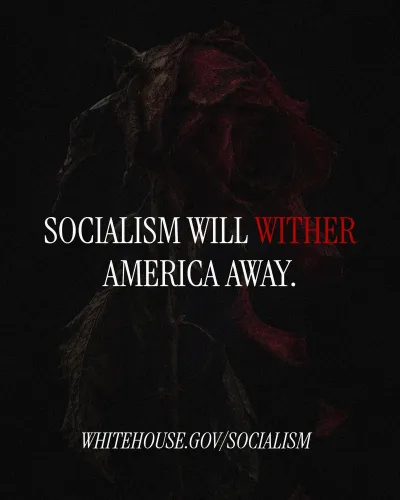
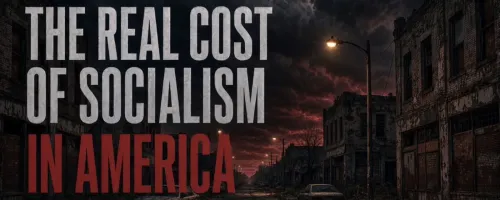
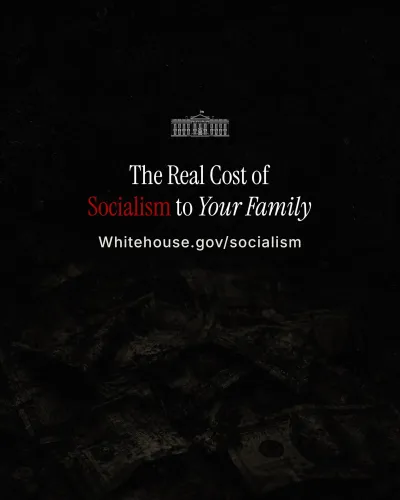
The White House on October 26, 2026, posted a stark ideological warning that 'socialism leads to a dark future America simply cannot afford,' deploying a decades-old rhetorical frame to shape the terms of upcoming economic policy debates in Washington.
Key Takeaways
The White House posted on October 26, 2026 , warning that socialism leads to a 'dark future America simply cannot afford.' The statement contains no specific bill, budget figure, or legislative trigger — it is a broad ideological framing device.
The capitalism-versus-socialism binary is a long-standing feature of American conservative political rhetoric, dating to at least the Cold War era.
In modern US politics, the 'socialist' label is frequently applied by critics to proposals such as expanded public healthcare, student-debt relief, and higher corporate taxes.
The post signals economic ideology — not just fiscal policy — will be central to the administration's public messaging going forward.
Congressional responses and any follow-up White House fiscal proposals will indicate whether this was a standalone statement or the start of a coordinated campaign.
The official White House account fired a pointed ideological warning on Monday, October 26, 2026, declaring that socialism charts a course toward a 'dark future America simply cannot afford' — framing today's policy choices as the direct architects of tomorrow's national fate.
The Exact Words — and Why They Land Now
The post read: 'Today's decisions become tomorrow's consequences. Socialism leads to a dark future America simply cannot afford.' Stripped of any bill number, budget figure, or legislative trigger, the message is deliberately broad — a values statement rather than a policy memo. That is precisely what makes it politically potent: it functions as a framing device, attaching a single word — 'socialism' — to every spending or regulatory debate the administration faces.
A Rhetorical Playbook Decades in the Making
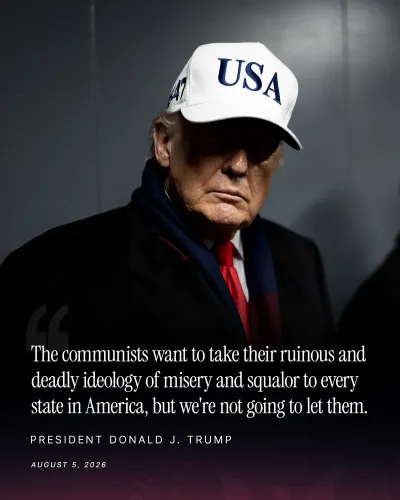
The capitalism-versus-socialism binary has been a fixture of American conservative rhetoric since at least the Cold War. The argument relies on historical examples of economic stagnation and political repression in self-described socialist states, contrasting them with market-led growth in the United States. In contemporary American politics, the label 'socialist' is regularly applied — by critics — to proposals ranging from expanded public healthcare to student-debt relief and higher corporate taxes. The White House statement fits squarely in that tradition, invoking consequences and affordability rather than naming a specific adversary programme.
That ambiguity is not accidental. A sweeping ideological warning allows the administration to frame a wide arc of opposition policy positions under a single unfavourable umbrella, without committing to a specific legislative fight on the record.
What Comes Next in Washington's Economic Debate
The post signals that economic ideology — not just fiscal arithmetic — will remain central to the administration's public messaging. Watch for congressional leaders and opposition figures to respond: either rebutting the 'socialist' characterisation of their proposals, or counter-framing around inequality and corporate power. Any follow-up White House communications on fiscal proposals, deregulation, or federal spending will reveal whether this statement was a standalone salvo or the opening of a coordinated messaging campaign.
The stakes are real. Economic ideology shapes public appetite for everything from infrastructure investment to social safety nets. When the executive bully pulpit frames a debate at the level of civilisational choice — 'dark future' versus affordable freedom — it sets the temperature for every budget negotiation that follows.
Point of View
They often elevate the debate to values and consequences rather than line items, making compromise harder to sell. For Indian observers tracking US economic policy, the signal is that Washington's next fiscal cycle will be fought not on numbers alone but on fundamental questions of state versus market — with downstream effects on global investment flows, trade posture, and multilateral economic governance.
NationPress
26 Oct 2026
Frequently Asked Questions
What did the White House say about socialism in its October 2026 post?
The White House posted that 'Today's decisions become tomorrow's consequences. Socialism leads to a dark future America simply cannot afford' — a broad ideological warning with no specific policy cited.
Why is the White House talking about socialism now?
The statement aligns with a recurring pattern in US conservative rhetoric, typically deployed during periods of debate over government spending, regulation, and social programmes to frame opposition proposals unfavourably.
What counts as 'socialism' in current US political debate?
In contemporary American politics, critics apply the label to a range of centre-left proposals including expanded public healthcare, student-debt cancellation, and higher corporate or wealth taxes — none of which are formal state ownership of industry.
How does the US capitalism-versus-socialism debate affect India?
The ideological direction of US economic policy influences global investment flows, trade negotiations, and the stance Washington takes in multilateral bodies like the IMF and WTO, all of which have direct consequences for Indian markets and diplomacy.
What should we watch for after this White House statement?
Key signals include responses from congressional leaders and opposition figures, and any follow-up White House messaging on specific fiscal proposals — which will reveal whether this was a standalone salvo or the start of a coordinated economic messaging campaign.