PNG connections scheme approved: incentives to cut payback period to 3 years
Synopsis
India's new PNG incentive scheme does something previous clean-cooking pushes did not: it attacks the economics directly. By cutting the capital payback period from 10 years to 3 through APM gas allocations, the Centre has given CGD companies a hard financial reason to expand networks — not just a policy nudge.
Key Takeaways
The Centre approved the Incentive Scheme for Promotion of Domestic PNG Connections on 18 August 2026 , effective 1 September 2026 .
Eligible CGD companies will receive 200 SCM of APM gas for every incremental billed domestic PNG connection above their threshold.
India currently has approximately 1.74 crore domestic PNG connections.
The scheme is expected to cut the capital expenditure payback period from ~10 years to ~3 years for CGD operators.
The scheme runs in two tranches over six months , incentivising both conversion of unbilled connections and new network expansion.
The Centre on Tuesday, 18 August 2026 approved a dedicated incentive scheme to fast-track the expansion of domestic piped natural gas (PNG) connections, aiming to bring clean, affordable cooking fuel to millions more Indian households. The Incentive Scheme for Promotion of Domestic PNG Connections will come into force on 1 September 2026.
How the Scheme Works
The scheme is structured to push City Gas Distribution (CGD) companies to convert dormant, unbilled PNG connections into active, billed ones — and to extend household PNG networks into previously uncovered areas. Eligible CGD entities will earn incentives for every incremental billed domestic PNG connection added above a threshold set for their respective geographical zones.
Specifically, each qualifying CGD company will receive an additional allocation of 200 Standard Cubic Metres (SCM) of domestically produced, lower-priced Administered Price Mechanism (APM) gas for every incremental billed connection achieved during the performance period. The scheme will roll out in two tranches over six months.
The Financial Logic
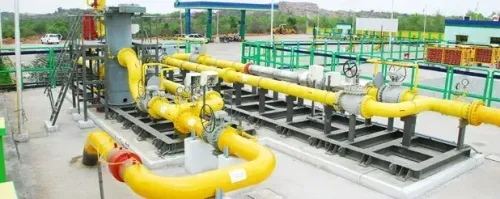
The APM gas allocation is designed to let CGD companies substitute costlier liquefied natural gas (LNG) currently used in their Compressed Natural Gas (CNG) transport segment. By lowering overall gas sourcing costs, the scheme improves the economics of PNG network expansion significantly.
According to the government, the resulting savings could shrink the capital expenditure payback period on domestic PNG connections from roughly 10 years to approximately 3 years — a reduction that materially changes the investment calculus for CGD operators. This is the central lever the scheme uses to incentivise faster network rollout.
Where India Stands on PNG
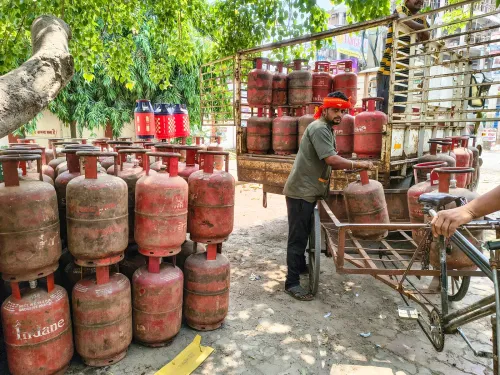
India currently has approximately 1.74 crore domestic PNG connections. While that figure has grown steadily over the past decade, penetration remains uneven — concentrated in larger cities and select urban corridors, with rural and semi-urban areas still heavily dependent on LPG cylinders. This scheme directly targets that gap by making network expansion financially attractive for CGD players.
Notably, this intervention comes as the government continues its broader push for clean cooking fuel access, building on the Pradhan Mantri Ujjwala Yojana framework that focused on LPG. PNG, however, offers a more permanent and operationally simpler solution for urban and peri-urban households.
Why PNG Matters for Consumers
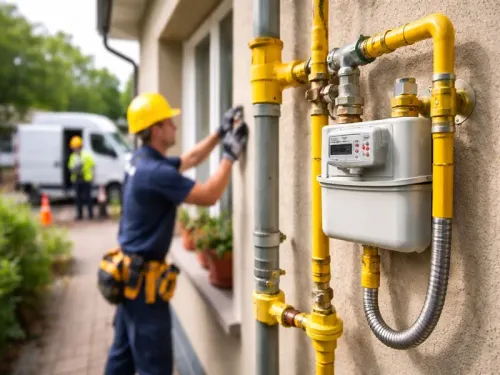
Unlike LPG, PNG is delivered directly to homes through underground pipelines, removing the need to book, store, or replace cylinders. Consumers are billed on actual metered usage — similar to electricity or water — making costs more predictable.
On safety, PNG is supplied at low pressure and is lighter than air, allowing it to disperse rapidly in the event of a leak rather than pooling at floor level as LPG does. As a cleaner-burning fuel, PNG also produces fewer pollutants than many conventional cooking fuels, contributing to better indoor air quality and lower household carbon emissions.
What Happens Next
With the scheme effective from 1 September 2026, CGD companies are expected to begin recalibrating their network expansion plans ahead of the first tranche. The government has not yet disclosed which specific geographical areas have been prioritised or what the threshold connection levels are for individual CGD zones. Industry observers will watch whether the shortened payback window translates into measurable connection growth within the six-month implementation window.
Point of View
Not policy ambition. Cutting the payback period from 10 years to 3 by redirecting cheaper APM gas is a concrete mechanism — unlike earlier clean-cooking initiatives that relied on subsidy transfers without fixing the underlying unit economics for distributors. The open question is execution: CGD companies have historically been cautious about extending networks into low-density or lower-income areas where connection density is thin. Whether a six-month incentive window is long enough to shift multi-year infrastructure decisions remains to be seen. The government's decision not to publish threshold levels or area-wise targets publicly also limits accountability.
NationPress
18 Aug 2026
Frequently Asked Questions
What is the Incentive Scheme for Promotion of Domestic PNG Connections?
It is a government-approved scheme, effective 1 September 2026, that offers City Gas Distribution companies additional allocations of lower-priced APM gas for every new billed domestic PNG connection they add above a set threshold. The scheme runs in two tranches over six months and is designed to accelerate household PNG network expansion across India.
How does the APM gas allocation benefit CGD companies?
CGD companies can use the additional APM gas allocation to substitute costlier LNG in their CNG transport segment, lowering overall gas sourcing costs. According to the government, this could reduce the capital expenditure payback period on domestic PNG connections from around 10 years to approximately 3 years.
How many domestic PNG connections does India currently have?
India currently has approximately 1.74 crore domestic PNG connections. The new scheme aims to accelerate growth by making network expansion financially viable for CGD operators, particularly in areas not yet covered.
Why is PNG considered better than LPG cylinders for households?
PNG is piped directly to homes through underground pipelines, eliminating the need to book, store, or replace cylinders. It is billed on actual metered consumption, supplied at low pressure, and is lighter than air — making it safer in the event of a leak. It also burns cleaner than many conventional fuels, improving indoor air quality.
When will the scheme come into effect and how long will it run?
The scheme comes into effect on 1 September 2026 and will be implemented in two tranches over a period of six months.