Meghalaya acquires 96 acres in East Garo Hills for permanent Me'gong Festival venue
Synopsis
Meghalaya is building more than a festival ground — it is betting on a 96-acre living heritage complex at Rongalgre where tourists can stay in replica Khasi, Jaintia, and Garo villages. Chief Minister Conrad Sangma frames it as a cultural firewall for younger generations increasingly drawn away from indigenous roots by global digital culture.
Key Takeaways
The Meghalaya government has acquired 96 acres at Rongalgre , East Garo Hills , for a permanent Me’gong Festival venue.
Chief Minister Conrad K.
Sangma announced the initiative on 18 August 2025 .
The site will feature replica villages representing Khasi , Jaintia , and Garo communities, including sub-groups such as the Pnar and War .
The project is currently in the planning stage ; land acquisition is complete but no construction timeline has been announced.
The initiative aims to combine cultural preservation with tourism promotion , targeting both domestic and international visitors.
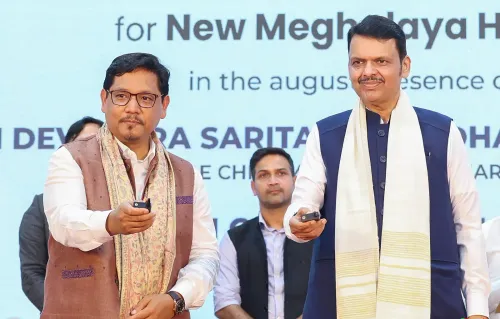
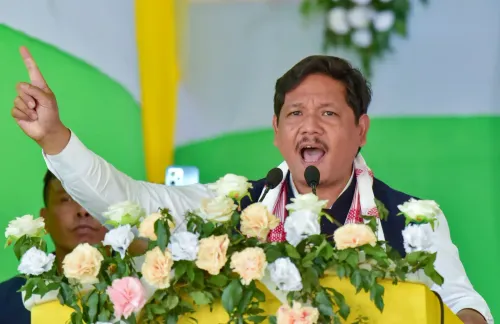
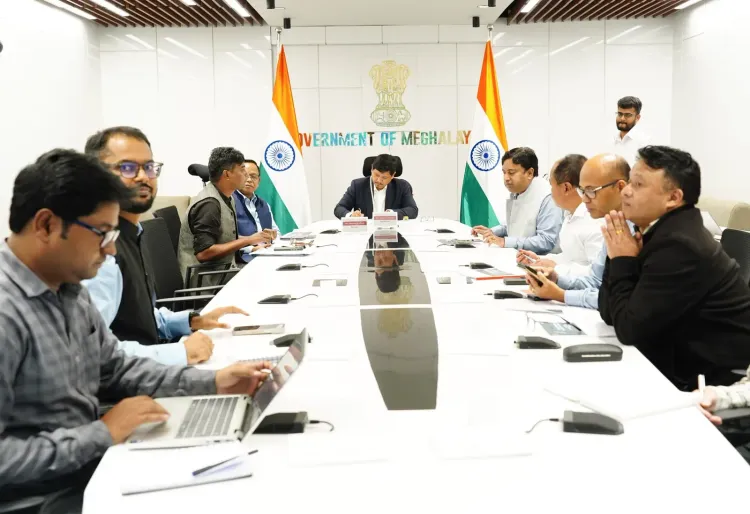
The Meghalaya government has acquired 96 acres of land at Rongalgre in East Garo Hills to develop a permanent venue for the Me'gong Festival, with plans to build replica villages that immerse visitors in the traditional lifestyles of the Khasi, Jaintia, and Garo communities. Chief Minister Conrad K. Sangma announced the initiative on Tuesday, 18 August, describing it as a landmark step in the state's cultural preservation and tourism strategy.
What the Project Entails
The proposed cultural destination at Rongalgre is envisaged as a living heritage complex where tourists can stay in traditional-style village settings and directly experience indigenous customs, architecture, and community practices. “When people go there for the Me’gong festival, they can actually go and stay in a Khasi village,” Sangma said, underscoring the immersive character of the initiative.
Beyond Khasi replica villages, the project will also include facilities representing Garo and Jaintia communities, with the government looking to incorporate sub-groups such as the Pnar and War within the same site. The project is currently in the planning stage, though land acquisition has already been completed.
Why It Matters for Meghalaya's Cultural Identity
Sangma linked the initiative to a broader state effort to safeguard Meghalaya’s indigenous traditions at a time of rapid social and technological change. He noted that younger generations are increasingly exposed to global influences through social media and digital platforms, making structured cultural touchpoints more critical than ever.
The project aims to move cultural tourism beyond conventional festival performances, offering instead a sustained, organised space where traditional architecture and community life can be experienced year-round. This is consistent with Meghalaya’s wider push to position its diverse tribal heritage as a pillar of its tourism economy.
Tourism and Heritage: A Dual Mandate
The permanent Me’gong venue is expected to serve a dual purpose — preserving indigenous lifestyles for future generations while drawing visitors from across India and abroad. State officials hope the Rongalgre site will eventually become a flagship cultural tourism destination, distinguishing Meghalaya from other northeastern states competing for tourist footfall.
Notably, the Me’gong Festival itself has grown in prominence as a celebration of the state’s three major tribal traditions. A permanent, purpose-built venue would give the festival a stable infrastructure and allow the government to scale programming and visitor capacity over time.
What Comes Next
With land acquisition complete, the government is expected to move into detailed planning and design for the replica villages and supporting infrastructure. No specific timeline for construction completion or inauguration has been announced yet. Industry observers and cultural bodies in the region are likely to watch the project closely as a potential model for community-based heritage tourism in the Northeast.
Point of View
Land-acquired cultural complex is a more credible commitment than a recurring festival alone — but the gap between acquisition and execution in Northeast infrastructure projects is historically wide. The real test will be whether Rongalgre becomes a functioning heritage destination or a well-intentioned land parcel that stalls at the design stage. Meghalaya’s framing of this as a bulwark against cultural erosion among youth is politically resonant, but the project needs a clear construction timeline, community co-governance structures, and a revenue model that does not make it dependent on state subsidies indefinitely.
NationPress
19 Aug 2026
Frequently Asked Questions
What is the Me’gong Festival permanent venue project in Meghalaya?
It is a state government initiative to build a permanent cultural tourism complex on 96 acres of land at Rongalgre in East Garo Hills , featuring replica villages of the Khasi, Jaintia, and Garo communities. The site is intended to host the Me’gong Festival and offer immersive year-round cultural experiences to visitors.
Where exactly is the proposed Me’gong Festival venue located?
The venue is planned at Rongalgre in East Garo Hills district of Meghalaya . The state government has already completed land acquisition of 96 acres at this site.
Which communities will be represented at the Rongalgre cultural complex?
The complex will include replica villages representing the Khasi , Jaintia , and Garo communities — Meghalaya’s three major tribal groups. Sub-groups such as the Pnar and War are also expected to be included within the site.
What is the current status of the project?
As of 18 August 2025 , the project is in the planning stage. Land acquisition has been completed, but no construction timeline or inauguration date has been officially announced.
Why is Meghalaya investing in a permanent cultural tourism venue?
Chief Minister Conrad K. Sangma cited the need to preserve indigenous traditions for younger generations increasingly influenced by global digital culture, while also positioning Meghalaya’s tribal heritage as a key draw for domestic and international tourists.