Urban Challenge Fund: Centre trains cities on bankable projects

Synopsis
The Centre wants cities to stop depending on grants. Under the ₹1 lakh crore Urban Challenge Fund, municipal bodies must pitch bankable projects that can attract nearly ₹4 lakh crore of investment. A New Delhi workshop with ADB, AIIB and HUDCO coached them on how to do it.
Key Takeaways
The Department of Urban Development under MoHUA held a national workshop in New Delhi on 26 November 2026 .
The Urban Challenge Fund provisions ₹1 lakh crore in Central Assistance to catalyse nearly ₹4 lakh crore of investment.
Municipal heads from over 25 'million cities' and State Mission Directors attended, along with ADB , AIIB and HUDCO .
Sessions covered PPP structuring, own-source revenue, carbon credit markets and private investor expectations.
DoUD Secretary Satendra Singh called the workshop an affirmative step to equip cities to submit bankable projects.
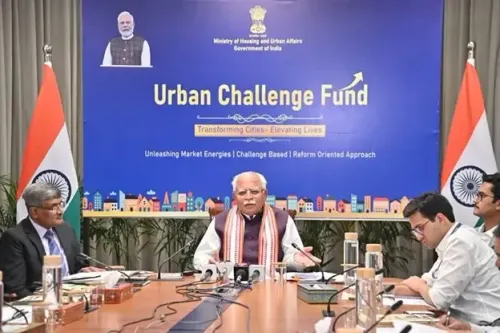
The Department of Urban Development (DoUD) under the Ministry of Housing and Urban Affairs (MoHUA) held a national workshop in New Delhi on Thursday, 26 November 2026 to help cities prepare bankable projects under the Urban Challenge Fund (UCF). The aim is to move urban infrastructure towards market-based financing. The UCF provisions ₹1 lakh crore in Central Assistance, which the ministry expects to catalyse nearly ₹4 lakh crore of investment.
Key Developments at the Workshop
According to a statement from the Ministry of Housing and Urban Affairs, the workshop offered cities handholding on how to prepare and finance urban projects. Sessions explained the UCF architecture and showed international examples of how projects under each vertical of the fund were financed.
Participants also discussed reforms and enablers. These included ways to improve own-source revenue, the urban road reform initiative, city economic plans, carbon credit markets and what private investors expect.
A separate session on public–private partnerships (PPP) covered project screening, structuring, risk allocation and revenue streams. Cities then shared their own experiences.
Who Attended
According to the ministry statement, attendees included Municipal Commissioners and Chiefs of Development Authorities from over 25 'million cities', along with State Mission Directors, sectoral experts and senior department officials.
Several financial institutions also took part:
- Asian Development Bank (ADB)
- Asian Infrastructure Investment Bank (AIIB)
- Housing and Urban Development Corporation (HUDCO)
Notably, multilateral lenders and a public-sector housing financier sat alongside city administrators. This signals that the fund's design depends on bringing outside capital into municipal projects.
What the Government Said
Satendra Singh, Secretary, Department of Urban Development, said the government needs to change its approach to urban development. He also stressed building capacity to conceptualise and ground transformative projects across the urban landscape.
“The workshop is an affirmative step in that direction to equip cities with the skills and ideas required to submit bankable projects under UCF,” Singh said.
In a hands-on exercise, cities formed groups and worked on priority projects. They drew on the workshop sessions and on lessons from peer states, then presented their outcomes and proposed projects.
Why the Urban Challenge Fund Matters
The ministry describes the UCF as a shift away from grant-based funding. Its new framework for urban infrastructure is meant to be:
- market-linked
- reform-driven
- outcome-oriented
Under the earlier model, the Centre largely funded city projects directly. The UCF instead uses public money to attract additional investment.
The ₹1 lakh crore of Central Assistance is meant to catalyse nearly ₹4 lakh crore of investment. That means every rupee of central support is expected to bring in roughly four rupees of total investment. Cities must therefore show that their projects can attract private investors, lenders and PPP partners.
This comes amid an emphasis on own-source revenue and city economic planning. Both are prerequisites for municipal bodies to borrow or attract partners on commercial terms.
What Happens Next
The cities' proposed projects will now need to be developed into proposals that can be submitted under the UCF. How quickly cities convert this training into bankable projects that win investor confidence will determine whether the fund meets its ₹4 lakh crore target.
Point of View
Governance and project pipelines that private investors demand. Workshops help, but whether this works will depend on reforms to municipal finances, not on how persuasive the pitch decks are.
NationPress
26 Nov 2026
Frequently Asked Questions
What is the Urban Challenge Fund?
The Urban Challenge Fund (UCF) is a central framework for urban infrastructure that moves away from grants towards a market-linked, reform-driven and outcome-oriented model. It provisions ₹1 lakh crore in Central Assistance to catalyse nearly ₹4 lakh crore of investment.
Why did MoHUA hold the Urban Challenge Fund workshop?
The workshop was held to help cities prepare bankable projects and move towards market-based financing of urban infrastructure. It covered the UCF architecture, PPP structuring, own-source revenue and private investor expectations.
Who attended the UCF workshop in New Delhi?
Municipal Commissioners and Chiefs of Development Authorities from over 25 'million cities' attended, along with State Mission Directors, sectoral experts and senior officials. ADB, AIIB and HUDCO also participated.
What did DoUD Secretary Satendra Singh say?
Satendra Singh stressed the need to change the government's approach to urban development and to build capacity for transformative projects. He called the workshop an affirmative step to equip cities to submit bankable projects under the UCF.
How is the Urban Challenge Fund different from earlier urban schemes?
Unlike grant-based funding, the UCF uses central assistance to attract market investment, with ₹1 lakh crore meant to unlock nearly ₹4 lakh crore. Cities must submit projects that are financially viable for lenders and private partners.